Beta

GuidedFloats is in beta. The full site launches March 1, 2027. The mobile app follows.

Guides: claim before March 1, 2027 and your first full season of Premium is free. Claim your founding spot →

Home › Waters › Louisiana › Black Bay
Estuary · Plaquemines Parish, a broad shallow bay in the Breton Sound estuary east of the lower Mississippi River · Louisiana

Black Bay Fishing Guides

A broad shallow bay in the Breton Sound estuary below New Orleans, with a gauge reporting temperature and salinity, and redfish and speckled trout as the year-round draw.
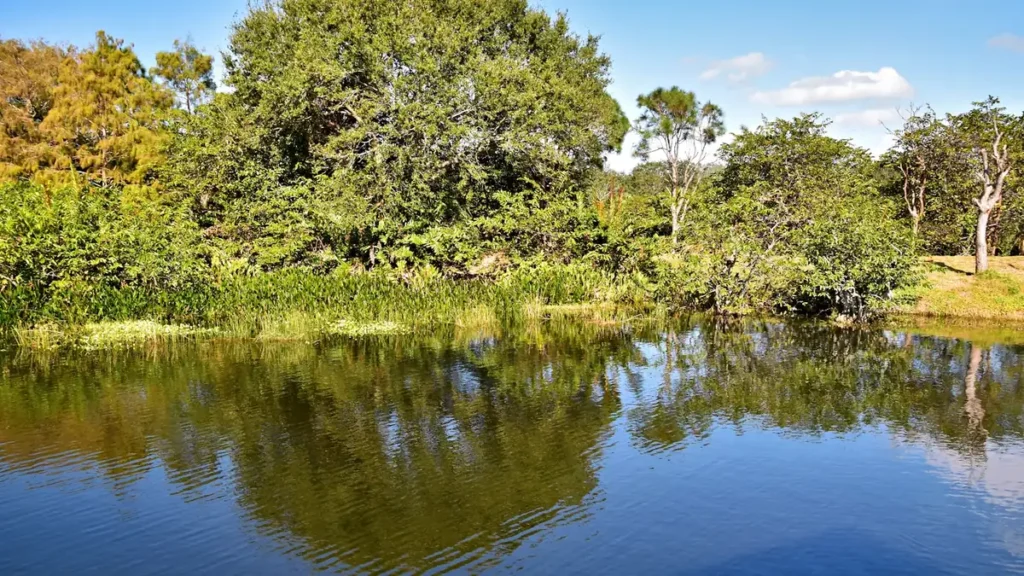
Low marsh grass and open water on a southeastern tidal river
Gauge location. Map data © OpenStreetMap contributors.

Guides on the Black Bay

Claimed profiles take booking requests. Unclaimed profiles are built from public records so the river is never empty; the guide can claim or remove one any time.

About the Black Bay

Black Bay lies in Plaquemines Parish on the eastern side of the lower Mississippi, part of the Breton Sound estuary that sits between the river levee and the Gulf. It is a broad, shallow, wind-exposed bay surrounded by marsh, oyster reef and a maze of bayous and cuts, and it is one of the most heavily fished inshore areas in Louisiana for good reason.

The gauge near Snake Island is a water-quality station, reporting water temperature, specific conductance and stage. Salinity is the interesting number in this system. Breton Sound receives freshwater from the river through diversions and crevasses, and how much fresh water is moving through changes the fishing substantially: a strong freshwater push moves speckled trout out toward the Gulf and pulls redfish and even largemouth bass into the interior marsh. Anglers who understand the conductance trace can work out where the fish have gone before they burn fuel looking.

Redfish are the constant. They are present all year, in the marsh edges, on the shallow flats and around the oyster reefs, and they are the reason most guides run here. Speckled trout are seasonal and salinity-dependent but can be exceptional when conditions line up, holding over the reefs and in the deeper cuts. Black drum, sheepshead and flounder round out the inshore mix, and in the fresher interior ponds largemouth bass are genuinely part of the catch, which is a peculiarly Louisiana state of affairs.

This is boat water and it demands respect. The bay is shallow and open, it builds a steep chop quickly in any wind, and the marsh is easy to get lost in. Louisiana saltwater regulations apply, and the trout and redfish limits have changed in recent years, so check the current rules.

This water needs a real photo

The photo at the top of this page is not Black Bay.

It is a regional stand-in, honestly captioned but generic — we will not put a name to a river we cannot prove. Send us a photograph you took here and it replaces the stand-in, with your credit on it.

Add a photo of this water See the badges

Pioneer badgeUnclaimed

Add a photo of this water

Landscape, not fish — the water itself. Reviewed by hand before it appears. The first one published here earns the Pioneer badge.

Never published. It is how the badge is held for you until member accounts open.

Posting to Black Bay.

JPG, PNG or WebP, up to 12 MB. Landscape orientation looks best at the top of the page. We resize it and strip the location data out of the file.

The name printed under the photo and on your badge. Leave blank to stay anonymous.

Reader photo license v1.0 — the short version:

  • You grant Guided Floats, LLC a non-exclusive, royalty-free license to publish, resize and crop your photo on guidedfloats.com and in GuidedFloats’ own social posts and apps. You keep the copyright and can use the photo anywhere else.
  • You confirm that you took the photo yourself, that publishing it does not infringe anyone else’s rights, and that anyone recognisable in it (or a parent or guardian, if they are under 18) is happy for it to appear here.
  • Credit is printed beside the photo wherever it appears on the site, using the credit name you give us. Leave it blank and we use your name; write “Anonymous” for no name. Your email address is never published.
  • Withdrawing is one email to hello@guidedfloats.com naming the photo. It comes off the site within 7 days.
Read the full license

Version 1.0, dated 6 September 2026. Applies to every photograph submitted to GuidedFloats through the contact form, a species page, or the community board.

1. What you give us

By ticking the box on the form you grant Guided Floats, LLC (“GuidedFloats”, “we”) a non-exclusive, worldwide, royalty-free license to store, copy, resize, crop and display your photograph on guidedfloats.com, in GuidedFloats’ own social media accounts and mobile apps, and in material that promotes the site itself, in connection with the fish, water or community feature you sent it in for. The license lasts until you withdraw it (section 4).

You keep the copyright. The license is not exclusive, so you can use the photo anywhere else and license it to anyone else. We will not sell your photo, license it on to anyone else on its own, or use it in paid advertising for a third party.

2. What you confirm

You confirm that you took the photograph yourself (or otherwise own the rights to it), that you have the right to grant this license, and that publishing the photo does not infringe anyone else’s copyright, privacy or other rights.

If any person is recognisable in the photo, you confirm that they have agreed to its being published here, and that a parent or guardian has agreed on behalf of anyone under 18. Please do not send photographs of other people’s catches, screenshots, or pictures copied from other websites or social media.

3. Credit

We print the credit name you give us beside the photo wherever it appears on the site, and record it as the photo’s creator in the page’s structured data. If you leave the credit blank we use the name you gave us on the form. Write “Anonymous” if you prefer no name at all. Your email address, phone number and the exact spot the photo was taken are never published.

4. Withdrawing the license

You can withdraw the license at any time by emailing hello@guidedfloats.com, or by using the contact form, and telling us which photo you mean. We will remove the photo from guidedfloats.com within 7 days of receiving your message and stop using it in anything new. Copies that are already outside our control — search-engine caches, social posts that have already gone out, printed material already produced — may take longer to disappear or may not be recallable, and we are not responsible for those.

5. What we may do

We choose which photos to publish and may decline any submission without giving a reason. We may crop, resize, sharpen or colour-correct a photo for display, and we may remove a photo at any time. We will not alter a photo in a way that misrepresents the fish, the water or you.

6. Your details

We keep your name, email address, the credit name, the water and date you gave us, and the network address the submission came from, with the submission record, as our evidence of this license. We hold that record for as long as the photo is published and for the retention period described in our privacy policy. Location data that your camera or phone embedded in the file is removed before the photo is published.

7. Versions

The version of this license you accepted is stored with your submission and printed with the photo. A later version does not apply to a photo you have already sent unless you agree to it.

Fished this water? Add a photo

Reviewed by hand before it appears. Pick the water, not the spot — we never publish exact locations.

Never published. We use it only if we need to ask about the photo.

Posting to Black Bay.

JPG, PNG or WebP, up to 12 MB. We resize it and strip the location data out of the file.

The name shown under the photo. Leave blank to stay anonymous.

Reader photo license v1.0 — the short version:

  • You grant Guided Floats, LLC a non-exclusive, royalty-free license to publish, resize and crop your photo on guidedfloats.com and in GuidedFloats’ own social posts and apps. You keep the copyright and can use the photo anywhere else.
  • You confirm that you took the photo yourself, that publishing it does not infringe anyone else’s rights, and that anyone recognisable in it (or a parent or guardian, if they are under 18) is happy for it to appear here.
  • Credit is printed beside the photo wherever it appears on the site, using the credit name you give us. Leave it blank and we use your name; write “Anonymous” for no name. Your email address is never published.
  • Withdrawing is one email to hello@guidedfloats.com naming the photo. It comes off the site within 7 days.
Read the full license

Version 1.0, dated 6 September 2026. Applies to every photograph submitted to GuidedFloats through the contact form, a species page, or the community board.

1. What you give us

By ticking the box on the form you grant Guided Floats, LLC (“GuidedFloats”, “we”) a non-exclusive, worldwide, royalty-free license to store, copy, resize, crop and display your photograph on guidedfloats.com, in GuidedFloats’ own social media accounts and mobile apps, and in material that promotes the site itself, in connection with the fish, water or community feature you sent it in for. The license lasts until you withdraw it (section 4).

You keep the copyright. The license is not exclusive, so you can use the photo anywhere else and license it to anyone else. We will not sell your photo, license it on to anyone else on its own, or use it in paid advertising for a third party.

2. What you confirm

You confirm that you took the photograph yourself (or otherwise own the rights to it), that you have the right to grant this license, and that publishing the photo does not infringe anyone else’s copyright, privacy or other rights.

If any person is recognisable in the photo, you confirm that they have agreed to its being published here, and that a parent or guardian has agreed on behalf of anyone under 18. Please do not send photographs of other people’s catches, screenshots, or pictures copied from other websites or social media.

3. Credit

We print the credit name you give us beside the photo wherever it appears on the site, and record it as the photo’s creator in the page’s structured data. If you leave the credit blank we use the name you gave us on the form. Write “Anonymous” if you prefer no name at all. Your email address, phone number and the exact spot the photo was taken are never published.

4. Withdrawing the license

You can withdraw the license at any time by emailing hello@guidedfloats.com, or by using the contact form, and telling us which photo you mean. We will remove the photo from guidedfloats.com within 7 days of receiving your message and stop using it in anything new. Copies that are already outside our control — search-engine caches, social posts that have already gone out, printed material already produced — may take longer to disappear or may not be recallable, and we are not responsible for those.

5. What we may do

We choose which photos to publish and may decline any submission without giving a reason. We may crop, resize, sharpen or colour-correct a photo for display, and we may remove a photo at any time. We will not alter a photo in a way that misrepresents the fish, the water or you.

6. Your details

We keep your name, email address, the credit name, the water and date you gave us, and the network address the submission came from, with the submission record, as our evidence of this license. We hold that record for as long as the photo is published and for the retention period described in our privacy policy. Location data that your camera or phone embedded in the file is removed before the photo is published.

7. Versions

The version of this license you accepted is stored with your submission and printed with the photo. A later version does not apply to a photo you have already sent unless you agree to it.

Access

Pointe-a-la-Hache - the nearest community on the river's east bank and the reference point for the gauge.
Delacroix - a well-known launch and marina to the north, the most-used gateway into the Breton Sound marsh.
Hopedale - another major launch to the northeast, with charter operations and easy access to the reefs.
Breton Sound - the wider estuary the bay is part of, holding the same species over a much larger area.
Bayou Terre aux Boeufs - the main bayou route through the marsh, and the sheltered option on windy days.
Mississippi River - the levee-bound river immediately west, whose freshwater input governs the bay's salinity.
New Orleans - roughly an hour away, the nearest city for tackle, guides, lodging and air access.

Seasons

Spring: redfish spread across the flats and the first strong speckled trout fishing sets up over the reefs.
Summer: hot and often calm early, with trout on the reefs at dawn and redfish along the marsh edges all day.
Fall: the finest fishing of the year, with bait leaving the marsh, redfish schooling hard and trout feeding heavily.
Winter: trout concentrate in deep bayous and canals, and redfish sit on shallow mud flats on sunny afternoons.

From the water

No logged trips yet. Be the first to put this water on your map.

Log this water

Fished it or cleaned it? Log in or create a free account to log a trip with photos and earn the waterway badge.

Questions

What species can you catch on the Black Bay?

Anglers target Atlantic Croaker, Black Drum, Blue Crab, Bluefish, Crevalle Jack, Gafftopsail Catfish, Gray Snapper, Ladyfish, Largemouth Bass, Red Drum, Sheepshead, Southern Flounder, Spotted Seatrout, Striped Mullet on the Black Bay in Louisiana.

Are there fishing guides on the Black Bay?

GuidedFloats lists 1 guide and outfitters on the Black Bay. Claimed profiles accept booking requests; unclaimed profiles are built from public records and link to the business.

Where can you access the Black Bay?

Pointe-a-la-Hache - the nearest community on the river's east bank and the reference point for the gauge. Delacroix - a well-known launch and marina to the north, the most-used gateway into the Breton Sound marsh. Hopedale - another major launch to the northeast, with charter operations and easy access to the reefs. Breton Sound - the wider estuary the bay is part of, holding the same species over a much larger area. Bayou Terre aux Boeufs - the main bayou route through the marsh, and the sheltered option on windy days. Mississippi River - the levee-bound river immediately west, whose freshwat...

When is the best time to fish the Black Bay?

Spring: redfish spread across the flats and the first strong speckled trout fishing sets up over the reefs. Summer: hot and often calm early, with trout on the reefs at dawn and redfish along the marsh edges all day. Fall: the finest fishing of the year, with bait leaving the marsh, redfish schooling hard and trout feeding heavily. Winter: trout concentrate in deep bayous and canals, and redfish sit on shallow mud flats on sunny afternoons.

Where are the fishing regulations for the Black Bay?

Regulations change by season and section. Read the current rules on the Louisiana agency site: https://www.wlf.louisiana.gov/page/saltwater-sport-fishing-regulations