Beta

GuidedFloats is in beta. The full site launches March 1, 2027. The mobile app follows.

Guides: claim before March 1, 2027 and your first full season of Premium is free. Claim your founding spot →

Home › Waters › Louisiana › Crooked Bayou
Bayou · St. Bernard Parish, the broken marsh northwest of Lake Cuatro Caballo near Delacroix, in the interior of the Breton Sound estuary · Louisiana

Crooked Bayou Fishing Guides

A marsh bayou in the Delacroix country of St. Bernard Parish, winding through the Breton Sound interior and holding redfish and speckled trout within sight of New Orleans.
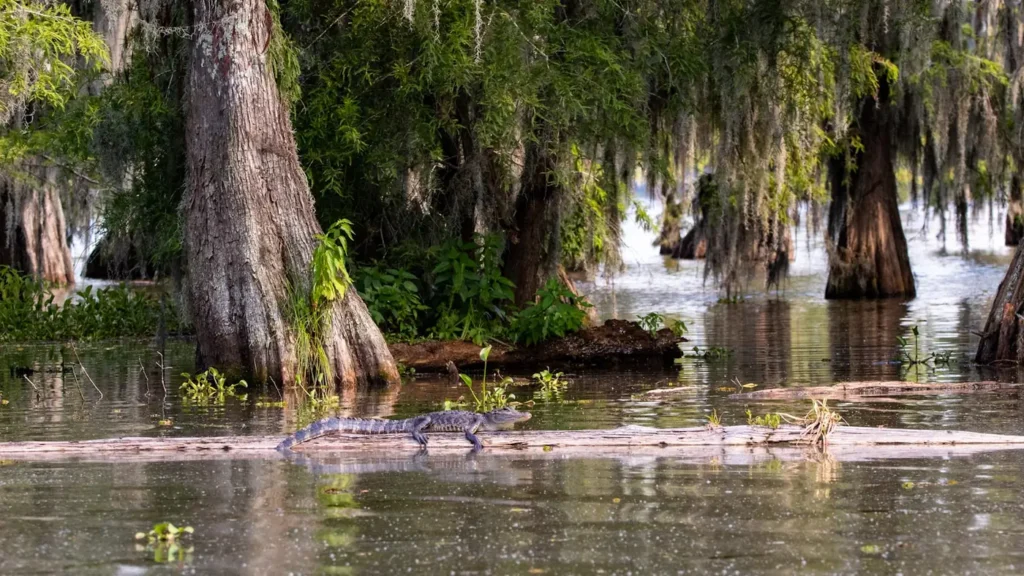
Cypress trunks and knees in the shallows of a Louisiana bayou
Gauge location. Map data © OpenStreetMap contributors.

Guides on the Crooked Bayou

Claimed profiles take booking requests. Unclaimed profiles are built from public records so the river is never empty; the guide can claim or remove one any time.

No guides listed yet

Guide or outfit this water? Create your profile. Listing is free, the commission is 10% or 7% with a premium profile, and premium profiles list first on this water.

About the Crooked Bayou

Crooked Bayou threads the broken marsh northwest of Lake Cuatro Caballo, deep in the Delacroix country of St. Bernard Parish. This is the interior of the Breton Sound estuary, a landscape of small lakes, connecting bayous and grass islands that changes shape from one decade to the next as the marsh erodes and is rebuilt. It lies less than an hour from downtown New Orleans, which is why Delacroix has supported guides and weekend anglers for generations, and why a bayou with no particular fame still sees skiffs on it most weeks of the year.

What makes this water worth a page is that it fishes across the whole salinity range. On a normal year it is brackish and produces redfish along every grass edge and point, with speckled trout in the deeper cuts and over any shell. After a wet spring, or when river diversions push fresh water through the basin, the same bayou will hold largemouth bass in the upper reaches while redfish drop toward the lakes. Guided trips work it with light spinning tackle and fly rods, poling the shallow edges for sighted redfish when the water is clean and switching to the deeper bends and junctions when wind or runoff takes the clarity away.

The gauge near Delacroix reports water temperature, stage, specific conductance and salinity, and in this part of the estuary the salinity reading is the single most useful number available to an angler. It tells you directly whether you are fishing a redfish-and-trout bayou or a bass-and-redfish bayou on any given week, and it moves considerably more than a newcomer expects. Stage matters too, because these marsh bayous are wind-driven rather than strictly tidal: a hard north wind in winter will pull water out of the marsh and strand the shallow routes, while a sustained south wind pushes it in and floods the grass. Read both before committing to a route.

This water needs a real photo

The photo at the top of this page is not Crooked Bayou.

It is a regional stand-in, honestly captioned but generic — we will not put a name to a river we cannot prove. Send us a photograph you took here and it replaces the stand-in, with your credit on it.

Add a photo of this water See the badges

Pioneer badgeUnclaimed

Add a photo of this water

Landscape, not fish — the water itself. Reviewed by hand before it appears. The first one published here earns the Pioneer badge.

Never published. It is how the badge is held for you until member accounts open.

Posting to Crooked Bayou.

JPG, PNG or WebP, up to 12 MB. Landscape orientation looks best at the top of the page. We resize it and strip the location data out of the file.

The name printed under the photo and on your badge. Leave blank to stay anonymous.

Reader photo license v1.0 — the short version:

  • You grant Guided Floats, LLC a non-exclusive, royalty-free license to publish, resize and crop your photo on guidedfloats.com and in GuidedFloats’ own social posts and apps. You keep the copyright and can use the photo anywhere else.
  • You confirm that you took the photo yourself, that publishing it does not infringe anyone else’s rights, and that anyone recognisable in it (or a parent or guardian, if they are under 18) is happy for it to appear here.
  • Credit is printed beside the photo wherever it appears on the site, using the credit name you give us. Leave it blank and we use your name; write “Anonymous” for no name. Your email address is never published.
  • Withdrawing is one email to hello@guidedfloats.com naming the photo. It comes off the site within 7 days.
Read the full license

Version 1.0, dated 6 September 2026. Applies to every photograph submitted to GuidedFloats through the contact form, a species page, or the community board.

1. What you give us

By ticking the box on the form you grant Guided Floats, LLC (“GuidedFloats”, “we”) a non-exclusive, worldwide, royalty-free license to store, copy, resize, crop and display your photograph on guidedfloats.com, in GuidedFloats’ own social media accounts and mobile apps, and in material that promotes the site itself, in connection with the fish, water or community feature you sent it in for. The license lasts until you withdraw it (section 4).

You keep the copyright. The license is not exclusive, so you can use the photo anywhere else and license it to anyone else. We will not sell your photo, license it on to anyone else on its own, or use it in paid advertising for a third party.

2. What you confirm

You confirm that you took the photograph yourself (or otherwise own the rights to it), that you have the right to grant this license, and that publishing the photo does not infringe anyone else’s copyright, privacy or other rights.

If any person is recognisable in the photo, you confirm that they have agreed to its being published here, and that a parent or guardian has agreed on behalf of anyone under 18. Please do not send photographs of other people’s catches, screenshots, or pictures copied from other websites or social media.

3. Credit

We print the credit name you give us beside the photo wherever it appears on the site, and record it as the photo’s creator in the page’s structured data. If you leave the credit blank we use the name you gave us on the form. Write “Anonymous” if you prefer no name at all. Your email address, phone number and the exact spot the photo was taken are never published.

4. Withdrawing the license

You can withdraw the license at any time by emailing hello@guidedfloats.com, or by using the contact form, and telling us which photo you mean. We will remove the photo from guidedfloats.com within 7 days of receiving your message and stop using it in anything new. Copies that are already outside our control — search-engine caches, social posts that have already gone out, printed material already produced — may take longer to disappear or may not be recallable, and we are not responsible for those.

5. What we may do

We choose which photos to publish and may decline any submission without giving a reason. We may crop, resize, sharpen or colour-correct a photo for display, and we may remove a photo at any time. We will not alter a photo in a way that misrepresents the fish, the water or you.

6. Your details

We keep your name, email address, the credit name, the water and date you gave us, and the network address the submission came from, with the submission record, as our evidence of this license. We hold that record for as long as the photo is published and for the retention period described in our privacy policy. Location data that your camera or phone embedded in the file is removed before the photo is published.

7. Versions

The version of this license you accepted is stored with your submission and printed with the photo. A later version does not apply to a photo you have already sent unless you agree to it.

Fished this water? Add a photo

Reviewed by hand before it appears. Pick the water, not the spot — we never publish exact locations.

Never published. We use it only if we need to ask about the photo.

Posting to Crooked Bayou.

JPG, PNG or WebP, up to 12 MB. We resize it and strip the location data out of the file.

The name shown under the photo. Leave blank to stay anonymous.

Reader photo license v1.0 — the short version:

  • You grant Guided Floats, LLC a non-exclusive, royalty-free license to publish, resize and crop your photo on guidedfloats.com and in GuidedFloats’ own social posts and apps. You keep the copyright and can use the photo anywhere else.
  • You confirm that you took the photo yourself, that publishing it does not infringe anyone else’s rights, and that anyone recognisable in it (or a parent or guardian, if they are under 18) is happy for it to appear here.
  • Credit is printed beside the photo wherever it appears on the site, using the credit name you give us. Leave it blank and we use your name; write “Anonymous” for no name. Your email address is never published.
  • Withdrawing is one email to hello@guidedfloats.com naming the photo. It comes off the site within 7 days.
Read the full license

Version 1.0, dated 6 September 2026. Applies to every photograph submitted to GuidedFloats through the contact form, a species page, or the community board.

1. What you give us

By ticking the box on the form you grant Guided Floats, LLC (“GuidedFloats”, “we”) a non-exclusive, worldwide, royalty-free license to store, copy, resize, crop and display your photograph on guidedfloats.com, in GuidedFloats’ own social media accounts and mobile apps, and in material that promotes the site itself, in connection with the fish, water or community feature you sent it in for. The license lasts until you withdraw it (section 4).

You keep the copyright. The license is not exclusive, so you can use the photo anywhere else and license it to anyone else. We will not sell your photo, license it on to anyone else on its own, or use it in paid advertising for a third party.

2. What you confirm

You confirm that you took the photograph yourself (or otherwise own the rights to it), that you have the right to grant this license, and that publishing the photo does not infringe anyone else’s copyright, privacy or other rights.

If any person is recognisable in the photo, you confirm that they have agreed to its being published here, and that a parent or guardian has agreed on behalf of anyone under 18. Please do not send photographs of other people’s catches, screenshots, or pictures copied from other websites or social media.

3. Credit

We print the credit name you give us beside the photo wherever it appears on the site, and record it as the photo’s creator in the page’s structured data. If you leave the credit blank we use the name you gave us on the form. Write “Anonymous” if you prefer no name at all. Your email address, phone number and the exact spot the photo was taken are never published.

4. Withdrawing the license

You can withdraw the license at any time by emailing hello@guidedfloats.com, or by using the contact form, and telling us which photo you mean. We will remove the photo from guidedfloats.com within 7 days of receiving your message and stop using it in anything new. Copies that are already outside our control — search-engine caches, social posts that have already gone out, printed material already produced — may take longer to disappear or may not be recallable, and we are not responsible for those.

5. What we may do

We choose which photos to publish and may decline any submission without giving a reason. We may crop, resize, sharpen or colour-correct a photo for display, and we may remove a photo at any time. We will not alter a photo in a way that misrepresents the fish, the water or you.

6. Your details

We keep your name, email address, the credit name, the water and date you gave us, and the network address the submission came from, with the submission record, as our evidence of this license. We hold that record for as long as the photo is published and for the retention period described in our privacy policy. Location data that your camera or phone embedded in the file is removed before the photo is published.

7. Versions

The version of this license you accepted is stored with your submission and printed with the photo. A later version does not apply to a photo you have already sent unless you agree to it.

Access

Delacroix - the end-of-the-road community and the traditional launch for this marsh.
Reggio - a St. Bernard Parish settlement upstream along the highway with additional access.
St. Bernard - the parish seat area, with lodging, fuel and services on the way down.
Lake Cuatro Caballo - the interior lake immediately southeast, fished on the same trip.
Lake Lery - a larger lake north of the bayou, reached through the same marsh.
New Orleans - under an hour northwest, and where most visiting anglers stay.
Breton Sound - the open estuary to the southeast that this marsh drains into.

Seasons

Spring: warming water and spreading redfish, with bass often present in the fresher upper reaches after a wet winter.
Summer: speckled trout move into the deeper cuts and open lakes while redfish work the grass early and late.
Fall: the strongest season, with clean water, schooling redfish on the shorelines and comfortable weather between fronts.
Winter: fish hold in the deepest bends and interior ponds, and strong north winds can empty the shallow marsh for days at a time.

From the water

No logged trips yet. Be the first to put this water on your map.

Log this water

Fished it or cleaned it? Log in or create a free account to log a trip with photos and earn the waterway badge.

Questions

What species can you catch on the Crooked Bayou?

Anglers target Black Drum, Blue Crab, Largemouth Bass, Red Drum, Sheepshead, Southern Flounder, Spotted Seatrout, Striped Mullet on the Crooked Bayou in Louisiana.

Where can you access the Crooked Bayou?

Delacroix - the end-of-the-road community and the traditional launch for this marsh. Reggio - a St. Bernard Parish settlement upstream along the highway with additional access. St. Bernard - the parish seat area, with lodging, fuel and services on the way down. Lake Cuatro Caballo - the interior lake immediately southeast, fished on the same trip. Lake Lery - a larger lake north of the bayou, reached through the same marsh. New Orleans - under an hour northwest, and where most visiting anglers stay. Breton Sound - the open estuary to the southeast that this marsh drains into.

When is the best time to fish the Crooked Bayou?

Spring: warming water and spreading redfish, with bass often present in the fresher upper reaches after a wet winter. Summer: speckled trout move into the deeper cuts and open lakes while redfish work the grass early and late. Fall: the strongest season, with clean water, schooling redfish on the shorelines and comfortable weather between fronts. Winter: fish hold in the deepest bends and interior ponds, and strong north winds can empty the shallow marsh for days at a time.

Where are the fishing regulations for the Crooked Bayou?

Regulations change by season and section. Read the current rules on the Louisiana agency site: https://www.wlf.louisiana.gov/page/fishing-regulations