Souris River Fishing Guides
The Mouse River, which loops down out of Saskatchewan across north-central North Dakota and back into Manitoba, holding strong northern pike water through the refuge reaches.
Guides on the Souris River
Claimed profiles take booking requests. Unclaimed profiles are built from public records so the river is never empty; the guide can claim or remove one any time.
No guides listed yet
Guide or outfit this water? Create your profile. Listing is free, the commission is 10% or 7% with a premium profile, and premium profiles list first on this water.
About the Souris River
The Souris is the river North Dakotans call the Mouse, and its shape is unlike anything else in the state. It rises in Saskatchewan, loops south into North Dakota in a long arc through Minot, swings back north past Westhope and returns to Canada, entering Manitoba within a few miles of the gauge. That great bend means the river flows north here, draining nearly seventeen thousand square miles by the time it leaves the country, and it has created an enormous corridor of marsh and backwater along the way.
Northern pike are the signature fish and the main reason anglers come. The slow current, dense aquatic vegetation and extensive backwaters are close to perfect pike habitat, and the lower river produces good numbers and respectable size. Walleye are present throughout and move well in spring, channel catfish occupy the deeper holes, and yellow perch, black crappie, largemouth and smallmouth bass fill the weedier and rockier margins. Goldeye, carp and freshwater drum are all common. The J. Clark Salyer National Wildlife Refuge covers a long stretch of the valley upstream of Westhope and is one of the most significant waterfowl areas on the continent.
The gauge near Westhope reports discharge and stage, and both matter on a river this flat. The Souris has a long history of serious flooding, most memorably in 2011, and the whole system is managed through a network of dams and reservoirs on both sides of the border, so flows reflect operating decisions as much as rainfall. A moderate reading means a slow, clear, weedy river ideal for working pike cover; a high one means fast, turbid water spread into the trees. The refuge reaches reward a slow approach with a boat or canoe, working the edges of the bulrush and cattail stands where the pike sit, rather than covering distance in open water.
This water needs a real photo
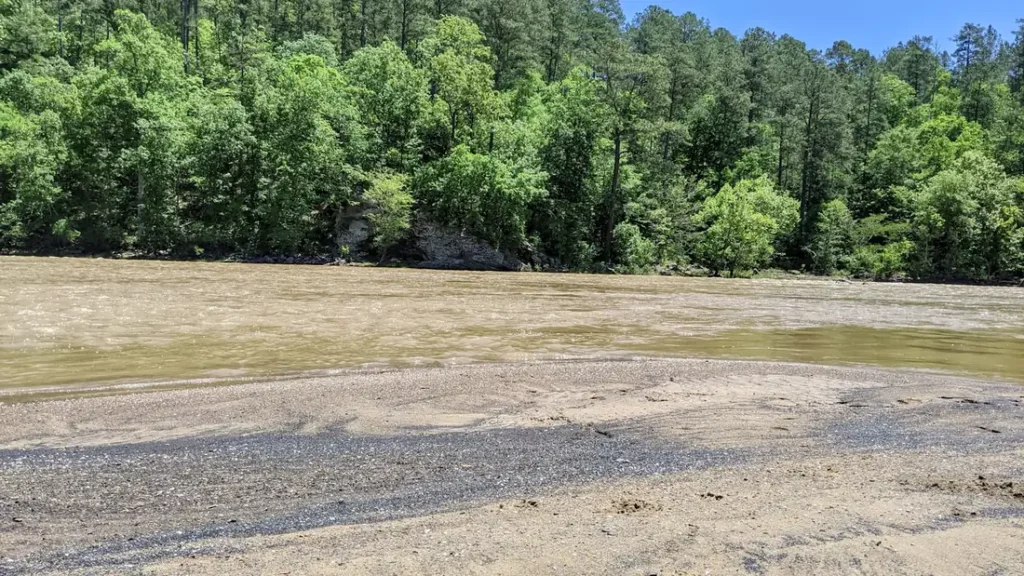
The photo at the top of this page is not Souris River.
It is a regional stand-in, honestly captioned but generic — we will not put a name to a river we cannot prove. Send us a photograph you took here and it replaces the stand-in, with your credit on it.
Add a photo of this water
Landscape, not fish — the water itself. Reviewed by hand before it appears. The first one published here earns the Pioneer badge.
Fished this water? Add a photo
Reviewed by hand before it appears. Pick the water, not the spot — we never publish exact locations.
Access
Westhope - the gauge town on the lower river, closest to the Canadian border and the usual access point.
J. Clark Salyer National Wildlife Refuge - the long refuge reach upstream, with the best public access and the strongest pike water.
Bottineau - the nearest town of size, with services and road access to the refuge reaches.
Upham - a village on the river within the refuge corridor, giving access to the marsh backwaters.
Lake Darling - the large upstream reservoir that governs flows on the lower river.
Minot - the city on the great bend upstream, the practical base for the middle river.
Kenmare - a town on the upper North Dakota reach above Lake Darling.
Seasons
Spring: the highest water of the year from snowmelt, with pike spawning in the flooded backwaters and walleye moving through the system.
Summer: slow, warm and weedy, with pike holding in the vegetation and catfish in the deeper holes, and the refuge reaches at their most productive.
Fall: cooling water concentrates pike and makes them aggressive, and the thinning weed cover makes the river far easier to fish.
Winter: frozen hard for months, with ice fishing the only option and the deeper holes and reservoir reaches the places to look.
From the water
No logged trips yet. Be the first to put this water on your map.
Log this water
Fished it or cleaned it? Log in or create a free account to log a trip with photos and earn the waterway badge.
Questions
What is the current flow on the Souris River?
As of Nov 2, 6:00 am, the USGS gauge SOURIS RIVER NEAR WESTHOPE, ND reads 403 cfs. Conditions update every 15 minutes.
What species can you catch on the Souris River?
Anglers target Black Crappie, Channel Catfish, Common Carp, Freshwater Drum, Goldeye, Largemouth Bass, Northern Pike, Smallmouth Bass, Walleye, Yellow Perch on the Souris River in North Dakota.
Where can you access the Souris River?
Westhope - the gauge town on the lower river, closest to the Canadian border and the usual access point. J. Clark Salyer National Wildlife Refuge - the long refuge reach upstream, with the best public access and the strongest pike water. Bottineau - the nearest town of size, with services and road access to the refuge reaches. Upham - a village on the river within the refuge corridor, giving access to the marsh backwaters. Lake Darling - the large upstream reservoir that governs flows on the lower river. Minot - the city on the great bend upstream, the practical base for the middle river. Kenm...
When is the best time to fish the Souris River?
Spring: the highest water of the year from snowmelt, with pike spawning in the flooded backwaters and walleye moving through the system. Summer: slow, warm and weedy, with pike holding in the vegetation and catfish in the deeper holes, and the refuge reaches at their most productive. Fall: cooling water concentrates pike and makes them aggressive, and the thinning weed cover makes the river far easier to fish. Winter: frozen hard for months, with ice fishing the only option and the deeper holes and reservoir reaches the places to look.
Where are the fishing regulations for the Souris River?
Regulations change by season and section. Read the current rules on the North Dakota agency site: https://gf.nd.gov/fishing