Little Fork River Fishing Guides
A remote far northern Minnesota river running to the Rainy River on the Ontario border, with strong smallmouth and walleye fishing and almost no development along its length.
Guides on the Little Fork River
Claimed profiles take booking requests. Unclaimed profiles are built from public records so the river is never empty; the guide can claim or remove one any time.
No guides listed yet
Guide or outfit this water? Create your profile. Listing is free, the commission is 10% or 7% with a premium profile, and premium profiles list first on this water.
About the Little Fork River
The Little Fork runs north through Koochiching County in the far north of Minnesota, draining a large, flat, heavily forested and very sparsely settled piece of country before joining the Rainy River near the Ontario border. It is a tannin-stained river flowing over sand, gravel and occasional bedrock ledges, with long quiet stretches broken by rapids that become significant at high water. The gauge at Littlefork sits near the lower end, not far above the Rainy confluence, and the river there is wide, strong and genuinely remote by the standards of the lower forty-eight.
Smallmouth bass and walleye carry the fishery. The smallmouth hold around the rock ledges and in the seams below the rapids, and because the river sees so little pressure the fishing can be exceptional for anglers willing to make the drive. Walleye are abundant and run to good size, particularly in the lower river where fish move up from the Rainy. Northern pike use the slower weedy margins, muskellunge are present in the lowest reaches, and lake sturgeon from the Rainy system enter the river, a population that is protected and carefully managed.
Remoteness is the defining practical fact. Services are thin, access is via a small number of road crossings and forest roads, and anyone floating the river should treat it as a wilderness trip rather than a day out. Spring runoff makes the rapids serious and the water cold enough to be dangerous. The gauge at Littlefork is the number to read, and summer low flow, while much safer, leaves rocky stretches that need careful lining or portaging. Anyone planning a float should leave a trip plan with somebody and carry more than they think they need, because help is a long way off and the stretches between road crossings are measured in hours rather than minutes.
This water needs a real photo
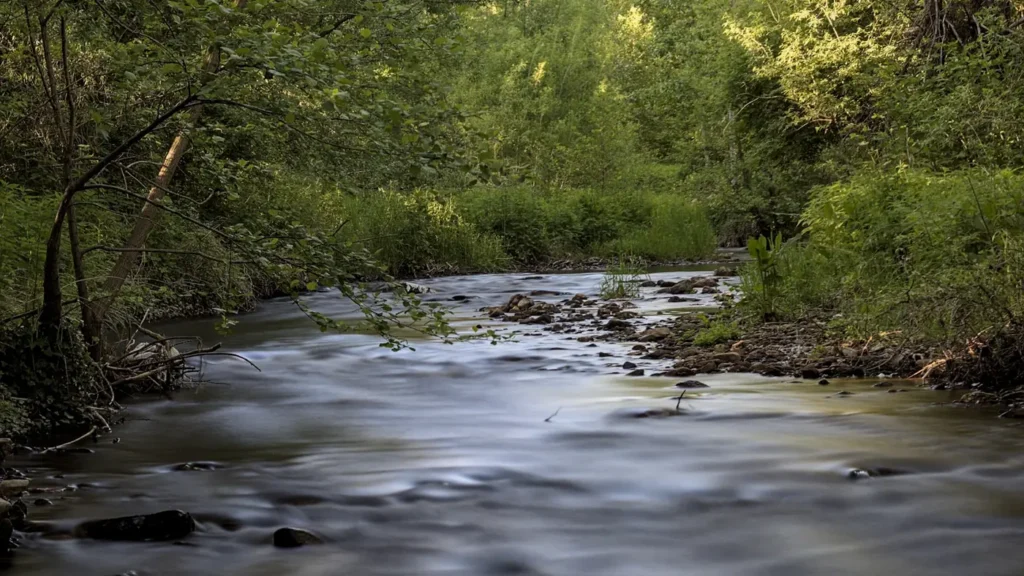
The photo at the top of this page is not Little Fork River.
It is a regional stand-in, honestly captioned but generic — we will not put a name to a river we cannot prove. Send us a photograph you took here and it replaces the stand-in, with your credit on it.
Add a photo of this water
Landscape, not fish — the water itself. Reviewed by hand before it appears. The first one published here earns the Pioneer badge.
Fished this water? Add a photo
Reviewed by hand before it appears. Pick the water, not the spot — we never publish exact locations.
Access
Littlefork - the gauge town and the main access point on the lower river, with the most services in the immediate area.
Rainy River confluence - the downstream end at the Ontario border, and the source of the larger walleye and the sturgeon.
Koochiching State Forest - the public land covering much of the corridor and the main source of legal access.
International Falls - the nearest city of size, the regional base for supplies, licences and shuttle arrangements.
Forest road crossings - the limited road accesses along the middle river, the practical put-ins for float trips.
Rapids reaches - the bedrock ledge sections that hold smallmouth and that become hazardous at spring flows.
Big Falls - upstream on the middle river, a traditional starting point for longer trips.
Seasons
Spring: high, cold and fast with the rapids at their most serious, and walleye moving up from the Rainy into the lower river.
Summer: the best season for smallmouth, with lower flows, warm stained water and excellent fishing for anglers prepared to travel.
Fall: cooling water concentrates walleye and brings the largest smallmouth onto the feed, with the corridor almost entirely empty of other anglers.
Winter: frozen hard for months, with the river effectively closed and activity limited to ice fishing on the Rainy downstream.
From the water
No logged trips yet. Be the first to put this water on your map.
Log this water
Fished it or cleaned it? Log in or create a free account to log a trip with photos and earn the waterway badge.
Questions
What is the current flow on the Little Fork River?
As of Nov 2, 7:30 am, the USGS gauge LITTLE FORK RIVER AT LITTLEFORK, MN reads 181 cfs. Conditions update every 15 minutes.
What species can you catch on the Little Fork River?
Anglers target Black Crappie, Burbot, Channel Catfish, Lake Sturgeon, Muskellunge, Northern Pike, Smallmouth Bass, Walleye, White Sucker, Yellow Perch on the Little Fork River in Minnesota.
Where can you access the Little Fork River?
Littlefork - the gauge town and the main access point on the lower river, with the most services in the immediate area. Rainy River confluence - the downstream end at the Ontario border, and the source of the larger walleye and the sturgeon. Koochiching State Forest - the public land covering much of the corridor and the main source of legal access. International Falls - the nearest city of size, the regional base for supplies, licences and shuttle arrangements. Forest road crossings - the limited road accesses along the middle river, the practical put-ins for float trips. Rapids reaches - the...
When is the best time to fish the Little Fork River?
Spring: high, cold and fast with the rapids at their most serious, and walleye moving up from the Rainy into the lower river. Summer: the best season for smallmouth, with lower flows, warm stained water and excellent fishing for anglers prepared to travel. Fall: cooling water concentrates walleye and brings the largest smallmouth onto the feed, with the corridor almost entirely empty of other anglers. Winter: frozen hard for months, with the river effectively closed and activity limited to ice fishing on the Rainy downstream.
Where are the fishing regulations for the Little Fork River?
Regulations change by season and section. Read the current rules on the Minnesota agency site: https://www.dnr.state.mn.us/fishing/index.html