Beta

GuidedFloats is in beta. The full site launches March 1, 2027. The mobile app follows.

Guides: claim before March 1, 2027 and your first full season of Premium is free. Claim your founding spot →

HomeWatersDelaware › Indian River
Estuary · Southeastern Delaware, Sussex County, the tidal river above Indian River Bay and the Atlantic inlet · Delaware

Indian River Fishing Guides

The tidal Delaware estuary above Indian River Bay, running to a jettied Atlantic inlet that funnels flounder, striped bass and bluefish through the season.
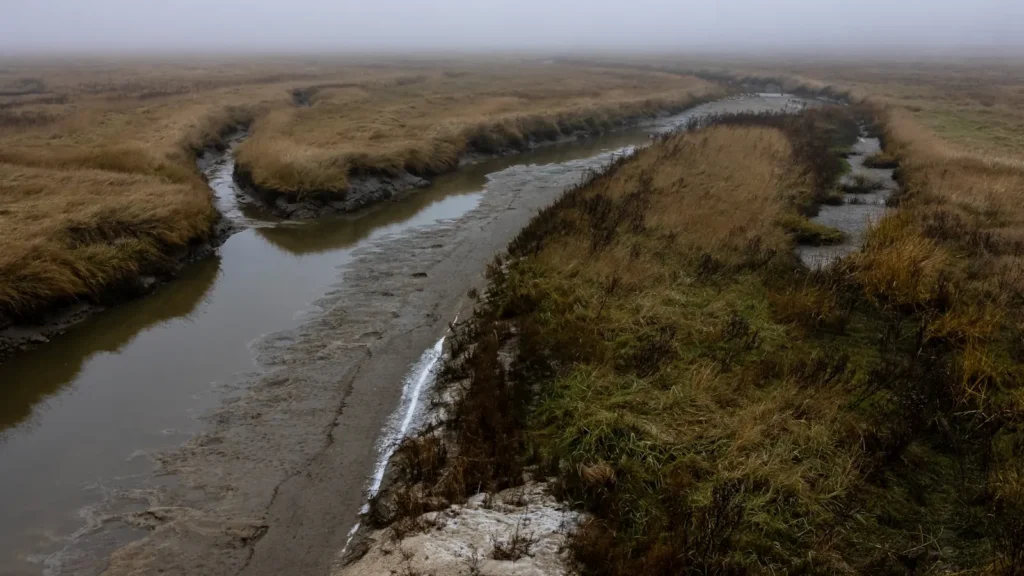
A muddy tidal creek winding through marshland on a foggy morning
Gauge location. Map data © OpenStreetMap contributors.

Guides on the Indian River

Claimed profiles take booking requests. Unclaimed profiles are built from public records so the river is never empty; the guide can claim or remove one any time.

No guides listed yet

Guide or outfit this water? Create your profile. Listing is free, the commission is 10% or 7% with a premium profile, and premium profiles list first on this water.

About the Indian River

The Indian River is tidal for essentially its whole fishable length, running east through Sussex County into Indian River Bay and out to the Atlantic through Indian River Inlet. The gauge at Rosedale Beach sits in the brackish middle water, well above the bay but fully under tidal influence, and it reports water surface elevation rather than discharge, which is the normal pattern for an estuary station and the right number to watch here.

The inlet is what makes the system. It is jettied, deep and fast, and it moves an enormous volume of water on each tide, concentrating bait and the fish that follow it. Striped bass use the inlet and the rips inside it heavily, and the run of fish through spring and again in late autumn is the best-known fishing in this part of Delaware. Bluefish arrive with warming water and can be anywhere in the system.

Summer flounder are the other mainstay, drifted over the channel edges and the sand flats through the warm months, and the bay behind the inlet is prime flounder ground. Weakfish, black drum, Atlantic croaker and northern kingfish all use the brackish water seasonally. Tautog hold on the jetty rock and the hard structure, black sea bass move in from the ocean, and white perch and American eel occupy the fresher water upstream. Blue crab are taken throughout.

Tide is everything. The current through the inlet is genuinely dangerous for small boats at peak flow, and most guides plan trips around slack water. The upper river is calmer and suits kayaks and small skiffs. Wind against tide builds steep water in the bay quickly, so the forecast matters as much as the tide table.

This water needs a real photo

The photo at the top of this page is not Indian River.

It is a regional stand-in, honestly captioned but generic — we will not put a name to a river we cannot prove. Send us a photograph you took here and it replaces the stand-in, with your credit on it.

Add a photo of this water See the badges

Pioneer badgeUnclaimed

Add a photo of this water

Landscape, not fish — the water itself. Reviewed by hand before it appears. The first one published here earns the Pioneer badge.

Never published. It is how the badge is held for you until member accounts open.

Posting to Indian River.

JPG, PNG or WebP, up to 12 MB. Landscape orientation looks best at the top of the page. We resize it and strip the location data out of the file.

The name printed under the photo and on your badge. Leave blank to stay anonymous.

Reader photo license v1.0 — the short version:

  • You grant Guided Floats, LLC a non-exclusive, royalty-free license to publish, resize and crop your photo on guidedfloats.com and in GuidedFloats’ own social posts and apps. You keep the copyright and can use the photo anywhere else.
  • You confirm that you took the photo yourself, that publishing it does not infringe anyone else’s rights, and that anyone recognisable in it (or a parent or guardian, if they are under 18) is happy for it to appear here.
  • Credit is printed beside the photo wherever it appears on the site, using the credit name you give us. Leave it blank and we use your name; write “Anonymous” for no name. Your email address is never published.
  • Withdrawing is one email to hello@guidedfloats.com naming the photo. It comes off the site within 7 days.
Read the full license

Version 1.0, dated 6 September 2026. Applies to every photograph submitted to GuidedFloats through the contact form, a species page, or the community board.

1. What you give us

By ticking the box on the form you grant Guided Floats, LLC (“GuidedFloats”, “we”) a non-exclusive, worldwide, royalty-free license to store, copy, resize, crop and display your photograph on guidedfloats.com, in GuidedFloats’ own social media accounts and mobile apps, and in material that promotes the site itself, in connection with the fish, water or community feature you sent it in for. The license lasts until you withdraw it (section 4).

You keep the copyright. The license is not exclusive, so you can use the photo anywhere else and license it to anyone else. We will not sell your photo, license it on to anyone else on its own, or use it in paid advertising for a third party.

2. What you confirm

You confirm that you took the photograph yourself (or otherwise own the rights to it), that you have the right to grant this license, and that publishing the photo does not infringe anyone else’s copyright, privacy or other rights.

If any person is recognisable in the photo, you confirm that they have agreed to its being published here, and that a parent or guardian has agreed on behalf of anyone under 18. Please do not send photographs of other people’s catches, screenshots, or pictures copied from other websites or social media.

3. Credit

We print the credit name you give us beside the photo wherever it appears on the site, and record it as the photo’s creator in the page’s structured data. If you leave the credit blank we use the name you gave us on the form. Write “Anonymous” if you prefer no name at all. Your email address, phone number and the exact spot the photo was taken are never published.

4. Withdrawing the license

You can withdraw the license at any time by emailing hello@guidedfloats.com, or by using the contact form, and telling us which photo you mean. We will remove the photo from guidedfloats.com within 7 days of receiving your message and stop using it in anything new. Copies that are already outside our control — search-engine caches, social posts that have already gone out, printed material already produced — may take longer to disappear or may not be recallable, and we are not responsible for those.

5. What we may do

We choose which photos to publish and may decline any submission without giving a reason. We may crop, resize, sharpen or colour-correct a photo for display, and we may remove a photo at any time. We will not alter a photo in a way that misrepresents the fish, the water or you.

6. Your details

We keep your name, email address, the credit name, the water and date you gave us, and the network address the submission came from, with the submission record, as our evidence of this license. We hold that record for as long as the photo is published and for the retention period described in our privacy policy. Location data that your camera or phone embedded in the file is removed before the photo is published.

7. Versions

The version of this license you accepted is stored with your submission and printed with the photo. A later version does not apply to a photo you have already sent unless you agree to it.

Fished this water? Add a photo

Reviewed by hand before it appears. Pick the water, not the spot — we never publish exact locations.

Never published. We use it only if we need to ask about the photo.

Posting to Indian River.

JPG, PNG or WebP, up to 12 MB. We resize it and strip the location data out of the file.

The name shown under the photo. Leave blank to stay anonymous.

Reader photo license v1.0 — the short version:

  • You grant Guided Floats, LLC a non-exclusive, royalty-free license to publish, resize and crop your photo on guidedfloats.com and in GuidedFloats’ own social posts and apps. You keep the copyright and can use the photo anywhere else.
  • You confirm that you took the photo yourself, that publishing it does not infringe anyone else’s rights, and that anyone recognisable in it (or a parent or guardian, if they are under 18) is happy for it to appear here.
  • Credit is printed beside the photo wherever it appears on the site, using the credit name you give us. Leave it blank and we use your name; write “Anonymous” for no name. Your email address is never published.
  • Withdrawing is one email to hello@guidedfloats.com naming the photo. It comes off the site within 7 days.
Read the full license

Version 1.0, dated 6 September 2026. Applies to every photograph submitted to GuidedFloats through the contact form, a species page, or the community board.

1. What you give us

By ticking the box on the form you grant Guided Floats, LLC (“GuidedFloats”, “we”) a non-exclusive, worldwide, royalty-free license to store, copy, resize, crop and display your photograph on guidedfloats.com, in GuidedFloats’ own social media accounts and mobile apps, and in material that promotes the site itself, in connection with the fish, water or community feature you sent it in for. The license lasts until you withdraw it (section 4).

You keep the copyright. The license is not exclusive, so you can use the photo anywhere else and license it to anyone else. We will not sell your photo, license it on to anyone else on its own, or use it in paid advertising for a third party.

2. What you confirm

You confirm that you took the photograph yourself (or otherwise own the rights to it), that you have the right to grant this license, and that publishing the photo does not infringe anyone else’s copyright, privacy or other rights.

If any person is recognisable in the photo, you confirm that they have agreed to its being published here, and that a parent or guardian has agreed on behalf of anyone under 18. Please do not send photographs of other people’s catches, screenshots, or pictures copied from other websites or social media.

3. Credit

We print the credit name you give us beside the photo wherever it appears on the site, and record it as the photo’s creator in the page’s structured data. If you leave the credit blank we use the name you gave us on the form. Write “Anonymous” if you prefer no name at all. Your email address, phone number and the exact spot the photo was taken are never published.

4. Withdrawing the license

You can withdraw the license at any time by emailing hello@guidedfloats.com, or by using the contact form, and telling us which photo you mean. We will remove the photo from guidedfloats.com within 7 days of receiving your message and stop using it in anything new. Copies that are already outside our control — search-engine caches, social posts that have already gone out, printed material already produced — may take longer to disappear or may not be recallable, and we are not responsible for those.

5. What we may do

We choose which photos to publish and may decline any submission without giving a reason. We may crop, resize, sharpen or colour-correct a photo for display, and we may remove a photo at any time. We will not alter a photo in a way that misrepresents the fish, the water or you.

6. Your details

We keep your name, email address, the credit name, the water and date you gave us, and the network address the submission came from, with the submission record, as our evidence of this license. We hold that record for as long as the photo is published and for the retention period described in our privacy policy. Location data that your camera or phone embedded in the file is removed before the photo is published.

7. Versions

The version of this license you accepted is stored with your submission and printed with the photo. A later version does not apply to a photo you have already sent unless you agree to it.

Access

Rosedale Beach - the gauge reach, with access to the tidal middle river.
Indian River Inlet - the Delaware Seashore State Park access and the jetties.
Massey Landing - a public ramp on the lower bay.
Oak Orchard - a long-established landing on the north shore of the river.
Millsboro - the head of tide and the upper end of the fishable river.
Holts Landing State Park - bay access and a shallow-water launch.
Delaware Seashore State Park - the main developed access to inlet and ocean.

Seasons

Spring: striped bass through the inlet and the first weakfish and croaker in the bay.
Summer: flounder on the flats and channel edges, bluefish through the inlet.
Fall: the strongest striped bass fishing of the year as fish stage and move out.
Winter: quiet, with white perch and holdover fish in the deeper upriver water.

From the water

No logged trips yet. Be the first to put this water on your map.

Log this water

Fished it or cleaned it? Log in or create a free account to log a trip with photos and earn the waterway badge.

Questions

What species can you catch on the Indian River?

Anglers target American Eel, Atlantic Croaker, Black Drum, Black Sea Bass, Blue Crab, Bluefish, Northern Kingfish, Striped Bass, Summer Flounder, Tautog, Weakfish, White Perch on the Indian River in Delaware.

Where can you access the Indian River?

Rosedale Beach - the gauge reach, with access to the tidal middle river. Indian River Inlet - the Delaware Seashore State Park access and the jetties. Massey Landing - a public ramp on the lower bay. Oak Orchard - a long-established landing on the north shore of the river. Millsboro - the head of tide and the upper end of the fishable river. Holts Landing State Park - bay access and a shallow-water launch. Delaware Seashore State Park - the main developed access to inlet and ocean.

When is the best time to fish the Indian River?

Spring: striped bass through the inlet and the first weakfish and croaker in the bay. Summer: flounder on the flats and channel edges, bluefish through the inlet. Fall: the strongest striped bass fishing of the year as fish stage and move out. Winter: quiet, with white perch and holdover fish in the deeper upriver water.

Where are the fishing regulations for the Indian River?

Regulations change by season and section. Read the current rules on the Delaware agency site: https://dnrec.delaware.gov/fish-wildlife/fishing/regulations/