Fishes St. Lucie Estuary
Estuary · Treasure Coast · Florida
St. Lucie Estuary Fishing Guides
The Stuart estuary where the St. Lucie River meets the Indian River Lagoon and the St. Lucie Inlet, with snook, tarpon and redfish and a gauge reading temperature and salinity.
Gauge location. Map data © OpenStreetMap contributors.
Guides on the St. Lucie Estuary
Claimed profiles take booking requests. Unclaimed profiles are built from public records so the river is never empty; the guide can claim or remove one any time.
About the St. Lucie Estuary
The St. Lucie Estuary is where the North and South Forks of the St. Lucie River come together at Stuart, join the Indian River Lagoon, and reach the Atlantic through the St. Lucie Inlet. It is one of the most productive and most closely watched estuaries in Florida, and the gauge at Steele Point on A1A is part of the reason. It reports water temperature and specific conductance as well as stage, which makes it genuinely useful for reading the estuary rather than just the tide.
Salinity is the whole story here. The estuary sits at the receiving end of the C-44 canal and the Lake Okeechobee discharge system, and when releases run heavy the water freshens, darkens and pushes the fish toward the inlet. When releases stop, salinity climbs back, the water clears, and the fishery reassembles across the flats and around the bridges. Guides who work this water check conductance the way trout guides check flow.
Snook are the signature fish, holding on the bridge pilings, seawalls and dock lights through the warm months and stacking near the inlet in summer. Redfish and spotted seatrout work the grass flats and oyster bars on the lagoon side. Tarpon move through from late spring into summer and are fished around the inlet and the deeper channels. Sheepshead, black drum, mangrove snapper and jacks fill in the rest of the calendar.
Access is good on both the river and the lagoon side, with ramps in Stuart, Port Salerno and Jensen Beach, and the fishery is small enough that a skiff can cover most of it in a tide. Anglers planning a trip should also watch the wind, since a hard easterly stacks water into the estuary and pushes clarity down even when discharge is off.
This water needs a real photo
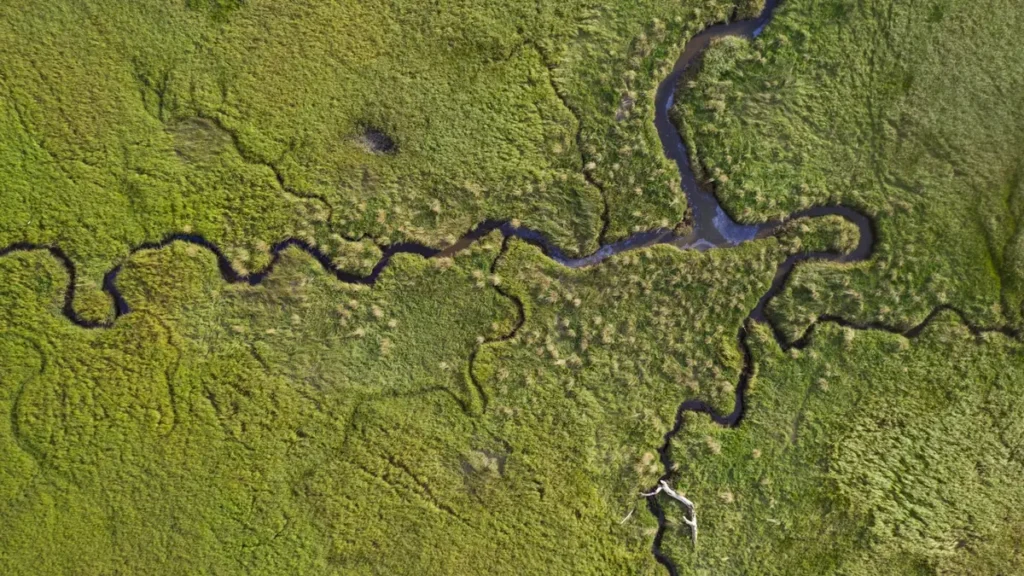
The photo at the top of this page is not St. Lucie Estuary.
It is a regional stand-in, honestly captioned but generic — we will not put a name to a river we cannot prove. Send us a photograph you took here and it replaces the stand-in, with your credit on it.
Pioneer badgeUnclaimed
Add a photo of this water
Landscape, not fish — the water itself. Reviewed by hand before it appears. The first one published here earns the Pioneer badge.
Fished this water? Add a photo
Reviewed by hand before it appears. Pick the water, not the spot — we never publish exact locations.
Access
Stuart: Sandsprit Park ramp, the main launch for the lower estuary.
Port Salerno: Manatee Pocket access close to the inlet.
Jensen Beach: causeway ramps and bank access on the lagoon side.
Roosevelt Bridge: bank and pier fishing in downtown Stuart.
Leighton Park: launch on the North Fork for the upper estuary.
Halpatiokee Regional Park: South Fork access for smaller boats and kayaks.
Note: check C-44 discharge status. Heavy releases move the fish toward the inlet.
Seasons
Winter: clearest water, sheepshead and black drum on structure, trout on the flats.
Spring: snook move out toward the inlet and tarpon begin to show.
Summer: peak snook and tarpon, but the highest risk of freshwater discharge.
Fall: salinity recovers, redfish push the bars, and the flats fish well again.
From the water
No logged trips yet. Be the first to put this water on your map.
Log this water
Fished it or cleaned it? Log in or create a free account to log a trip with photos and earn the waterway badge.
Questions
What species can you catch on the St. Lucie Estuary?
Anglers target Black Drum, Common Snook, Crevalle Jack, Ladyfish, Mangrove Snapper, Red Drum, Sheepshead, Spotted Seatrout, Tarpon on the St. Lucie Estuary in Florida.
Are there fishing guides on the St. Lucie Estuary?
GuidedFloats lists 3 guides and outfitters on the St. Lucie Estuary. Claimed profiles accept booking requests; unclaimed profiles are built from public records and link to the business.
Where can you access the St. Lucie Estuary?
Stuart: Sandsprit Park ramp, the main launch for the lower estuary. Port Salerno: Manatee Pocket access close to the inlet. Jensen Beach: causeway ramps and bank access on the lagoon side. Roosevelt Bridge: bank and pier fishing in downtown Stuart. Leighton Park: launch on the North Fork for the upper estuary. Halpatiokee Regional Park: South Fork access for smaller boats and kayaks. Note: check C-44 discharge status. Heavy releases move the fish toward the inlet.
When is the best time to fish the St. Lucie Estuary?
Winter: clearest water, sheepshead and black drum on structure, trout on the flats. Spring: snook move out toward the inlet and tarpon begin to show. Summer: peak snook and tarpon, but the highest risk of freshwater discharge. Fall: salinity recovers, redfish push the bars, and the flats fish well again.
Where are the fishing regulations for the St. Lucie Estuary?
Regulations change by season and section. Read the current rules on the Florida agency site: https://myfwc.com/fishing/saltwater/recreational/