Merrimack River Estuary Fishing Guides
The tidal Merrimack at Newburyport, a famous striped bass estuary where a big river meets the Gulf of Maine between Salisbury and Plum Island.
Guides on the Merrimack River Estuary
Claimed profiles take booking requests. Unclaimed profiles are built from public records so the river is never empty; the guide can claim or remove one any time.
No guides listed yet
Guide or outfit this water? Create your profile. Listing is free, the commission is 10% or 7% with a premium profile, and premium profiles list first on this water.
About the Merrimack River Estuary
The Merrimack drains a very large piece of New Hampshire and northeastern Massachusetts, and it finishes at Newburyport in one of the best known striped bass estuaries in New England. The last few miles run between the Salisbury shore and Plum Island before squeezing through the mouth into the Gulf of Maine, and the geometry does most of the work: a big river carrying a lot of water meets a strong ocean tide in a narrow outlet, and the current that results concentrates bait and fish in a way few places on the coast can match. The surrounding country is salt marsh, barrier beach and the old port town itself.
Striped bass are the fishery that made the river famous. They enter in the spring, hold through the summer on the channel edges and around the mouth, and feed hard in the autumn as bait leaves the marshes, and the river produces large fish as well as numbers. Bluefish follow the warm water in. American shad run up the river in late spring and are a fishery in their own right for anglers who want them. Winter flounder use the deeper holes in the cooler months, summer flounder work the sand on the ocean side, white perch live in the brackish reaches year round, and menhaden and eel make up much of the forage. Boats dominate, but Plum Island, the Salisbury beachfront and the jetties give shore anglers real options.
The gauge at Newburyport reports stage and no temperature, so the tide is the number it gives you and the thermal picture has to come from elsewhere. That is less of a handicap here than on most estuaries, because the fishing is so strongly tide-driven: the stage trace tells you when the current will run hardest through the mouth, and the hard-running stages of the tide are when the fish feed. Plan a trip around the tide, use the season to tell you which species to expect, and treat the mouth with respect, because the outlet is genuinely dangerous in a running tide against an onshore wind.
This water needs a real photo
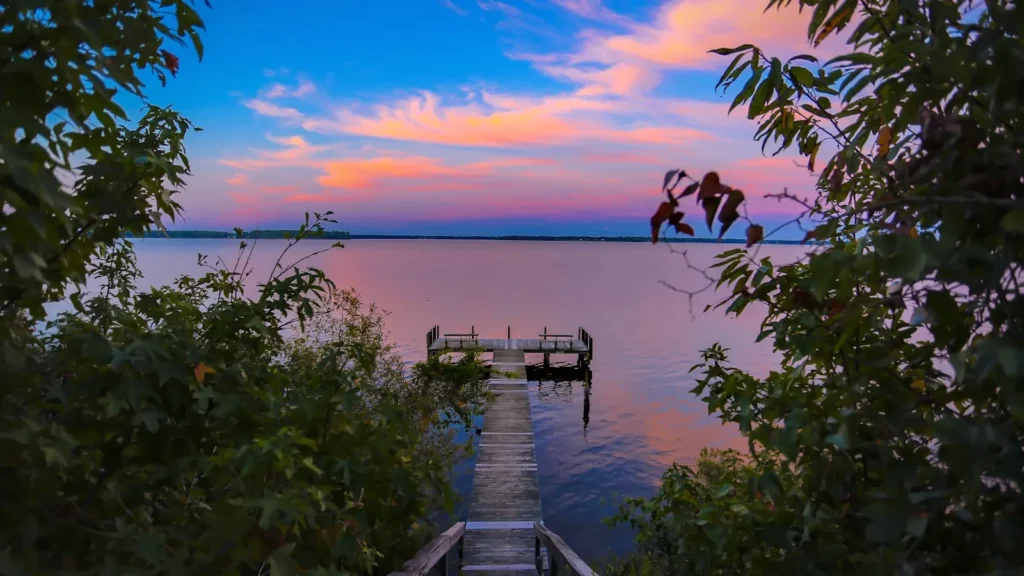
The photo at the top of this page is not Merrimack River Estuary.
It is a regional stand-in, honestly captioned but generic — we will not put a name to a river we cannot prove. Send us a photograph you took here and it replaces the stand-in, with your credit on it.
Add a photo of this water
Landscape, not fish — the water itself. Reviewed by hand before it appears. The first one published here earns the Pioneer badge.
Fished this water? Add a photo
Reviewed by hand before it appears. Pick the water, not the spot — we never publish exact locations.
Access
Newburyport - the port town at the gauge, with launches, tackle, charters and strong shoreline access.
Plum Island - the barrier island on the south side of the mouth, fished hard from the beach and the jetty.
Salisbury - the town on the north shore, with beach access and the north jetty.
Merrimack River mouth - the outlet itself, the most productive and the most hazardous water in the system.
Joppa Flats - the broad flats inside the mouth, a classic fly fishing area on the right tide.
Amesbury - the upstream town where the estuary meets the river proper.
Gulf of Maine - the open water beyond the mouth, with the inshore fishery the charters work.
Seasons
Spring: striped bass enter the river and the American shad run begins, with winter flounder still available in the deeper holes.
Summer: steady striper fishing on the channel edges and around the mouth, with bluefish and fluke joining in and night tides best for larger bass.
Fall: the best of the year, as bait leaves the marshes and bass and bluefish feed hard through the mouth on the dropping tide.
Winter: cold and quiet, with the estuary largely left alone and winter flounder the only dependable option.
From the water
No logged trips yet. Be the first to put this water on your map.
Log this water
Fished it or cleaned it? Log in or create a free account to log a trip with photos and earn the waterway badge.
Questions
What species can you catch on the Merrimack River Estuary?
Anglers target American Eel, American Shad, Atlantic Menhaden, Bluefish, Striped Bass, Summer Flounder, White Perch, Winter Flounder on the Merrimack River Estuary in Massachusetts.
Where can you access the Merrimack River Estuary?
Newburyport - the port town at the gauge, with launches, tackle, charters and strong shoreline access. Plum Island - the barrier island on the south side of the mouth, fished hard from the beach and the jetty. Salisbury - the town on the north shore, with beach access and the north jetty. Merrimack River mouth - the outlet itself, the most productive and the most hazardous water in the system. Joppa Flats - the broad flats inside the mouth, a classic fly fishing area on the right tide. Amesbury - the upstream town where the estuary meets the river proper. Gulf of Maine - the open water beyond...
When is the best time to fish the Merrimack River Estuary?
Spring: striped bass enter the river and the American shad run begins, with winter flounder still available in the deeper holes. Summer: steady striper fishing on the channel edges and around the mouth, with bluefish and fluke joining in and night tides best for larger bass. Fall: the best of the year, as bait leaves the marshes and bass and bluefish feed hard through the mouth on the dropping tide. Winter: cold and quiet, with the estuary largely left alone and winter flounder the only dependable option.
Where are the fishing regulations for the Merrimack River Estuary?
Regulations change by season and section. Read the current rules on the Massachusetts agency site: https://www.mass.gov/recreational-saltwater-fishing