Fishes North Santee River, South Santee River
Estuary · Santee Delta · South Carolina
North Santee River Fishing Guides
The northern arm of the Santee delta below Jamestown, a maze of old rice fields and tidal marsh running to Winyah Bay, with redfish, trout and a strong striped bass history.
Gauge location. Map data © OpenStreetMap contributors.
Guides on the North Santee River
Claimed profiles take booking requests. Unclaimed profiles are built from public records so the river is never empty; the guide can claim or remove one any time.
About the North Santee River
The North Santee is one of the two arms the Santee River splits into below Jamestown before reaching the Atlantic between Georgetown and McClellanville. The gauge near North Santee sits in the lower delta, in a landscape of abandoned rice fields, tidal creeks and spartina marsh that is among the most extensive estuarine habitat in South Carolina. Much of the surrounding land is protected within the Santee Coastal Reserve and the Santee Delta Wildlife Management Area.
The fishery is layered by salinity and season. Red drum are the everyday target, working the flooded grass on high water and the creek mouths and drops on the fall. Spotted seatrout hold in the deeper creeks and are strongest from autumn into early winter. Southern flounder work the sandy edges and creek confluences in the warm months. Black drum and sheepshead relate to the hard structure, which in this delta usually means old rice-field trunks and the remnants of the dike system.
Striped bass are the historic fish here. The Santee system supported a famous landlocked and migratory striper fishery, and while the runs are a fraction of what they were, stripers still move into the lower river and are managed with care. In the fresher water above the salt wedge, largemouth bass, bluegill and catfish take over.
Flow out of the upper basin is regulated, and freshwater releases shift the salt wedge a long way up or down the delta. That, plus a tidal range of several feet, means the same creek can fish completely differently between two visits. Local knowledge counts for a lot in this water. The South Santee arm and Winyah Bay are both within easy running distance, which gives anglers somewhere to go when a hard freshwater release makes the North Santee unproductive.
This water needs a real photo
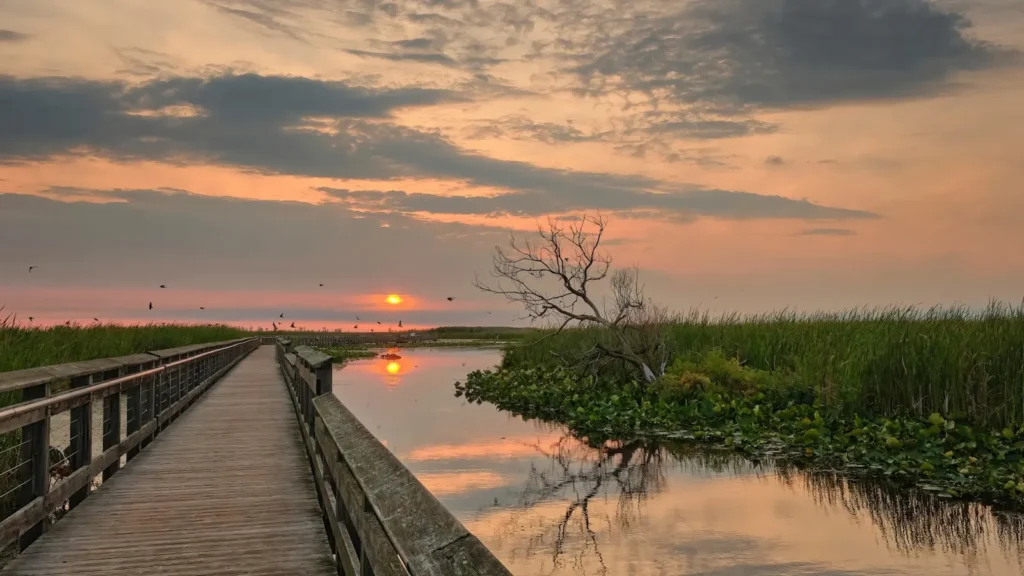
The photo at the top of this page is not North Santee River.
It is a regional stand-in, honestly captioned but generic — we will not put a name to a river we cannot prove. Send us a photograph you took here and it replaces the stand-in, with your credit on it.
Pioneer badgeUnclaimed
Add a photo of this water
Landscape, not fish — the water itself. Reviewed by hand before it appears. The first one published here earns the Pioneer badge.
Fished this water? Add a photo
Reviewed by hand before it appears. Pick the water, not the spot — we never publish exact locations.
Access
South Santee: ramp off Highway 17 with access to both delta arms.
McClellanville: town landing with access to the southern marsh.
Georgetown: ramps at the top of Winyah Bay to the north.
Santee Coastal Reserve: limited public access and paddle launches.
Jamestown: upper river access above the delta split.
Bank fishing is very limited. This is a boat and kayak fishery.
Note: tidal range is several feet and the creeks drain hard. Watch the stage.
Seasons
Winter: clear cold water, trout in the deep creeks, redfish schooled up.
Spring: warming marsh, redfish spread out, and the striper movement begins.
Summer: hot and buggy, flounder on the edges, best on the early tides.
Fall: the peak, redfish flooding the grass and trout stacked in the creeks.
From the water
No logged trips yet. Be the first to put this water on your map.
Log this water
Fished it or cleaned it? Log in or create a free account to log a trip with photos and earn the waterway badge.
Questions
What species can you catch on the North Santee River?
Anglers target Black Drum, Bluegill, Channel Catfish, Largemouth Bass, Red Drum, Sheepshead, Southern Flounder, Spotted Seatrout, Striped Bass on the North Santee River in South Carolina.
Are there fishing guides on the North Santee River?
GuidedFloats lists 1 guide and outfitters on the North Santee River. Claimed profiles accept booking requests; unclaimed profiles are built from public records and link to the business.
Where can you access the North Santee River?
South Santee: ramp off Highway 17 with access to both delta arms. McClellanville: town landing with access to the southern marsh. Georgetown: ramps at the top of Winyah Bay to the north. Santee Coastal Reserve: limited public access and paddle launches. Jamestown: upper river access above the delta split. Bank fishing is very limited. This is a boat and kayak fishery. Note: tidal range is several feet and the creeks drain hard. Watch the stage.
When is the best time to fish the North Santee River?
Winter: clear cold water, trout in the deep creeks, redfish schooled up. Spring: warming marsh, redfish spread out, and the striper movement begins. Summer: hot and buggy, flounder on the edges, best on the early tides. Fall: the peak, redfish flooding the grass and trout stacked in the creeks.
Where are the fishing regulations for the North Santee River?
Regulations change by season and section. Read the current rules on the South Carolina agency site: https://www.dnr.sc.gov/regulations.html