Float Trip Packing List: What to Bring
A practical float trip packing list for guided fishing floats and canoe floats: sun gear, footwear, dry bag, license, layers, and what to leave home.
Most of what goes wrong on a float trip is a packing mistake. Sunburned shins, a phone at the bottom of the river, flip flops floating away in the first riffle, a license left on the kitchen counter. None of it is complicated to avoid. This float trip packing list covers a guided fishing float in a drift boat or raft and a recreational canoe or kayak float, with notes on where the two differ. If you are not sure which kind of trip you booked, start with what a float trip is and come back.
The short list
If you read nothing else, bring these.
- Fishing license, printed or saved offline on your phone
- Polarized sunglasses
- Sun protection: hat, sunscreen, and a long-sleeve sun shirt
- Shoes that strap on and can get wet
- A rain shell, even if the forecast is clear
- A dry bag for phone, keys, and wallet
- Water, more than you think
- Cash for the tip and the shuttle
Sun protection
A river doubles the sun. You get it from above and reflected off the water, for eight hours, with nothing to stand under. Pack a wide-brim hat or a cap with a neck flap, sunscreen you will actually reapply (a stick is easier in a boat than a bottle), and a long-sleeve hooded sun shirt. The sun hoodie is the single most useful piece of clothing on this list. It keeps you cooler than bare skin in July, and it means you only have to sunscreen your hands, face, and neck.
Do not skip the backs of your hands and the tops of your feet. Those are the two spots that burn on a boat and the two spots everyone forgets.
Footwear
No flip flops. Not on a guided trip, not on a canoe float, not ever. They come off in current, they offer no grip on wet rock, and every guide has a story about a client walking barefoot over a gravel bar because a sandal floated away at the put-in.
What works:
- Wet-wading shoes or sandals with a heel strap for summer. Closed-toe is better than open-toe on Ozark gravel.
- Old sneakers you do not mind soaking if you do not own anything else. They work fine.
- Wading boots if you own them and the guide expects you to wade. Ask about felt versus rubber soles, since some states restrict felt.
Bring dry shoes and socks for the drive home and leave them in the car. Details on seasonal footwear are in what to wear on a float trip.
Dry bag
A small roll-top dry bag, 5 to 10 liters, holds a phone, wallet, keys, a spare shirt, and a snack. Clip it to the boat. On a guided trip the guide usually has a dry box for your valuables, but bringing your own means you never have to ask. On a canoe float, the dry bag is the difference between a wet phone and a working one after the first tip-over. Waterproof phone pouches on a lanyard are also worth the few dollars.
Polarized sunglasses
Polarized lenses cut glare so you can see the bottom, the fish, and the rocks you are about to hit. They also keep a hook out of your eye. Bring them on any kind of float, and bring a retainer strap. Amber or copper lenses work well on the clear Ozark rivers. Gray works on big western water in bright sun.
License and paperwork
Buy your fishing license before the morning of the trip. Many boat ramps have no cell service, and the guide is not going to wait while you find a signal. Some Ozark rivers and trout parks require an additional trout permit or daily tag, and rules differ by state and by stretch. Check the Missouri Department of Conservation or Montana Fish, Wildlife and Parks for the water you are floating, and ask your guide what you need when you book. Save a screenshot of the license on your phone in case the app will not load.
Layers
Mornings on the water are colder than the forecast suggests, especially on tailwaters and spring creeks where the water itself is around 50 to 58 degrees. Pack a light fleece or puffy and a rain shell in every season. In summer you will shed them by nine. In spring and fall you will be glad you have them at three. Cotton stays wet and cold, so favor synthetic or wool next to the skin.
Food and water
On a guided full-day float, lunch is usually provided. Confirm when you book and mention any allergies. Bring your own water anyway, at least two liters per person on a hot day, plus a couple of snacks for the slow stretch after lunch. On a canoe float you bring everything. A soft cooler is easier to wedge into a canoe than a hard one, and it does not turn into a sail.
What the guide provides
You do not need to own gear to book a guided float. A typical full-day trip includes:
- The boat, oars, and life jackets
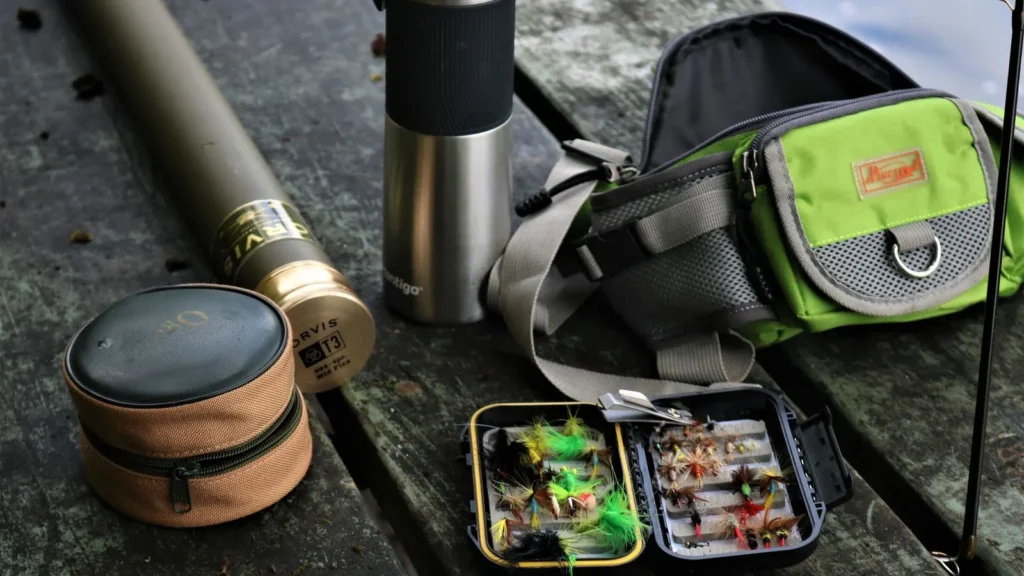
- Rods, reels, and flies or lures, unless you want to bring your own
- Leaders, tippet, weight, indicators, and terminal tackle
- A net, and the knowledge of where the fish are
- The shuttle
- Lunch and drinks on most full-day trips
- A dry box for your valuables
What guides usually do not provide: your license, sunscreen, rain gear, waders, and alcohol. Some are fine with a beer or two in the boat and some are not. Ask, and do not assume.
What not to bring
- Glass. Glass containers are banned on most Ozark float streams and on many river access areas elsewhere. Rangers and outfitters check. Cans and plastic only.
- Flip flops. See above.
- Styrofoam coolers. They break, they blow away, and they are prohibited on some rivers.
- Anything you cannot afford to lose. Wedding rings, expensive watches, a camera without a strap.
- A hard-sided suitcase worth of gear. A drift boat has room for one small bag per angler. Pack light.
- Your own rods, unless you asked. Guides rig for the water. Bringing five rods you will not use just takes up space.
Guided float versus canoe float
| Item | Guided fishing float | Canoe or kayak float |
|---|---|---|
| Life jacket | Provided | Provided by the outfitter, wear it |
| Lunch | Usually provided on full days | Bring your own |
| Tackle | Provided | Bring your own, keep it minimal |
| Dry storage | Guide has a dry box | Bring a dry bag, tie it in |
| Trash | Guide packs it out | Bring a trash bag, pack it out |
| First aid | Guide carries a kit | Bring a small kit |
The night before
Lay it all out. Charge your phone. Fill the water bottles and put them in the fridge. Confirm the meeting spot and time with the guide or outfitter, and get a phone number that works. Print directions to the ramp, because the last few miles are often out of signal. Put the license in the dry bag. Then go to bed early, because the alarm is going to be earlier than you want.