Clyde River Fishing Guides
A Northeast Kingdom river whose landlocked salmon run was restored after the Newport dam came out in 1996, and which now fishes as one of Vermont's best salmon waters.
Guides on the Clyde River
Claimed profiles take booking requests. Unclaimed profiles are built from public records so the river is never empty; the guide can claim or remove one any time.
No guides listed yet
Guide or outfit this water? Create your profile. Listing is free, the commission is 10% or 7% with a premium profile, and premium profiles list first on this water.
About the Clyde River
The Clyde River runs west across Vermont’s Northeast Kingdom from Island Pond to Newport, where it enters Lake Memphremagog, and it carries one of the more remarkable fishery recovery stories in New England. For most of the twentieth century a hydroelectric dam at Newport sat across the bottom of the river and cut the landlocked salmon off from their spawning water. After a long and contentious campaign the dam was removed in 1996, and the salmon returned to a river they had effectively been locked out of for generations. It remains one of the clearest demonstrations in the region of what removing a single barrier can do.
The result is that the Clyde now fishes as a genuine landlocked salmon river. Salmon run up out of Memphremagog in spring and again in autumn, and the lower river below Newport is where most anglers meet them. Rainbow and brown trout are present through the middle reaches, brook trout in the colder tributaries, and the slower sections and ponds along the river’s length hold smallmouth bass, yellow perch, walleye and northern pike. The river threads a chain of ponds on its way west, which gives it an unusually varied character for its modest length.
The gauge at Newport reports discharge and stage on a drainage of about one hundred and forty-two square miles. Flow is the governing variable for the salmon fishing: the fish move on water, and a rise in spring or after the first serious autumn rain is what brings them up. The Northeast Kingdom is the least-populated corner of Vermont and the river reflects that, with modest development and genuinely quiet fishing even in the better-known reaches. Autumn is the season most anglers plan around, and fish should be handled with care while they are on spawning water.
This water needs a real photo
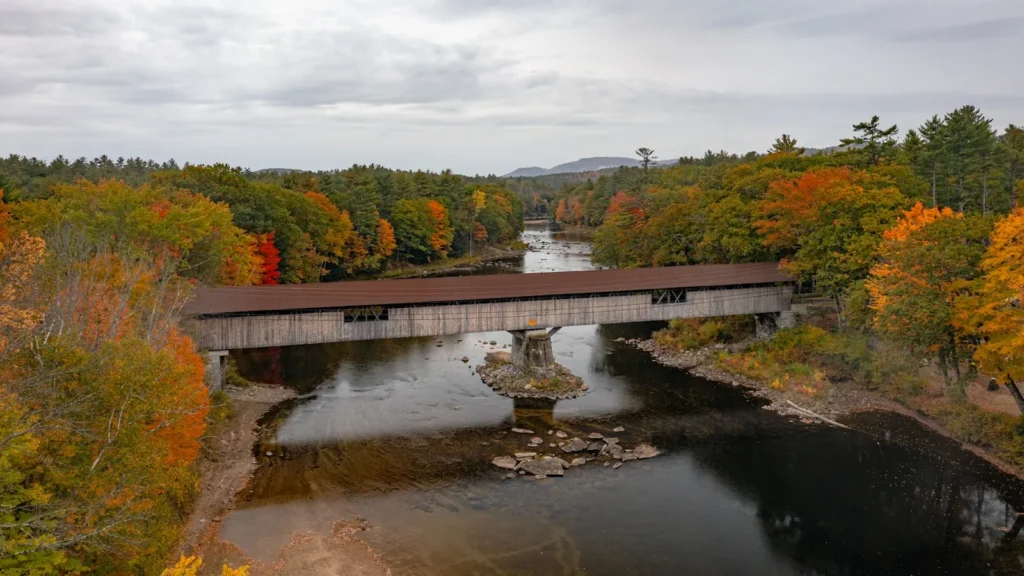
The photo at the top of this page is not Clyde River.
It is a regional stand-in, honestly captioned but generic — we will not put a name to a river we cannot prove. Send us a photograph you took here and it replaces the stand-in, with your credit on it.
Add a photo of this water
Landscape, not fish — the water itself. Reviewed by hand before it appears. The first one published here earns the Pioneer badge.
Fished this water? Add a photo
Reviewed by hand before it appears. Pick the water, not the spot — we never publish exact locations.
Access
Newport - the river mouth at Lake Memphremagog, the site of the removed dam and the centre of the salmon fishery.
Clyde Pond - an impoundment on the lower river with its own warmwater fishing and shoreline access.
Pensioner Pond - a mid-river pond offering a change of pace and reliable access.
Charleston - a middle-river town providing road access to the quieter reaches.
Island Pond - the village at the head of the system and the upstream limit of the river.
Route 105 corridor - the road following much of the river and the practical way to find access points.
Lake Memphremagog - the lake the salmon live in between runs, and the water they come out of each spring and fall.
Seasons
Spring: salmon move up out of Memphremagog on high water, making the lower river below Newport the focus of the year's first run.
Summer: quieter for salmon, with trout in the middle reaches and warmwater fishing in the ponds along the river's length.
Fall: the headline season, as the autumn spawning run brings salmon into the river in numbers; handle spawning fish carefully.
Winter: cold and largely frozen, with the river itself closed to most fishing and attention shifting to the lake.
From the water
No logged trips yet. Be the first to put this water on your map.
Log this water
Fished it or cleaned it? Log in or create a free account to log a trip with photos and earn the waterway badge.
Questions
What is the current flow on the Clyde River?
As of Nov 2, 6:30 am, the USGS gauge CLYDE RIVER AT NEWPORT, VT reads 43 cfs. Conditions update every 15 minutes.
What species can you catch on the Clyde River?
Anglers target Brook Trout, Brown Trout, Landlocked Salmon, Northern Pike, Rainbow Trout, Smallmouth Bass, Walleye, Yellow Perch on the Clyde River in Vermont.
Where can you access the Clyde River?
Newport - the river mouth at Lake Memphremagog, the site of the removed dam and the centre of the salmon fishery. Clyde Pond - an impoundment on the lower river with its own warmwater fishing and shoreline access. Pensioner Pond - a mid-river pond offering a change of pace and reliable access. Charleston - a middle-river town providing road access to the quieter reaches. Island Pond - the village at the head of the system and the upstream limit of the river. Route 105 corridor - the road following much of the river and the practical way to find access points. Lake Memphremagog - the lake the s...
When is the best time to fish the Clyde River?
Spring: salmon move up out of Memphremagog on high water, making the lower river below Newport the focus of the year's first run. Summer: quieter for salmon, with trout in the middle reaches and warmwater fishing in the ponds along the river's length. Fall: the headline season, as the autumn spawning run brings salmon into the river in numbers; handle spawning fish carefully. Winter: cold and largely frozen, with the river itself closed to most fishing and attention shifting to the lake.
Where are the fishing regulations for the Clyde River?
Regulations change by season and section. Read the current rules on the Vermont agency site: https://vtfishandwildlife.com/fish/fishing-regulations