Fishes Lake Fork Reservoir
Reservoir · East Texas · Texas
Lake Fork Reservoir Fishing Guides
The lake that built the reputation of Texas big-bass fishing: standing timber left in place when it filled in 1980, and a February trophy window anglers plan a year around.
Gauge location. Map data © OpenStreetMap contributors.
Guides on the Lake Fork Reservoir
Claimed profiles take booking requests. Unclaimed profiles are built from public records so the river is never empty; the guide can claim or remove one any time.
About the Lake Fork Reservoir
Lake Fork is the reason Texas has a reputation for giant largemouth. The Sabine River Authority flooded the Lake Fork Creek bottoms in 1980 and, unusually for the era, left the timber standing. More than forty years later that drowned forest is still the whole story of the place. Bass hold on individual trunks, on the edges of the old creek channels running between them, and on the roadbeds, bridges and fence lines that were never cleared. It is a lake where a single tree can be a spot, and where anglers keep waypoints the way other people keep phone numbers.
The trophy fishing runs in a narrow window. Fish that spend most of the year deep move up to stage in February, and the days around the last cold fronts before the spawn are when the heaviest fish are catchable. By May that window has closed and Fork settles into being a very good ordinary bass lake, plus a genuinely excellent crappie lake that most visitors drive past. Winter crappie stack on the bridge columns and brush in numbers that would be the headline anywhere else.
Fork is a water supply reservoir first and a fishery second, so the pool moves with drought and with demand from the Dallas area rather than with the fishing calendar. A low pool pulls fish off the shallowest timber and concentrates them, which can make the lake easier to read; a full pool floods the bushes and spreads them out across acres of new cover. The gauge below reports both surface elevation and stored volume, so you can see which of those two lakes you are driving to before you hitch the trailer.
Length rules on Fork are stricter than the statewide ones and have been changed more than once. Read the current regulations before you keep a fish.
This water needs a real photo
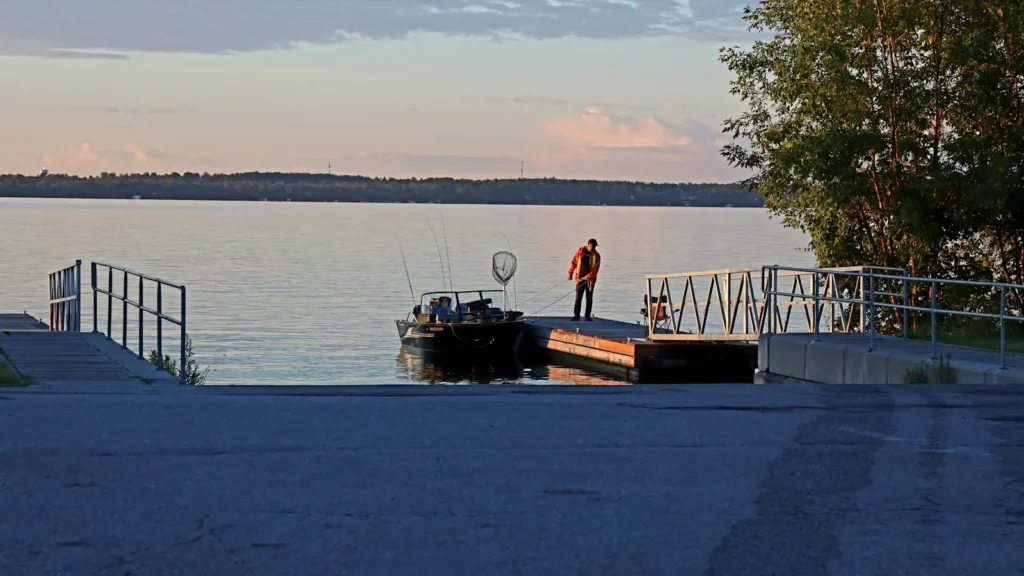
The photo at the top of this page is not Lake Fork Reservoir.
It is a regional stand-in, honestly captioned but generic — we will not put a name to a river we cannot prove. Send us a photograph you took here and it replaces the stand-in, with your credit on it.
Pioneer badgeUnclaimed
Add a photo of this water
Landscape, not fish — the water itself. Reviewed by hand before it appears. The first one published here earns the Pioneer badge.
Pool right now
398.10ft NGVD29
- 24 hours-0.02 ft → steady
- Storage549,500 acre-ft
- For the dateLow for the date
Reading taken 49 min ago at USGS 08018800, Lake Fk Res nr Quitman, TX. Elevation is the surface of the lake above the survey datum, not depth. Source.
Fished this water? Add a photo
Reviewed by hand before it appears. Pick the water, not the spot — we never publish exact locations.
Access
Lake Fork Marina and Highway 154: main-lake ramp and the best-known bridge water.
FM 515 bridge: north end ramps and a classic winter crappie bridge.
Oak Ridge Marina: east side access with fuel and lighted crappie docks.
Little Caney and Birch Creek arms: quieter timber-choked water for shallow fishing.
Sabine River Authority public ramps: several free launches spaced around the lake.
Lake Fork Dam area: the deepest water and the summer offshore fishing.
Note: shoreline is largely private, so plan on fishing from a boat.
Seasons
Winter: crappie on bridges and brush, and the first heavy bass staging deep on channel edges.
February and March: the trophy window, prespawn fish on the first drop outside the flats.
Spring into early summer: post-spawn fish scattered through the timber, good numbers, fewer giants.
Summer and fall: deep timber and creek channels, then a shad-driven shallow bite as the water cools.
From the water
No logged trips yet. Be the first to put this water on your map.
Log this water
Fished it or cleaned it? Log in or create a free account to log a trip with photos and earn the waterway badge.
Questions
What species can you catch on the Lake Fork Reservoir?
Anglers target Black Crappie, Bluegill, Channel Catfish, Largemouth Bass, White Bass, White Crappie on the Lake Fork Reservoir in Texas.
Are there fishing guides on the Lake Fork Reservoir?
GuidedFloats lists 1 guide and outfitters on the Lake Fork Reservoir. Claimed profiles accept booking requests; unclaimed profiles are built from public records and link to the business.
Where can you access the Lake Fork Reservoir?
Lake Fork Marina and Highway 154: main-lake ramp and the best-known bridge water. FM 515 bridge: north end ramps and a classic winter crappie bridge. Oak Ridge Marina: east side access with fuel and lighted crappie docks. Little Caney and Birch Creek arms: quieter timber-choked water for shallow fishing. Sabine River Authority public ramps: several free launches spaced around the lake. Lake Fork Dam area: the deepest water and the summer offshore fishing. Note: shoreline is largely private, so plan on fishing from a boat.
When is the best time to fish the Lake Fork Reservoir?
Winter: crappie on bridges and brush, and the first heavy bass staging deep on channel edges. February and March: the trophy window, prespawn fish on the first drop outside the flats. Spring into early summer: post-spawn fish scattered through the timber, good numbers, fewer giants. Summer and fall: deep timber and creek channels, then a shad-driven shallow bite as the water cools.
Where are the fishing regulations for the Lake Fork Reservoir?
Regulations change by season and section. Read the current rules on the Texas agency site: https://tpwd.texas.gov/regulations/outdoor-annual/fishing