Housatonic River Estuary Fishing Guides
The tidal mouth of the Housatonic at Stratford, one of the most productive striped bass estuaries on the Connecticut shoreline, fished hard on the moving tide.
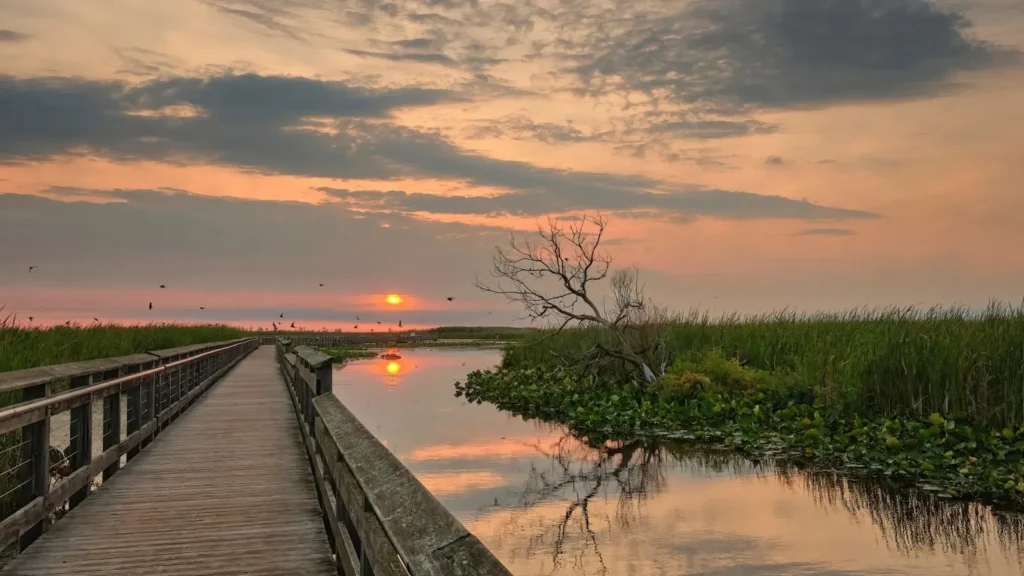
Guides on the Housatonic River Estuary
Claimed profiles take booking requests. Unclaimed profiles are built from public records so the river is never empty; the guide can claim or remove one any time.
No guides listed yet
Guide or outfit this water? Create your profile. Listing is free, the commission is 10% or 7% with a premium profile, and premium profiles list first on this water.
About the Housatonic River Estuary
Anglers who know the Housatonic as a trout river in the northwest hills are often surprised to learn how good the other end of it is. Below Derby the river becomes tidal, and the last several miles between Stratford and Milford are a broad estuary of channels, mudflats and salt marsh that empties into Long Island Sound. The marshes around Nells Island are the heart of it. The combination of a large river mouth, extensive marsh, and the strong tidal currents of the western Sound makes this one of the most dependable striped bass estuaries in Connecticut, and it produces fish from the first warm weeks of spring until the water goes cold.
Striped bass are the fishery and the reason most people come. They hold on the channel edges, on the bars at the mouth and in the marsh drains on the falling tide, and the pattern is almost entirely a function of current rather than time of day. Bluefish arrive with the summer and will push bait to the surface across the flats. Summer flounder work the sandy channel edges, winter flounder use the deeper holes early and late in the season, scup fill the structure, and weakfish appear in some years in real numbers. Blue crabs are abundant through the summer and American eel and menhaden form much of the forage base. Small boats and kayaks reach the best of it; there is useful shoreline access at Stratford Point and in the state lands along the marsh.
The gauge near Nells Island reports water temperature and nothing else, which is exactly the right number for this water. Striper movement in a western Sound estuary tracks temperature closely: the first push comes as the shallows climb through the upper forties and fifties, the summer plateau sends the bigger fish to the deeper channel edges and the night tides, and the autumn cooling sets off the best fishing of the year as bait pours out of the marsh. Read the temperature, then fish the tide; the two together explain nearly everything that happens here.
This water needs a real photo
The photo at the top of this page is not Housatonic River Estuary.
It is a regional stand-in, honestly captioned but generic — we will not put a name to a river we cannot prove. Send us a photograph you took here and it replaces the stand-in, with your credit on it.
Add a photo of this water
Landscape, not fish — the water itself. Reviewed by hand before it appears. The first one published here earns the Pioneer badge.
Fished this water? Add a photo
Reviewed by hand before it appears. Pick the water, not the spot — we never publish exact locations.
Access
Stratford - the town at the river mouth, with launches, tackle and the most used shoreline access.
Nells Island - the marsh complex at the heart of the estuary and the gauge location.
Milford - the town on the east side of the mouth, with marinas and charter access.
Stratford Point - the shoreline access at the mouth, productive on the moving tide.
Derby - the head of tide upstream, where the estuary meets the river proper.
Long Island Sound - the open water beyond the mouth, with the bluefish and fluke fishing of the western Sound.
Short Beach - the Stratford shorefront access used by anglers working the bars on foot.
Seasons
Spring: the first striped bass push into the marsh and channel edges as the shallows warm, and winter flounder are available early.
Summer: steady and varied, with bluefish, fluke and scup joining the stripers and the night tides producing the larger bass.
Fall: the best fishing of the year, as bait leaves the marsh and stripers and bluefish feed hard on the outgoing tide.
Winter: cold and largely quiet, with the deeper holes holding fish and most of the estuary left alone until spring.
From the water
No logged trips yet. Be the first to put this water on your map.
Log this water
Fished it or cleaned it? Log in or create a free account to log a trip with photos and earn the waterway badge.
Questions
What species can you catch on the Housatonic River Estuary?
Anglers target American Eel, Atlantic Menhaden, Blue Crab, Bluefish, Scup, Striped Bass, Summer Flounder, Weakfish, Winter Flounder on the Housatonic River Estuary in Connecticut.
Where can you access the Housatonic River Estuary?
Stratford - the town at the river mouth, with launches, tackle and the most used shoreline access. Nells Island - the marsh complex at the heart of the estuary and the gauge location. Milford - the town on the east side of the mouth, with marinas and charter access. Stratford Point - the shoreline access at the mouth, productive on the moving tide. Derby - the head of tide upstream, where the estuary meets the river proper. Long Island Sound - the open water beyond the mouth, with the bluefish and fluke fishing of the western Sound. Short Beach - the Stratford shorefront access used by anglers...
When is the best time to fish the Housatonic River Estuary?
Spring: the first striped bass push into the marsh and channel edges as the shallows warm, and winter flounder are available early. Summer: steady and varied, with bluefish, fluke and scup joining the stripers and the night tides producing the larger bass. Fall: the best fishing of the year, as bait leaves the marsh and stripers and bluefish feed hard on the outgoing tide. Winter: cold and largely quiet, with the deeper holes holding fish and most of the estuary left alone until spring.
Where are the fishing regulations for the Housatonic River Estuary?
Regulations change by season and section. Read the current rules on the Connecticut agency site: https://portal.ct.gov/deep/fishing/regulations/fishing-regulations