Reynolds Channel Fishing Guides
The tidal channel behind Long Beach, one of the most heavily fished and most productive pieces of the Long Island south shore back-bay system.
Guides on the Reynolds Channel
Claimed profiles take booking requests. Unclaimed profiles are built from public records so the river is never empty; the guide can claim or remove one any time.
No guides listed yet
Guide or outfit this water? Create your profile. Listing is free, the commission is 10% or 7% with a premium profile, and premium profiles list first on this water.
About the Reynolds Channel
Reynolds Channel is the main back-bay channel running behind the Long Beach barrier island on Long Island’s south shore, connecting the inlet systems at either end and separating the island from the mainland marshes of Nassau County. It is working water in every sense, crossed by bridges, lined with bulkhead and marina, and fished by more anglers than almost any other piece of water in the state. It is also genuinely productive, because the channel carries a strong tidal current between two ocean inlets and the current moves bait through a long corridor of structure: bridge abutments, bulkheads, marsh drains, mussel beds and deep holes.
Striped bass are the backbone of it, available from the spring through late autumn and holding on the bridge structure and the channel edges wherever the current concentrates. Bluefish arrive with the warm water and can be thick. Summer flounder are a major fishery on the sand edges and the drains, winter flounder work the deeper holes in the cold months, and tautog hold on the hard structure through autumn. Weakfish, scup, black sea bass and northern kingfish all appear in season, and blue crabs are abundant in summer. The variety is part of the attraction: a single tide here can produce four or five species. Boats, kayaks and the extensive public shoreline at Point Lookout and along the bulkheads all work.
The gauge at Point Lookout reports water temperature and nothing else, which is the right single number for a back bay. Everything in this channel is driven by temperature and current together: the spring warming through the fifties starts the striper and fluke seasons, the summer plateau pushes fish onto the night tides and the deeper edges, and the autumn cooling triggers the best bass and tog fishing of the year. The tide schedule supplies the rest. Fish the moving water, not the slack, and let the temperature trace tell you which species to expect.
This water needs a real photo
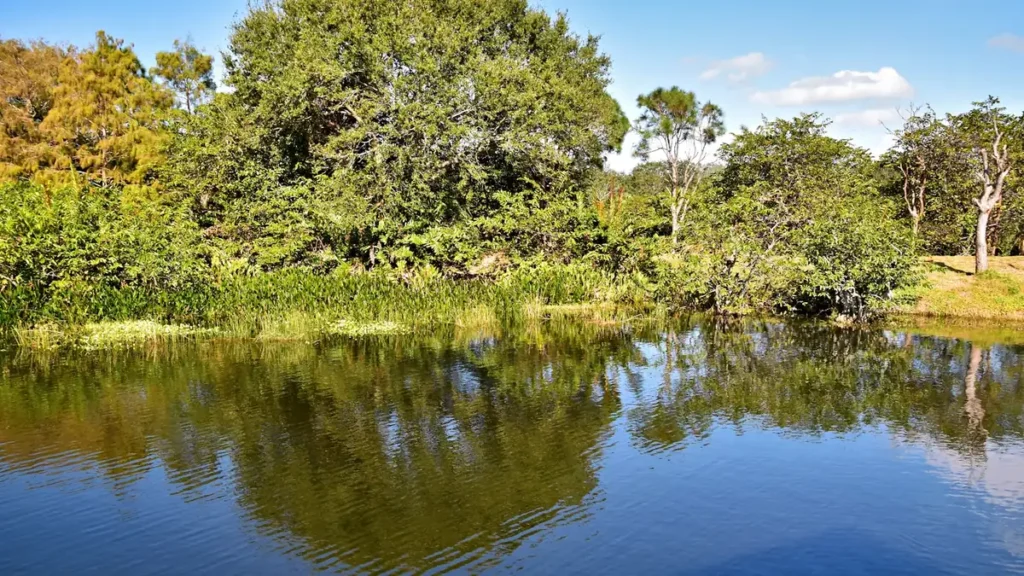
The photo at the top of this page is not Reynolds Channel.
It is a regional stand-in, honestly captioned but generic — we will not put a name to a river we cannot prove. Send us a photograph you took here and it replaces the stand-in, with your credit on it.
Add a photo of this water
Landscape, not fish — the water itself. Reviewed by hand before it appears. The first one published here earns the Pioneer badge.
Fished this water? Add a photo
Reviewed by hand before it appears. Pick the water, not the spot — we never publish exact locations.
Access
Point Lookout - the community at the east end of the channel and the gauge location, with strong shore access.
Long Beach - the barrier island town along the channel, with bulkhead access and launches.
Jones Inlet - the eastern ocean outlet, a major striper and fluke fishery in its own right.
East Rockaway Inlet - the western outlet at the other end of the channel system.
Lido Beach - the mid-island community with marsh and channel access.
Freeport - the mainland port with charter boats, tackle and launches serving the back bay.
Hempstead Bay - the marsh and bay system behind the channel, with drains that fish well on the ebb.
Seasons
Spring: striped bass and the first fluke arrive as the back bay warms through the fifties, with winter flounder still available early.
Summer: the most varied fishing of the year, with fluke, bluefish, scup and sea bass joining the stripers and night tides best for larger bass.
Fall: the strongest stretch, with bass and bluefish feeding hard on the outgoing tide and tautog on the hard structure.
Winter: cold and quiet, with the deeper holes holding winter flounder and most of the channel left alone.
From the water
No logged trips yet. Be the first to put this water on your map.
Log this water
Fished it or cleaned it? Log in or create a free account to log a trip with photos and earn the waterway badge.
Questions
What species can you catch on the Reynolds Channel?
Anglers target Black Sea Bass, Blue Crab, Bluefish, Northern Kingfish, Scup, Striped Bass, Summer Flounder, Tautog, Weakfish, Winter Flounder on the Reynolds Channel in New York.
Where can you access the Reynolds Channel?
Point Lookout - the community at the east end of the channel and the gauge location, with strong shore access. Long Beach - the barrier island town along the channel, with bulkhead access and launches. Jones Inlet - the eastern ocean outlet, a major striper and fluke fishery in its own right. East Rockaway Inlet - the western outlet at the other end of the channel system. Lido Beach - the mid-island community with marsh and channel access. Freeport - the mainland port with charter boats, tackle and launches serving the back bay. Hempstead Bay - the marsh and bay system behind the channel, with...
When is the best time to fish the Reynolds Channel?
Spring: striped bass and the first fluke arrive as the back bay warms through the fifties, with winter flounder still available early. Summer: the most varied fishing of the year, with fluke, bluefish, scup and sea bass joining the stripers and night tides best for larger bass. Fall: the strongest stretch, with bass and bluefish feeding hard on the outgoing tide and tautog on the hard structure. Winter: cold and quiet, with the deeper holes holding winter flounder and most of the channel left alone.
Where are the fishing regulations for the Reynolds Channel?
Regulations change by season and section. Read the current rules on the New York agency site: https://dec.ny.gov/things-to-do/freshwater-fishing/regulations