Lake Cypress Springs Fishing Guides
A 3,400-acre north-east Texas reservoir noted for unusually clear water, steep rocky shoreline and a quality largemouth bass and crappie fishery.
Guides on the Lake Cypress Springs
Claimed profiles take booking requests. Unclaimed profiles are built from public records so the river is never empty; the guide can claim or remove one any time.
No guides listed yet
Guide or outfit this water? Create your profile. Listing is free, the commission is 10% or 7% with a premium profile, and premium profiles list first on this water.
About the Lake Cypress Springs
Lake Cypress Springs is the smallest and by a wide margin the clearest of the three reservoirs on Big Cypress Creek, sitting above Lake Bob Sandlin south of Mount Vernon. At roughly 3,400 acres it is a compact lake with a steep, rocky, heavily developed shoreline and water clarity that is genuinely unusual for east Texas — several feet of visibility is normal where neighbouring reservoirs run stained. That clarity changes everything about how the lake is fished: finesse presentations, lighter line and longer casts do far better here than the heavy flipping tackle that works a few miles downstream, and the fish are correspondingly spookier.
Largemouth bass are the main fishery and the lake has a reputation for quality over quantity, with fish holding on the rock, the boat docks and the submerged brush that the local lake authority has deliberately added over the years. Crappie are the second draw and are reliable on that same brush and around the bridge crossings. White bass school in the open basin, redear sunfish grow large on the rocky margins and are a genuinely worthwhile target, and channel and blue catfish work the deeper channel. The shoreline is almost entirely private, so this is a boat fishery, and it carries more recreational traffic than its neighbours through the summer.
The gauge near Mount Vernon reports pool elevation and precipitation but no water temperature. On a clear, steep-sided lake the pool reading matters in a particular way: a full pool puts water against the rock and the dock structure where the bass hold, while a drawn-down pool pulls fish off that cover and out to the deeper brush piles and the creek channel. Because this is the top lake in the chain, its level responds to local rainfall more directly than the two below it.
This water needs a real photo
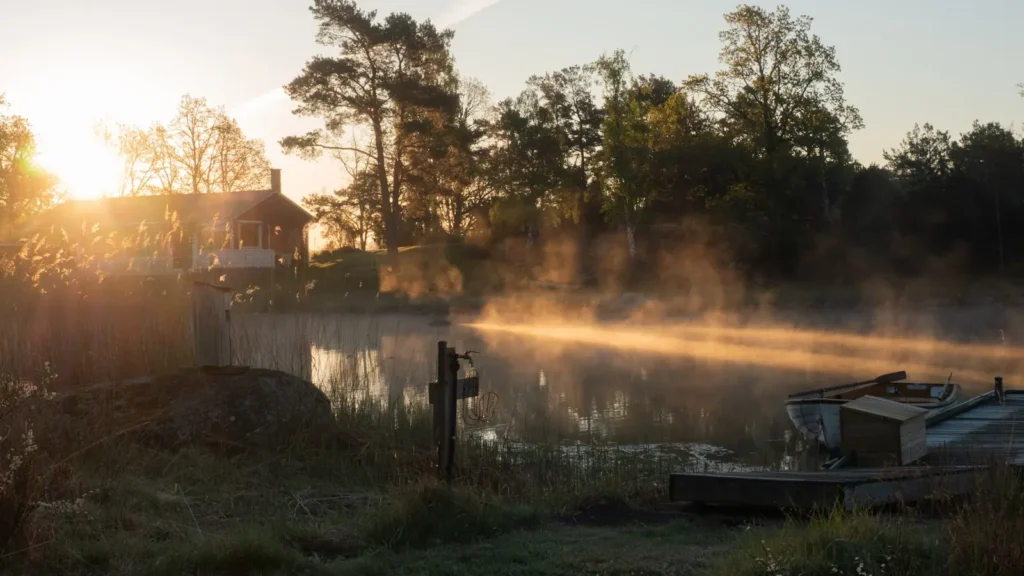
The photo at the top of this page is not Lake Cypress Springs.
It is a regional stand-in, honestly captioned but generic — we will not put a name to a river we cannot prove. Send us a photograph you took here and it replaces the stand-in, with your credit on it.
Add a photo of this water
Landscape, not fish — the water itself. Reviewed by hand before it appears. The first one published here earns the Pioneer badge.
Pool right now
- 24 hours0.00 ft → steady
- For the dateLow for the date
Reading taken 48 min ago at USGS 07344484, Lk Cypress Spgs nr Mount Vernon, TX. Elevation is the surface of the lake above the survey datum, not depth. Source.
Fished this water? Add a photo
Reviewed by hand before it appears. Pick the water, not the spot — we never publish exact locations.
Access
Mount Vernon - the gauge town just north of the lake, with lodging, tackle and food.
Franklin County Water District park - the main public launch and the most reliable access point.
Overlook Park - a south-shore access with parking, ramp and shoreline room.
Walleye Creek - a quieter arm on the western side, useful on windy days.
Cypress Springs Dam - the eastern structure and gauge reference point.
Lake Bob Sandlin - the next reservoir downstream, timbered and stained, a deliberate contrast.
Lake O' the Pines - the larger regional alternative an hour and a half east.
Seasons
Spring: the strongest season, with largemouth bass spawning on the rock and crappie moving onto the brush piles.
Summer: early and late fishing only, as clear water and heavy recreational traffic make the middle of the day difficult.
Fall: excellent and much quieter, with bass grouping on the points and white bass schooling in the basin.
Winter: the best crappie fishing of the year on deep brush, and big largemouth are catchable on slow presentations.
From the water
No logged trips yet. Be the first to put this water on your map.
Log this water
Fished it or cleaned it? Log in or create a free account to log a trip with photos and earn the waterway badge.
Questions
What species can you catch on the Lake Cypress Springs?
Anglers target Black Crappie, Blue Catfish, Bluegill, Channel Catfish, Largemouth Bass, Redear Sunfish, White Bass, White Crappie on the Lake Cypress Springs in Texas.
Where can you access the Lake Cypress Springs?
Mount Vernon - the gauge town just north of the lake, with lodging, tackle and food. Franklin County Water District park - the main public launch and the most reliable access point. Overlook Park - a south-shore access with parking, ramp and shoreline room. Walleye Creek - a quieter arm on the western side, useful on windy days. Cypress Springs Dam - the eastern structure and gauge reference point. Lake Bob Sandlin - the next reservoir downstream, timbered and stained, a deliberate contrast. Lake O' the Pines - the larger regional alternative an hour and a half east.
When is the best time to fish the Lake Cypress Springs?
Spring: the strongest season, with largemouth bass spawning on the rock and crappie moving onto the brush piles. Summer: early and late fishing only, as clear water and heavy recreational traffic make the middle of the day difficult. Fall: excellent and much quieter, with bass grouping on the points and white bass schooling in the basin. Winter: the best crappie fishing of the year on deep brush, and big largemouth are catchable on slow presentations.
Where are the fishing regulations for the Lake Cypress Springs?
Regulations change by season and section. Read the current rules on the Texas agency site: https://tpwd.texas.gov/regulations/outdoor-annual/fishing