LaPlatte River Fishing Guides
A short Champlain Valley river running through Shelburne into Lake Champlain, with a falls that splits a lake-run fishery below from a modest trout stream above.
Guides on the LaPlatte River
Claimed profiles take booking requests. Unclaimed profiles are built from public records so the river is never empty; the guide can claim or remove one any time.
No guides listed yet
Guide or outfit this water? Create your profile. Listing is free, the commission is 10% or 7% with a premium profile, and premium profiles list first on this water.
About the LaPlatte River
The LaPlatte is a small river by any measure, running about twenty miles west from the hills near Hinesburg across the Champlain Valley clay plain through Shelburne and into Shelburne Bay, a few miles south of Burlington. It is one of the most closely studied small rivers in Vermont, because it drains intensively farmed land directly into Lake Champlain and has been a focus of phosphorus and sediment work for years. For an angler the relevant consequence is that the lower river runs turbid after rain and clears slowly across the clay.
Shelburne Falls is the feature that organises the fishery. Below the falls the river is connected to Lake Champlain, and lake fish use it: steelhead and brown trout run up in spring and fall, northern pike spawn in the marshy lower reaches, and smallmouth, largemouth and perch move in and out from the bay. Above the falls the river is a separate proposition, a modest brook and brown trout stream running through farmland and woodlot with stocked fish supplementing a limited wild population. The two reaches barely resemble each other.
The wetland complex at the river’s mouth is a significant piece of Lake Champlain habitat and is largely conserved, which keeps the lowest reach undeveloped even this close to Burlington. Flow is rain and snowmelt driven with no meaningful storage, so the river rises fast and drops within a day or two, and summer flows can get very thin above the falls. The gauge at Shelburne Falls reports water temperature alongside discharge and stage, which is the useful number for judging the lake-run timing and the midsummer trout water. The falls are best treated as two separate destinations rather than two ends of one river, because the fishing above and below them bears little resemblance.
This water needs a real photo
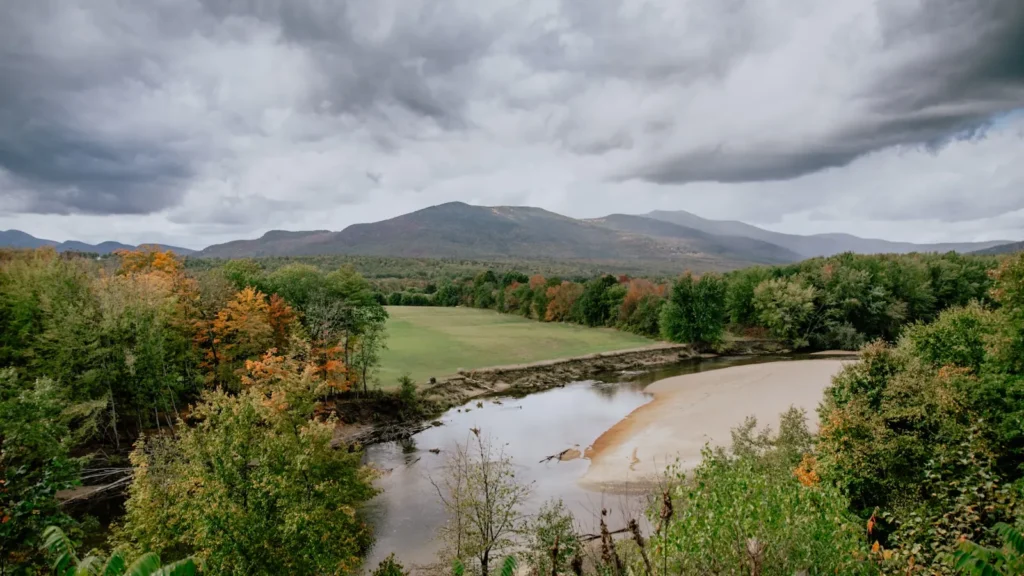
The photo at the top of this page is not LaPlatte River.
It is a regional stand-in, honestly captioned but generic — we will not put a name to a river we cannot prove. Send us a photograph you took here and it replaces the stand-in, with your credit on it.
Add a photo of this water
Landscape, not fish — the water itself. Reviewed by hand before it appears. The first one published here earns the Pioneer badge.
Fished this water? Add a photo
Reviewed by hand before it appears. Pick the water, not the spot — we never publish exact locations.
Access
Shelburne Falls - the gauge reach and the dividing line between the lake-run water below and the trout stream above.
Shelburne Bay - the Lake Champlain bay the river enters, the source of the steelhead, brown trout and pike.
LaPlatte River Natural Area - the conserved wetland and floodplain at the river mouth, with trail access to the lowest reach.
Hinesburg - the upstream town, the head of the small trout water above the falls.
Shelburne - the town at the falls, for the most convenient access, parking and local information.
Muddy Brook confluence - the main tributary joining the lower river, worth knowing for the flow and clarity it adds.
Burlington - the nearest city, a few miles north, for licences, fly shops and guide contacts.
Seasons
Spring: the best window, with steelhead and brown trout running up from Shelburne Bay and pike spawning in the marshy lower reaches.
Summer: warm, often turbid and thin above the falls, with the lower river fishing for bass and pike rather than trout.
Fall: the second run of lake fish, with cooling water, better clarity and the strongest chance at a large brown trout below the falls.
Winter: iced through most of the river, with the fishery shifting to Shelburne Bay and its ice fishing rather than the river.
From the water
No logged trips yet. Be the first to put this water on your map.
Log this water
Fished it or cleaned it? Log in or create a free account to log a trip with photos and earn the waterway badge.
Questions
What is the current flow on the LaPlatte River?
As of Nov 2, 7:30 am, the USGS gauge LAPLATTE RIVER AT SHELBURNE FALLS, VT reads 5 cfs, with water temperature 45.3 F. Conditions update every 15 minutes.
What species can you catch on the LaPlatte River?
Anglers target American Eel, Brook Trout, Brown Trout, Largemouth Bass, Northern Pike, Rainbow Trout, Smallmouth Bass, Steelhead, White Sucker, Yellow Perch on the LaPlatte River in Vermont.
Where can you access the LaPlatte River?
Shelburne Falls - the gauge reach and the dividing line between the lake-run water below and the trout stream above. Shelburne Bay - the Lake Champlain bay the river enters, the source of the steelhead, brown trout and pike. LaPlatte River Natural Area - the conserved wetland and floodplain at the river mouth, with trail access to the lowest reach. Hinesburg - the upstream town, the head of the small trout water above the falls. Shelburne - the town at the falls, for the most convenient access, parking and local information. Muddy Brook confluence - the main tributary joining the lower river,...
When is the best time to fish the LaPlatte River?
Spring: the best window, with steelhead and brown trout running up from Shelburne Bay and pike spawning in the marshy lower reaches. Summer: warm, often turbid and thin above the falls, with the lower river fishing for bass and pike rather than trout. Fall: the second run of lake fish, with cooling water, better clarity and the strongest chance at a large brown trout below the falls. Winter: iced through most of the river, with the fishery shifting to Shelburne Bay and its ice fishing rather than the river.
Where are the fishing regulations for the LaPlatte River?
Regulations change by season and section. Read the current rules on the Vermont agency site: https://vtfishandwildlife.com/fish/fishing-regulations