Gallinas River Fishing Guides
A northeastern New Mexico river that starts as a Sangre de Cristo trout stream in Gallinas Canyon and finishes as warmwater plains water on its way to the Pecos.
Guides on the Gallinas River
Claimed profiles take booking requests. Unclaimed profiles are built from public records so the river is never empty; the guide can claim or remove one any time.
No guides listed yet
Guide or outfit this water? Create your profile. Listing is free, the commission is 10% or 7% with a premium profile, and premium profiles list first on this water.
About the Gallinas River
The Gallinas rises high in the Sangre de Cristo mountains above Las Vegas, New Mexico, and runs southeast out of the mountains onto the plains before joining the Pecos River. Like several New Mexico rivers it is really two fisheries separated by an elevation change, and which one an angler finds depends entirely on where along it they stop. The gauge near Colonias sits well down on the plains reach, a long way in character from the canyon water near the mountains.
Up in Gallinas Canyon, above and around Montezuma and El Porvenir, the river is a small, cold, tumbling trout stream running through ponderosa and mixed conifer. Rainbow and brown trout are the mainstays there, and Rio Grande cutthroat, the state fish and a species of real conservation interest, occupy some of the colder headwater tributaries. Below Las Vegas the river warms, slows and widens into plains water, where channel catfish become the dominant species and smallmouth and largemouth bass, green sunfish, bluegill, carp and white sucker fill out the fishery.
The gauge near Colonias reports discharge and stage, and its readings swing widely: this is a river that can run at a couple of cubic feet per second in a dry spell and thirty or more after a storm over the mountains. That volatility is the single most important thing to understand before driving out, because the lower river is a very different proposition at each end of that range. Access on the canyon water is largely from national forest land, while the plains reach runs mostly through private ranchland and is reached at road crossings. The practical advice is to decide before leaving home which river is wanted, because the canyon and the plains reach are an hour apart and ask for completely different tackle and completely different expectations.
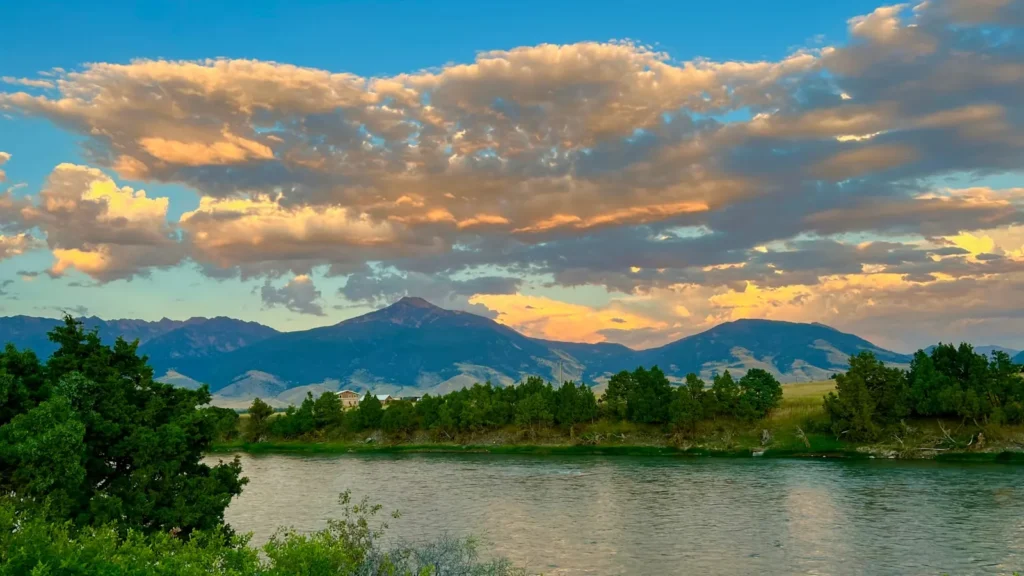
This water needs a real photo
The photo at the top of this page is not Gallinas River.
It is a regional stand-in, honestly captioned but generic — we will not put a name to a river we cannot prove. Send us a photograph you took here and it replaces the stand-in, with your credit on it.
Add a photo of this water
Landscape, not fish — the water itself. Reviewed by hand before it appears. The first one published here earns the Pioneer badge.
Fished this water? Add a photo
Reviewed by hand before it appears. Pick the water, not the spot — we never publish exact locations.
Access
Colonias - the gauge locality on the plains reach and the usual reference point for lower-river conditions.
Las Vegas - the city at the mountain front, the practical base for fishing either reach of the river.
Gallinas Canyon - the upper trout water above town, with national forest access along the canyon road.
Montezuma - a village in the canyon just above Las Vegas with roadside access to the trout reach.
El Porvenir - a settlement higher in the canyon, giving access to the smallest and coldest water.
Storrie Lake - a reservoir near Las Vegas fed from the river, a useful alternative in poor river conditions.
Pecos River confluence - the downstream limit of the river, southeast of the gauge.
Seasons
Spring: snowmelt from the Sangre de Cristos brings the highest and most reliable flows, with the canyon trout water at its best as it drops.
Summer: the canyon stays cool and fishable while the plains reach runs warm and low, broken by sharp monsoon rises from July onward.
Fall: the finest season on both reaches, with settled clear flows, aggressive brown trout in the canyon and catfish active below.
Winter: the canyon water is cold and often snowbound at the road, while the plains reach runs low, clear and slow.
From the water
No logged trips yet. Be the first to put this water on your map.
Log this water
Fished it or cleaned it? Log in or create a free account to log a trip with photos and earn the waterway badge.
Questions
What is the current flow on the Gallinas River?
As of Nov 2, 6:00 am, the USGS gauge GALLINAS R NR COLONIAS, NM reads 408 cfs. Conditions update every 15 minutes.
What species can you catch on the Gallinas River?
Anglers target Bluegill, Brown Trout, Channel Catfish, Common Carp, Green Sunfish, Largemouth Bass, Rainbow Trout, Rio Grande Cutthroat Trout, Smallmouth Bass, White Sucker on the Gallinas River in New Mexico.
Where can you access the Gallinas River?
Colonias - the gauge locality on the plains reach and the usual reference point for lower-river conditions. Las Vegas - the city at the mountain front, the practical base for fishing either reach of the river. Gallinas Canyon - the upper trout water above town, with national forest access along the canyon road. Montezuma - a village in the canyon just above Las Vegas with roadside access to the trout reach. El Porvenir - a settlement higher in the canyon, giving access to the smallest and coldest water. Storrie Lake - a reservoir near Las Vegas fed from the river, a useful alternative in poor...
When is the best time to fish the Gallinas River?
Spring: snowmelt from the Sangre de Cristos brings the highest and most reliable flows, with the canyon trout water at its best as it drops. Summer: the canyon stays cool and fishable while the plains reach runs warm and low, broken by sharp monsoon rises from July onward. Fall: the finest season on both reaches, with settled clear flows, aggressive brown trout in the canyon and catfish active below. Winter: the canyon water is cold and often snowbound at the road, while the plains reach runs low, clear and slow.
Where are the fishing regulations for the Gallinas River?
Regulations change by season and section. Read the current rules on the New Mexico agency site: https://wildlife.dgf.nm.gov/fishing/