Raystown Branch Juniata River Fishing Guides
The cold tailwater below Raystown Dam, carrying trout, smallmouth, walleye and musky through Huntingdon to the Juniata main stem in central Pennsylvania.
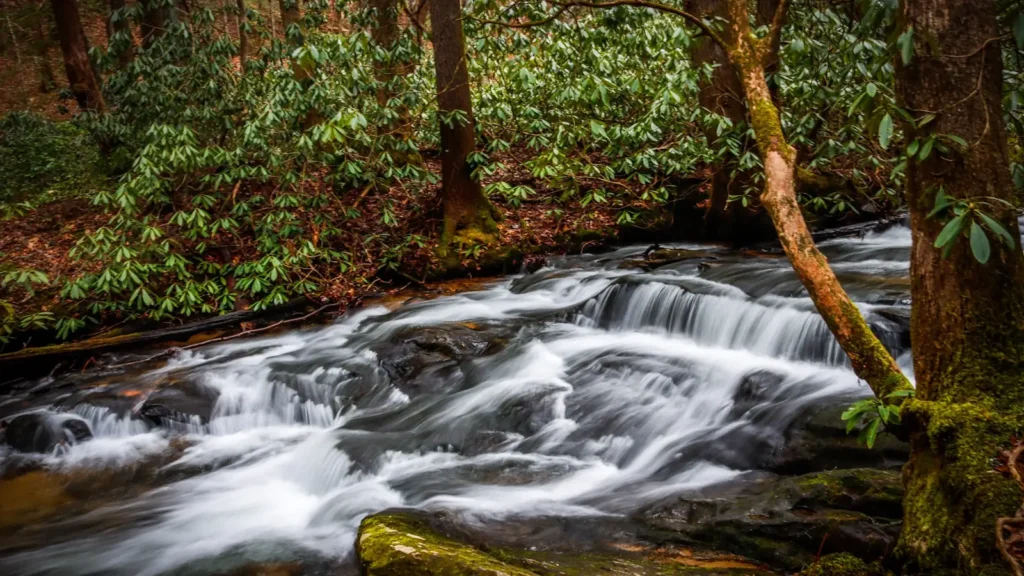
Guides on the Raystown Branch Juniata River
Claimed profiles take booking requests. Unclaimed profiles are built from public records so the river is never empty; the guide can claim or remove one any time.
No guides listed yet
Guide or outfit this water? Create your profile. Listing is free, the commission is 10% or 7% with a premium profile, and premium profiles list first on this water.
About the Raystown Branch Juniata River
Raystown Lake is the largest lake wholly inside Pennsylvania, and the river that leaves it is a genuine tailwater rather than a reservoir outflow in name only. The dam draws from depth, so the Raystown Branch below it runs cold and clear through the summer months while the surrounding freestone streams of Huntingdon County are warming past the point where trout will feed. The reach is short — a handful of miles from the dam to the Juniata River main stem at Huntingdon — but it carries one of the more varied fish communities of any tailwater in the state, and the gauge below the dam reports temperature as well as flow, which is unusual and useful.
Trout are the headline near the dam, where brown and rainbow trout hold in the riffles and the deeper slots and grow heavy on a year-round food supply. Moving downstream the river widens, warms a little, and smallmouth bass take over as the dominant fish, holding on ledges and around the bridge abutments through Huntingdon. Walleye run the deeper channels and are most reliably caught at dusk, and the reach has a real muskellunge population that accounts for a handful of very large fish each season. Rock bass, bluegill and channel catfish fill in around all of it. The river is wadeable in the upper reach and better floated below town.
Because the gauge publishes temperature, this is one of the reaches where you can plan a trip precisely. A release holding in the low fifties means trout water all the way to the confluence; a reading pushing the mid-sixties means the trout have tucked into the first mile and the smallmouth fishing is the better bet. The discharge trace tells you the rest: steady moderate flows are ideal, and a hard release makes the lower reach a float rather than a wade.
This water needs a real photo
The photo at the top of this page is not Raystown Branch Juniata River.
It is a regional stand-in, honestly captioned but generic — we will not put a name to a river we cannot prove. Send us a photograph you took here and it replaces the stand-in, with your credit on it.
Add a photo of this water
Landscape, not fish — the water itself. Reviewed by hand before it appears. The first one published here earns the Pioneer badge.
Fished this water? Add a photo
Reviewed by hand before it appears. Pick the water, not the spot — we never publish exact locations.
Access
Raystown Dam - the gauge site and the upstream end of the coldest, most reliable trout water.
Huntingdon - the gauge town, with lodging, tackle, food and the shortest walk to the lower reach.
Route 26 crossing - the usual mid-reach access and the easiest place to judge release level.
Seven Points - the Raystown Lake recreation hub just above the dam, useful for launching on the lake itself.
Juniata confluence - the downstream limit, where the branch joins the main stem and the fishing turns fully warmwater.
Raystown Lake - the still-water alternative immediately upstream, with its own striped bass and lake trout fishery.
Standing Stone Creek - the small freestone trout stream entering at Huntingdon, a good wet-weather option.
Seasons
Spring: high but productive, with heavy releases pushing trout to the margins and smallmouth waking up downstream.
Summer: the best of the year here, with cold releases holding trout while every freestone stream nearby has gone warm.
Fall: excellent and underused, with walleye and musky both feeding hard and the trout still active near the dam.
Winter: the upper mile stays fishable on the steadier releases, and the deeper channels hold walleye through the cold.
From the water
No logged trips yet. Be the first to put this water on your map.
Log this water
Fished it or cleaned it? Log in or create a free account to log a trip with photos and earn the waterway badge.
Questions
What is the current flow on the Raystown Branch Juniata River?
As of Nov 2, 5:30 am, the USGS gauge Rays Br Juniata R bl Rays Dam nr Huntingdon, PA reads 2,580 cfs, with water temperature 60.1 F. Conditions update every 15 minutes.
What species can you catch on the Raystown Branch Juniata River?
Anglers target Bluegill, Brown Trout, Channel Catfish, Muskellunge, Rainbow Trout, Rock Bass, Smallmouth Bass, Walleye on the Raystown Branch Juniata River in Pennsylvania.
Where can you access the Raystown Branch Juniata River?
Raystown Dam - the gauge site and the upstream end of the coldest, most reliable trout water. Huntingdon - the gauge town, with lodging, tackle, food and the shortest walk to the lower reach. Route 26 crossing - the usual mid-reach access and the easiest place to judge release level. Seven Points - the Raystown Lake recreation hub just above the dam, useful for launching on the lake itself. Juniata confluence - the downstream limit, where the branch joins the main stem and the fishing turns fully warmwater. Raystown Lake - the still-water alternative immediately upstream, with its own striped...
When is the best time to fish the Raystown Branch Juniata River?
Spring: high but productive, with heavy releases pushing trout to the margins and smallmouth waking up downstream. Summer: the best of the year here, with cold releases holding trout while every freestone stream nearby has gone warm. Fall: excellent and underused, with walleye and musky both feeding hard and the trout still active near the dam. Winter: the upper mile stays fishable on the steadier releases, and the deeper channels hold walleye through the cold.
Where are the fishing regulations for the Raystown Branch Juniata River?
Regulations change by season and section. Read the current rules on the Pennsylvania agency site: https://www.pa.gov/agencies/fishandboat/fishing/regulations