Ten Mile River Fishing Guides
An urban East Providence river at the head of Narragansett Bay, reopened to migrating river herring by a series of fish ladders and now quietly worth fishing again.
Guides on the Ten Mile River
Claimed profiles take booking requests. Unclaimed profiles are built from public records so the river is never empty; the guide can claim or remove one any time.
No guides listed yet
Guide or outfit this water? Create your profile. Listing is free, the commission is 10% or 7% with a premium profile, and premium profiles list first on this water.
About the Ten Mile River
The Ten Mile River is a restoration story that happens to fish well. It drops out of southeastern Massachusetts, crosses into Rhode Island at East Providence and runs the last short stretch to the Seekonk River at the head of Narragansett Bay. For most of the twentieth century it was a working industrial river, dammed repeatedly and effectively closed to anything that needed to move upstream. The fish ladders built at Omega, Hunts Mills and Turner Reservoir changed that, reopening the lower river to migrating river herring and American eel for the first time in generations, and the alewife run that now returns each spring is the most visible result.
For anglers the appeal is a genuinely urban fishery within minutes of Providence. The impoundments behind the old dams hold largemouth bass, chain pickerel, yellow perch, bluegill and bullhead, and the moving water between them fishes for smallmouth. White perch push up from the bay into the lower river, and American eel are present throughout. It is not big water and it does not pretend to be wilderness, but it is accessible, free, and productive in a way that surprises people who have only seen it from the highway.
The gauge at Pawtucket Avenue sits near the downstream end and reports discharge and stage. Because the watershed is heavily developed, the river rises and falls faster after rain than its size suggests, and a storm can put colour in it for a day or two. The best fishing is usually a few days after a rain, when the water has cleared but the flow is still up. Spring is the headline season, when the herring run concentrates predators below each ladder, but the bass and pickerel fishing holds up all season.
This water needs a real photo
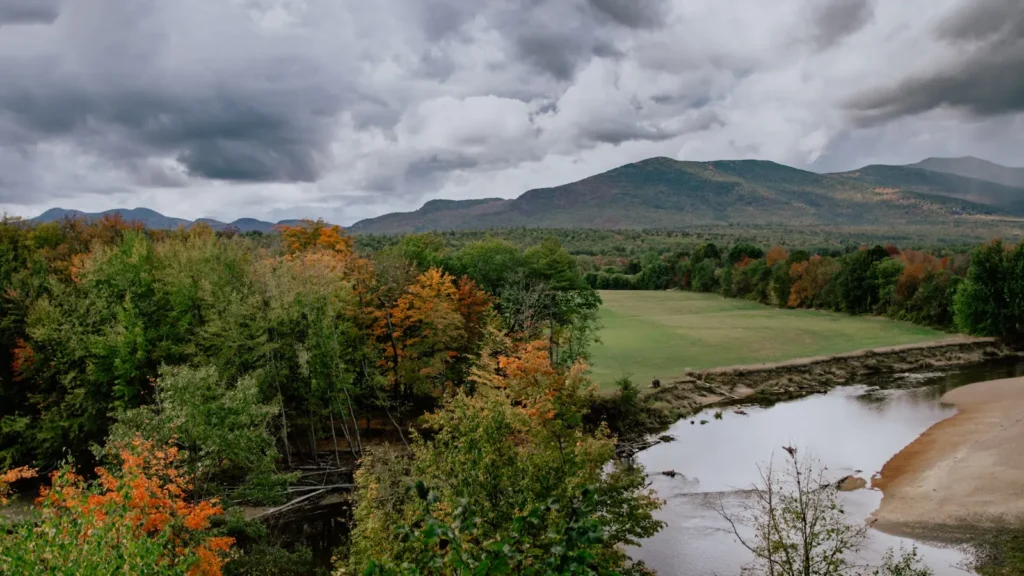
The photo at the top of this page is not Ten Mile River.
It is a regional stand-in, honestly captioned but generic — we will not put a name to a river we cannot prove. Send us a photograph you took here and it replaces the stand-in, with your credit on it.
Add a photo of this water
Landscape, not fish — the water itself. Reviewed by hand before it appears. The first one published here earns the Pioneer badge.
Fished this water? Add a photo
Reviewed by hand before it appears. Pick the water, not the spot — we never publish exact locations.
Access
Pawtucket Avenue, East Providence - the gauge crossing and the most direct access to the lower river.
Hunts Mills - a restored dam and fish ladder site with parking, trails and the best spring viewing of the herring run.
Turner Reservoir - the largest impoundment on the river, with shoreline access and warmwater fishing throughout.
Omega Pond - the lowest impoundment, closest to the Seekonk and the bay.
Ten Mile River Greenway - a paved path following much of the corridor and the simplest way to reach water on foot.
Slater Park - a long-established park on the Massachusetts side offering additional upstream access.
Seekonk River confluence - the tidal downstream limit, where white perch and bay species enter the system.
Seasons
Spring: the river herring run is the event of the year, drawing predators below every ladder and making this the best fishing of the season.
Summer: warm and low, with largemouth, pickerel and panfish in the impoundments and the best action early and late in the day.
Fall: cooling water brings bass back onto the feed and the greenway is at its quietest, making this an underrated stretch of the calendar.
Winter: largely iced on the impoundments, with limited open-water fishing in the moving reaches between dams.
From the water
No logged trips yet. Be the first to put this water on your map.
Log this water
Fished it or cleaned it? Log in or create a free account to log a trip with photos and earn the waterway badge.
Questions
What is the current flow on the Ten Mile River?
As of Nov 2, 6:15 am, the USGS gauge TEN MILE R., PAWTUCKET AVE. AT E. PROVIDENCE, RI reads 29 cfs. Conditions update every 15 minutes.
What species can you catch on the Ten Mile River?
Anglers target American Eel, American Shad, Bluegill, Bullhead, Chain Pickerel, Largemouth Bass, Smallmouth Bass, White Perch, Yellow Perch on the Ten Mile River in Rhode Island.
Where can you access the Ten Mile River?
Pawtucket Avenue, East Providence - the gauge crossing and the most direct access to the lower river. Hunts Mills - a restored dam and fish ladder site with parking, trails and the best spring viewing of the herring run. Turner Reservoir - the largest impoundment on the river, with shoreline access and warmwater fishing throughout. Omega Pond - the lowest impoundment, closest to the Seekonk and the bay. Ten Mile River Greenway - a paved path following much of the corridor and the simplest way to reach water on foot. Slater Park - a long-established park on the Massachusetts side offering addit...
When is the best time to fish the Ten Mile River?
Spring: the river herring run is the event of the year, drawing predators below every ladder and making this the best fishing of the season. Summer: warm and low, with largemouth, pickerel and panfish in the impoundments and the best action early and late in the day. Fall: cooling water brings bass back onto the feed and the greenway is at its quietest, making this an underrated stretch of the calendar. Winter: largely iced on the impoundments, with limited open-water fishing in the moving reaches between dams.
Where are the fishing regulations for the Ten Mile River?
Regulations change by season and section. Read the current rules on the Rhode Island agency site: https://dem.ri.gov/natural-resources-bureau/fish-wildlife/freshwater-fisheries