Lake Charlotte Fishing Guides
A cypress-rimmed tidal lake in the lower Trinity delta north of Anahuac, freshwater most of the year but tide-driven, with a gauge reading stage and water temperature.
Guides on the Lake Charlotte
Claimed profiles take booking requests. Unclaimed profiles are built from public records so the river is never empty; the guide can claim or remove one any time.
No guides listed yet
Guide or outfit this water? Create your profile. Listing is free, the commission is 10% or 7% with a premium profile, and premium profiles list first on this water.
About the Lake Charlotte
Lake Charlotte sits in the lower Trinity River delta north of Anahuac, one of a set of shallow lakes connected to the river and to each other by bayous and cuts through cypress and tupelo swamp. It is classified as estuary water and behaves like it, even though most of the year it fishes as fresh water. The tide reaches it, salinity climbs in a dry summer and falls again when the Trinity runs, and the fish community reflects that swing.
The gauge reports stage and water temperature. Stage is driven by the river above and the tide below in roughly equal measure, and the two do not always work in the same direction. A big Trinity release with an incoming tide can hold water high for days; a dry autumn with a hard north wind can drop the lake enough to make the connecting bayous marginal for a boat. Anglers here read the gauge before committing to a launch, which is not something most Texas lake fishing requires. Water temperature is worth the same attention, since the shallow lake warms early in spring and pushes the bass onto the cypress well before larger reservoirs inland turn on.
Largemouth bass and crappie around the cypress are the usual quarry, along with good numbers of catfish and some genuinely large alligator gar. In drier periods redfish and flounder push up out of Trinity Bay and are caught alongside bass, which is the sort of thing that makes this water memorable. The setting is the real draw for many: old cypress, Spanish moss and quiet backwater within an hour of Houston. Access is by boat through the bayou connections, and the surrounding land is largely wildlife management area, so the shoreline stays undeveloped and the fishing pressure stays modest even on weekends.
This water needs a real photo
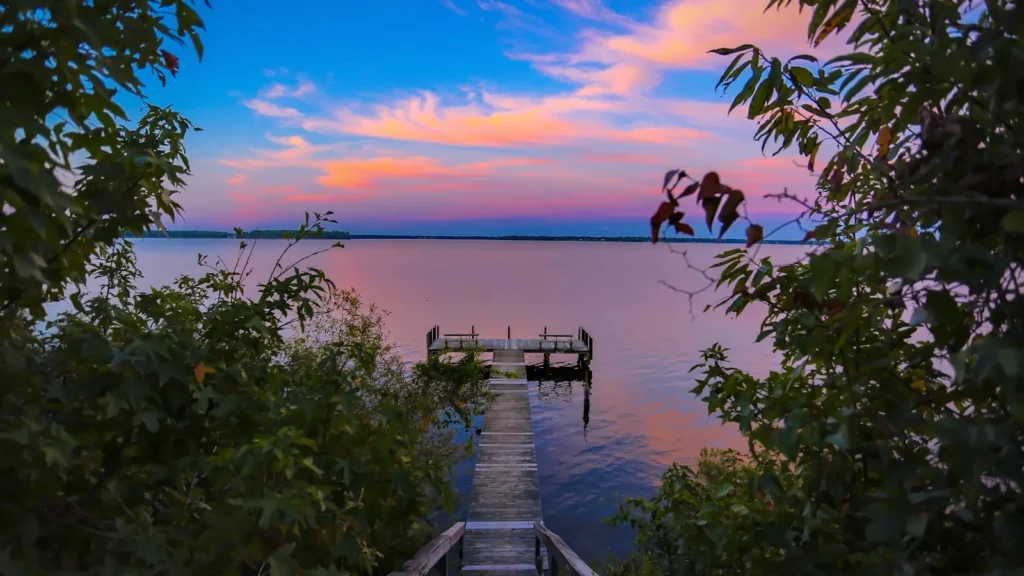
The photo at the top of this page is not Lake Charlotte.
It is a regional stand-in, honestly captioned but generic — we will not put a name to a river we cannot prove. Send us a photograph you took here and it replaces the stand-in, with your credit on it.
Add a photo of this water
Landscape, not fish — the water itself. Reviewed by hand before it appears. The first one published here earns the Pioneer badge.
Fished this water? Add a photo
Reviewed by hand before it appears. Pick the water, not the spot — we never publish exact locations.
Access
Anahuac - the county seat south of the lake, with fuel, food, tackle and the nearest full services.
Trinity River - the river the delta lakes connect to, with the main channel running past to Trinity Bay.
Lake Charlotte Bayou - the connecting cut from the river, the usual boat route in and the first thing to go shallow on low water.
Wallisville - the settlement at the head of the bay, with launch access to the lower river and the saltwater barrier.
Trinity Bay - the open bay below, source of the redfish and flounder that move up in dry periods.
Mac Bayou - the adjoining delta water, fished the same way and a useful alternative.
Cypress stands - the standing timber around the lake margin, the structure that holds bass and crappie year round.
Seasons
Spring: bass move shallow to the cypress and crappie stack on the timber, usually with high water off the Trinity.
Summer: hot and often low, fished early around shade and deeper cuts, with catfish and gar most active.
Fall: falling water and cooling temperatures bring the best bass fishing of the year, and saltwater species push up on dry years.
Winter: crappie hold deep around timber and the lake is quiet, with access dependent on whether the bayous have enough water.
From the water
No logged trips yet. Be the first to put this water on your map.
Log this water
Fished it or cleaned it? Log in or create a free account to log a trip with photos and earn the waterway badge.
Questions
What species can you catch on the Lake Charlotte?
Anglers target Alligator Gar, Black Crappie, Blue Catfish, Bluegill, Bowfin, Channel Catfish, Flathead Catfish, Largemouth Bass, Red Drum, Redear Sunfish, Southern Flounder, Spotted Gar, Striped Mullet, Warmouth, White Crappie on the Lake Charlotte in Texas.
Where can you access the Lake Charlotte?
Anahuac - the county seat south of the lake, with fuel, food, tackle and the nearest full services. Trinity River - the river the delta lakes connect to, with the main channel running past to Trinity Bay. Lake Charlotte Bayou - the connecting cut from the river, the usual boat route in and the first thing to go shallow on low water. Wallisville - the settlement at the head of the bay, with launch access to the lower river and the saltwater barrier. Trinity Bay - the open bay below, source of the redfish and flounder that move up in dry periods. Mac Bayou - the adjoining delta water, fished the...
When is the best time to fish the Lake Charlotte?
Spring: bass move shallow to the cypress and crappie stack on the timber, usually with high water off the Trinity. Summer: hot and often low, fished early around shade and deeper cuts, with catfish and gar most active. Fall: falling water and cooling temperatures bring the best bass fishing of the year, and saltwater species push up on dry years. Winter: crappie hold deep around timber and the lake is quiet, with access dependent on whether the bayous have enough water.
Where are the fishing regulations for the Lake Charlotte?
Regulations change by season and section. Read the current rules on the Texas agency site: https://tpwd.texas.gov/regulations/outdoor-annual/fishing