Thames River Fishing Guides
Connecticut's deepest tidal river, running fifteen miles from Norwich to the sound at New London, with a striped bass fishery that holds fish nearly year round and a spring run of shad and herring.
Guides on the Thames River
Claimed profiles take booking requests. Unclaimed profiles are built from public records so the river is never empty; the guide can claim or remove one any time.
No guides listed yet
Guide or outfit this water? Create your profile. Listing is free, the commission is 10% or 7% with a premium profile, and premium profiles list first on this water.
About the Thames River
The Thames is not a long river by any measure, but it is a deep one, and that single fact shapes everything about how it fishes. From the confluence of the Yantic and the Shetucket at Norwich it runs roughly fifteen miles south to Long Island Sound between New London and Groton, and for most of that distance it is a true drowned river valley with a dredged channel carrying real depth. The gauge at Groton reads stage and water temperature, which is the right pair of numbers for a tidal river where discharge is a far less useful figure than the state of the tide.
Striped bass are the reason most anglers come. The Thames holds a population of fish through the cold months in the deep water above the bridges, a genuine winter fishery in a region where most rivers shut down entirely, and it fills with migratory fish from spring through late fall. The tide runs hard through the narrows, and the rips and eddies that form around the bridge abutments, the shoal edges and the mouths of the coves are where fish set up to feed. Anglers who learn the timing of the current here catch far more than those who simply pick a spot.
Spring brings alewife, blueback herring and American shad up from the sound toward the Norwich dams, and the bass and bluefish follow them. Summer adds fluke over the sandy bottom in the lower river, black sea bass and scup around structure, and tautog on the rock and rubble near the mouth. Late fall is the best striper fishing of the year, when bait pours out of the coves on the dropping tide.
Access is unusually good for a New England tidal river. Both banks carry state and municipal launches, the towns sit right at the water, and a substantial charter and guide fleet works out of New London, Groton and Mystic just to the east.
This water needs a real photo
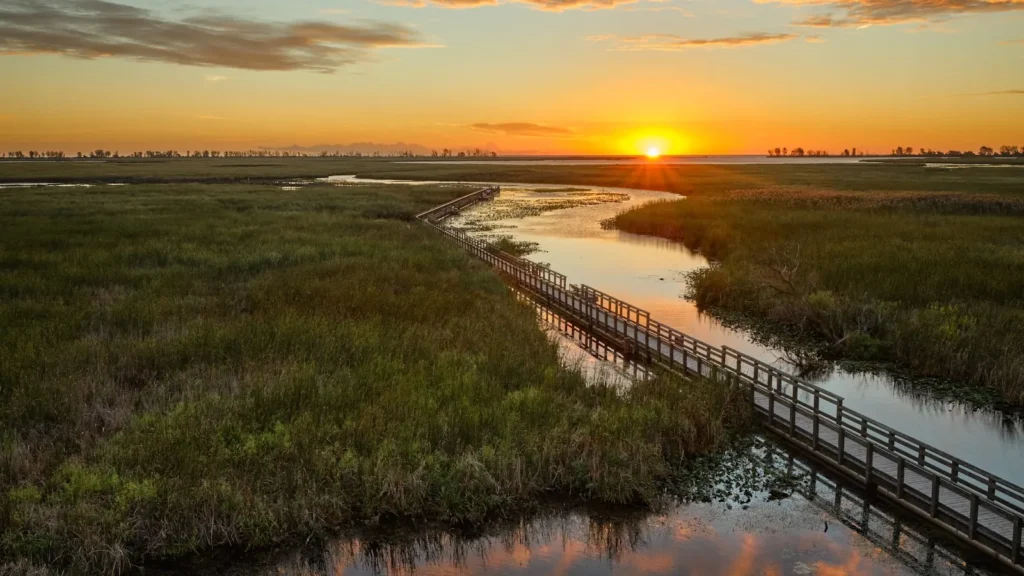
The photo at the top of this page is not Thames River.
It is a regional stand-in, honestly captioned but generic — we will not put a name to a river we cannot prove. Send us a photograph you took here and it replaces the stand-in, with your credit on it.
Add a photo of this water
Landscape, not fish — the water itself. Reviewed by hand before it appears. The first one published here earns the Pioneer badge.
Fished this water? Add a photo
Reviewed by hand before it appears. Pick the water, not the spot — we never publish exact locations.
Access
Groton - the town at the gauge, with marinas, tackle, fuel and charter operations.
New London - the deepwater port across the river, with full services and boat access.
Norwich - the head of tide at the top of the estuary, with a city launch and shore access.
Thames River state boat launch - public ramp access to the middle river.
Long Island Sound - open salt water at the river mouth, a short run for boats.
Mystic - the neighboring harbor town east of the mouth, with guides and outfitters.
Poquetanuck Cove - a large tidal cove off the east bank holding bait and fish.
Seasons
Spring: herring and shad push upriver and striped bass move in behind them as water warms through April and May.
Summer: fluke, sea bass, scup and tautog fill out the mix while stripers hold deep and feed hardest at night.
Fall: the strongest fishing of the year, with bait flushing from the coves and bass and bluefish feeding heavily into November.
Winter: a real cold water striper fishery persists in the deep holes above the bridges when most regional waters are done.
From the water
No logged trips yet. Be the first to put this water on your map.
Log this water
Fished it or cleaned it? Log in or create a free account to log a trip with photos and earn the waterway badge.
Questions
What species can you catch on the Thames River?
Anglers target American Shad, Atlantic Menhaden, Black Sea Bass, Bluefish, Channel Catfish, Hickory Shad, Largemouth Bass, Scup, Smallmouth Bass, Striped Bass, Summer Flounder, Tautog, Weakfish, White Perch, Winter Flounder on the Thames River in Connecticut.
Where can you access the Thames River?
Groton - the town at the gauge, with marinas, tackle, fuel and charter operations. New London - the deepwater port across the river, with full services and boat access. Norwich - the head of tide at the top of the estuary, with a city launch and shore access. Thames River state boat launch - public ramp access to the middle river. Long Island Sound - open salt water at the river mouth, a short run for boats. Mystic - the neighboring harbor town east of the mouth, with guides and outfitters. Poquetanuck Cove - a large tidal cove off the east bank holding bait and fish.
When is the best time to fish the Thames River?
Spring: herring and shad push upriver and striped bass move in behind them as water warms through April and May. Summer: fluke, sea bass, scup and tautog fill out the mix while stripers hold deep and feed hardest at night. Fall: the strongest fishing of the year, with bait flushing from the coves and bass and bluefish feeding heavily into November. Winter: a real cold water striper fishery persists in the deep holes above the bridges when most regional waters are done.
Where are the fishing regulations for the Thames River?
Regulations change by season and section. Read the current rules on the Connecticut agency site: https://portal.ct.gov/deep/fishing