Anchor River Fishing Guides
A short road-accessible Kenai Peninsula river entering Cook Inlet at Anchor Point, fished hard for king salmon in early summer and for steelhead in autumn.
Guides on the Anchor River
Claimed profiles take booking requests. Unclaimed profiles are built from public records so the river is never empty; the guide can claim or remove one any time.
No guides listed yet
Guide or outfit this water? Create your profile. Listing is free, the commission is 10% or 7% with a premium profile, and premium profiles list first on this water.
About the Anchor River
The Anchor River is small by Alaskan standards and matters more than its size suggests, because it is reachable by car. It rises in the hills of the southern Kenai Peninsula, runs west through a wooded valley, and enters Cook Inlet at Anchor Point just north of Homer, crossed by the Sterling Highway a short distance above the mouth. That road access makes it the southernmost drive-to king salmon stream in the state and one of the few genuinely productive Alaskan rivers that does not require a bush plane, which is why it draws crowds on the opening weekends of the king season and why the regulations on it are detailed and strictly enforced.
Chinook salmon are the headline run, entering in late May and June and fished in the lower river under a restricted, closely managed season. Coho follow in August and September and spread further up the system, and pink salmon fill the river in even-numbered years in very large numbers. The resident and sea-run fishery is what keeps locals coming back: Dolly Varden are abundant and take flies readily, rainbow trout hold in the upper reaches, and coastal cutthroat trout are present in the system. The autumn steelhead run is the connoisseur’s fishery here, a wild catch-and-release-only run of fish that comes in from September and is pursued with far less company than the king season.
The gauge near Anchor Point reports stage, water temperature and precipitation, but no discharge series, so the stage trace is the number to read before driving out. A sharp rise after coastal rain means a brown, unfishable river that usually clears within a day or two; a low, flat stage means clear water and visible fish, which on a river this small can also mean very wary ones. The temperature series is a genuine help in timing the steelhead run. Check the current emergency orders before any king trip.
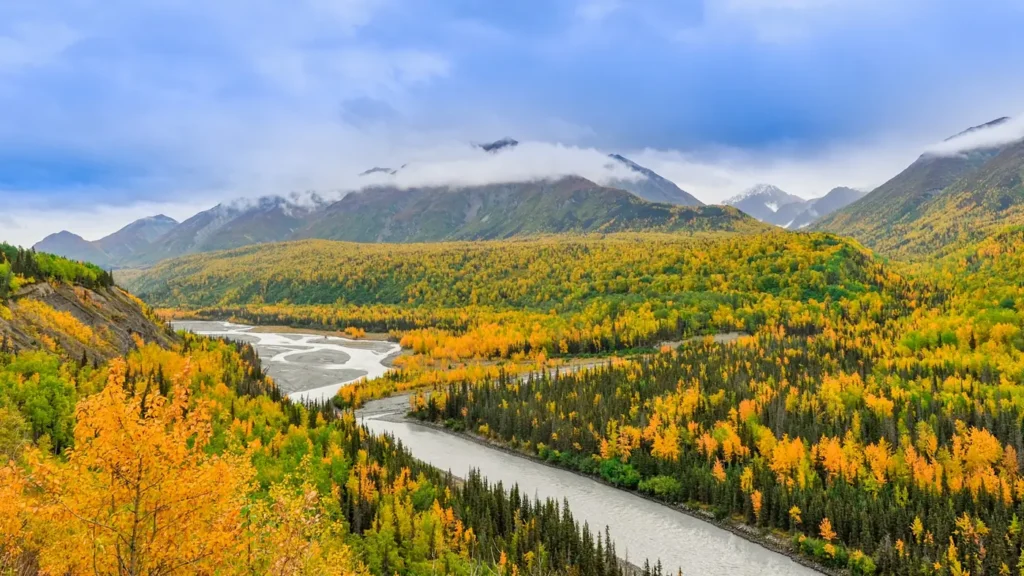
This water needs a real photo
The photo at the top of this page is not Anchor River.
It is a regional stand-in, honestly captioned but generic — we will not put a name to a river we cannot prove. Send us a photograph you took here and it replaces the stand-in, with your credit on it.
Add a photo of this water
Landscape, not fish — the water itself. Reviewed by hand before it appears. The first one published here earns the Pioneer badge.
Fished this water? Add a photo
Reviewed by hand before it appears. Pick the water, not the spot — we never publish exact locations.
Access
Anchor Point - the gauge community at the mouth and the main access to the lower river.
Anchor River State Recreation Area - the campground and river access at the mouth, the busiest fishing water.
Sterling Highway bridge - the usual mid-river access and the easiest place to judge clarity.
North Fork Road - the upper access, opening the smaller resident trout and Dolly Varden water.
Cook Inlet mouth - the tidal end, where kings stage before pushing up on the tide.
Homer - the regional base for lodging, tackle, charters and food, twenty minutes south.
Ninilchik River - the next road-accessible king stream north, a natural alternative when the Anchor is high.
Seasons
Spring: the king salmon opening in late May and June is the busiest fishing of the year on the lower river.
Summer: quieter, with Dolly Varden and resident trout through the system and pink salmon in even-numbered years.
Fall: coho through August and September, then the wild steelhead run, the best fishing on the river for many anglers.
Winter: closed and iced, with the river reopening as the snowmelt clears in spring.
From the water
No logged trips yet. Be the first to put this water on your map.
Log this water
Fished it or cleaned it? Log in or create a free account to log a trip with photos and earn the waterway badge.
Questions
What species can you catch on the Anchor River?
Anglers target Chinook Salmon, Coastal Cutthroat Trout, Coho Salmon, Dolly Varden, Pink Salmon, Rainbow Trout, Steelhead on the Anchor River in Alaska.
Where can you access the Anchor River?
Anchor Point - the gauge community at the mouth and the main access to the lower river. Anchor River State Recreation Area - the campground and river access at the mouth, the busiest fishing water. Sterling Highway bridge - the usual mid-river access and the easiest place to judge clarity. North Fork Road - the upper access, opening the smaller resident trout and Dolly Varden water. Cook Inlet mouth - the tidal end, where kings stage before pushing up on the tide. Homer - the regional base for lodging, tackle, charters and food, twenty minutes south. Ninilchik River - the next road-accessible...
When is the best time to fish the Anchor River?
Spring: the king salmon opening in late May and June is the busiest fishing of the year on the lower river. Summer: quieter, with Dolly Varden and resident trout through the system and pink salmon in even-numbered years. Fall: coho through August and September, then the wild steelhead run, the best fishing on the river for many anglers. Winter: closed and iced, with the river reopening as the snowmelt clears in spring.
Where are the fishing regulations for the Anchor River?
Regulations change by season and section. Read the current rules on the Alaska agency site: https://www.adfg.alaska.gov/index.cfm?adfg=fishregulations.main