Taku River Fishing Guides
A sixty-five-hundred-square-mile transboundary river draining British Columbia into Southeast Alaska near Juneau, carrying one of the region's most important chinook salmon runs.
Guides on the Taku River
Claimed profiles take booking requests. Unclaimed profiles are built from public records so the river is never empty; the guide can claim or remove one any time.
No guides listed yet
Guide or outfit this water? Create your profile. Listing is free, the commission is 10% or 7% with a premium profile, and premium profiles list first on this water.
About the Taku River
The Taku River drains roughly sixty-five hundred square miles of northwestern British Columbia before crossing into Southeast Alaska and reaching tidewater southeast of Juneau. It is one of the great transboundary rivers of the region, and the gauge near Juneau reads water temperature, discharge, stage, conductance, dissolved oxygen, pH and turbidity, which makes it one of the better-instrumented rivers in Alaska. The temperature and turbidity records are both genuinely useful here, because this is a glacially influenced system whose colour and clarity change dramatically through the season.
The Taku is glacial water for much of the summer, running grey with rock flour when melt is at its peak and clearing markedly as the weather cools in autumn. That seasonal clearing is the single most important thing for an angler to understand about the river, because visibility governs how and where fish can be caught. The lower river spreads across a broad tidal flat, and the boundary between fresh and salt water shifts with the tide over a considerable distance, concentrating fish as they stage before running up.
The Taku’s chinook salmon run is its defining feature and one of the most important in Southeast Alaska, managed jointly across the international border and closely monitored. Coho salmon follow in autumn and provide outstanding fishing. Sockeye, pink and chum salmon all use the system in numbers. Dolly Varden are abundant and follow the salmon to feed, coastal cutthroat trout hold in the clearer tributaries and sloughs, and steelhead, rainbow trout, arctic grayling and round whitefish are part of the wider watershed’s fish community.
Access is by boat or float plane from Juneau, with no road connection, and this is serious country where weather governs travel and bears are a genuine consideration. Alaska’s regulations for the Taku are detailed, change by species and by year, and are worth reading closely before any trip is planned.
This water needs a real photo
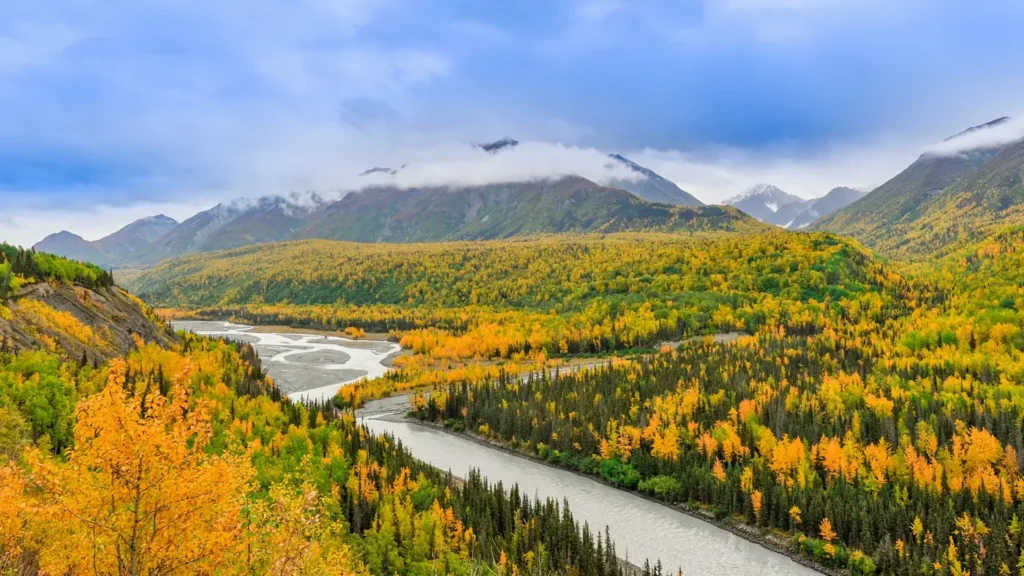
The photo at the top of this page is not Taku River.
It is a regional stand-in, honestly captioned but generic — we will not put a name to a river we cannot prove. Send us a photograph you took here and it replaces the stand-in, with your credit on it.
Add a photo of this water
Landscape, not fish — the water itself. Reviewed by hand before it appears. The first one published here earns the Pioneer badge.
Fished this water? Add a photo
Reviewed by hand before it appears. Pick the water, not the spot — we never publish exact locations.
Access
Juneau - the nearest city and the base for all access, with lodging, guides, charters and supplies.
Float plane and jet boat operators - the practical means of reaching the river, booked out of Juneau.
Taku Inlet - the tidal approach from Juneau, with staging fish and its own saltwater fishery.
Taku River tidal flats - the lower river, where fresh and salt water mix and fish concentrate.
Tongass National Forest - the surrounding public land, with remote cabins available by reservation.
Taku Harbor - a sheltered anchorage and state marine park south of the river mouth.
Mendenhall and Montana Creek areas - road-accessible Juneau alternatives when weather closes the inlet.
Seasons
Spring: the river is high with early melt, runs grey, and access is weather-dependent with little fishing pressure.
Summer: the chinook salmon run is the centrepiece, followed by sockeye, pink and chum salmon through the warm months.
Fall: coho salmon run as the glacial melt eases and the water clears, which is the most productive period of the year.
Winter: the river is effectively inaccessible to anglers and the country is left to the weather.
From the water
No logged trips yet. Be the first to put this water on your map.
Log this water
Fished it or cleaned it? Log in or create a free account to log a trip with photos and earn the waterway badge.
Questions
What is the current flow on the Taku River?
As of Oct 18, 5:00 pm, the USGS gauge TAKU R NR JUNEAU AK reads 20,500 cfs, with water temperature 39.9 F. Conditions update every 15 minutes.
What species can you catch on the Taku River?
Anglers target Arctic Grayling, Chinook Salmon, Chum Salmon, Coastal Cutthroat Trout, Coho Salmon, Dolly Varden, Pink Salmon, Rainbow Trout, Round Whitefish, Sockeye Salmon, Steelhead on the Taku River in Alaska.
Where can you access the Taku River?
Juneau - the nearest city and the base for all access, with lodging, guides, charters and supplies. Float plane and jet boat operators - the practical means of reaching the river, booked out of Juneau. Taku Inlet - the tidal approach from Juneau, with staging fish and its own saltwater fishery. Taku River tidal flats - the lower river, where fresh and salt water mix and fish concentrate. Tongass National Forest - the surrounding public land, with remote cabins available by reservation. Taku Harbor - a sheltered anchorage and state marine park south of the river mouth. Mendenhall and Montana Cr...
When is the best time to fish the Taku River?
Spring: the river is high with early melt, runs grey, and access is weather-dependent with little fishing pressure. Summer: the chinook salmon run is the centrepiece, followed by sockeye, pink and chum salmon through the warm months. Fall: coho salmon run as the glacial melt eases and the water clears, which is the most productive period of the year. Winter: the river is effectively inaccessible to anglers and the country is left to the weather.
Where are the fishing regulations for the Taku River?
Regulations change by season and section. Read the current rules on the Alaska agency site: https://www.adfg.alaska.gov/index.cfm?adfg=fishregulations.main