Big South Fork Fishing Guides
The Big South Fork of the Cumberland, running north out of Tennessee through a national river gorge of sandstone bluffs and arches into Kentucky, with wild smallmouth and muskie.
Guides on the Big South Fork
Claimed profiles take booking requests. Unclaimed profiles are built from public records so the river is never empty; the guide can claim or remove one any time.
No guides listed yet
Guide or outfit this water? Create your profile. Listing is free, the commission is 10% or 7% with a premium profile, and premium profiles list first on this water.
About the Big South Fork
The Big South Fork of the Cumberland River forms in Tennessee where the Clear Fork and New River meet and runs north into Kentucky through the Big South Fork National River and Recreation Area, a gorge of sandstone cliffs, natural arches and old coal-camp history, before reaching Lake Cumberland. Very little of the corridor is developed; most of the access is by gravel road, trail or boat, and stretches of it feel as remote as anywhere east of the Mississippi.
Smallmouth bass are the primary fishery and they are wild, holding on the boulder gardens, the bedrock ledges and the deep bluff pools that the gorge produces in abundance. Muskellunge are the other draw and the Kentucky reaches have a well-regarded muskie population, fished hard in the cold months by anglers who are willing to cast very large flies and lures all day for one opportunity. Rock bass are constant, spotted bass mix in on the lower river, walleye run up out of Lake Cumberland, and catfish and bluegill fill the slower pools.
The Stearns gauge is the working number. This is a flashy gorge river with a big sandstone drainage: rain in the upper basin brings it up hard and fast, and high water in the gorge is dangerous, with class rapids that whitewater boaters run at those levels. Moderate readings mean fishable, floatable water with defined pools and rapids. Late-summer low water clears beautifully, makes the smallmouth spooky, and turns the trip into a wade-and-hike rather than a float.
Stearns, Whitley City and Oneida in Tennessee are the base towns. Blue Heron, Yamacraw and Leatherwood Ford are the main river access points.
This water needs a real photo
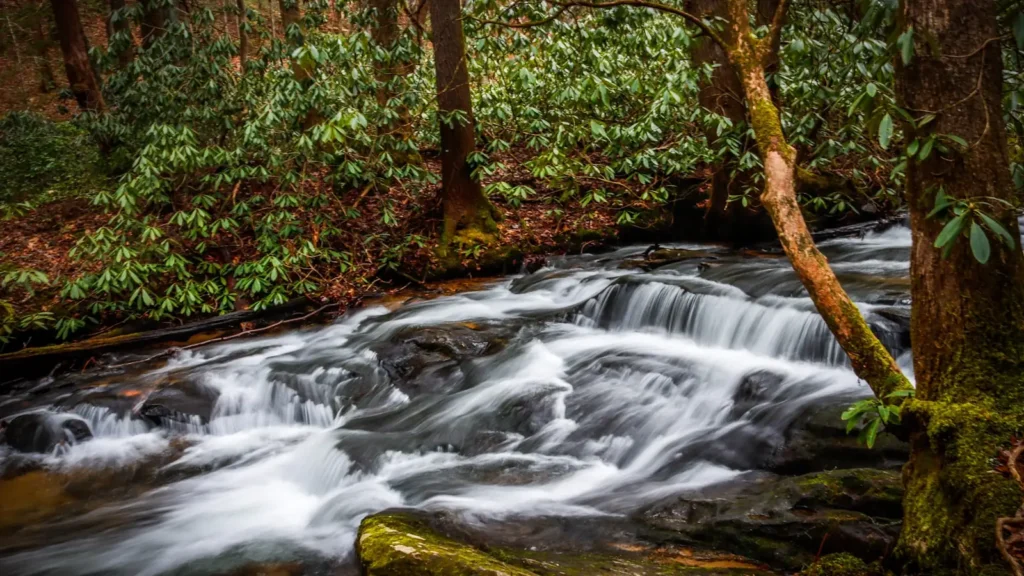
The photo at the top of this page is not Big South Fork.
It is a regional stand-in, honestly captioned but generic — we will not put a name to a river we cannot prove. Send us a photograph you took here and it replaces the stand-in, with your credit on it.
Add a photo of this water
Landscape, not fish — the water itself. Reviewed by hand before it appears. The first one published here earns the Pioneer badge.
Fished this water? Add a photo
Reviewed by hand before it appears. Pick the water, not the spot — we never publish exact locations.
Access
Yamacraw Bridge: the most-used Kentucky access, with parking and a launch.
Blue Heron: the historic mining camp with river access and the Big South Fork Scenic Railway.
Alum Ford: a boat ramp on the lower river toward Lake Cumberland.
Leatherwood Ford: the main Tennessee access in the gorge.
Bear Creek and Station Camp: gravel-road access to remote reaches.
Rock Creek: a cold tributary with a trout fishery.
Lake Cumberland at the mouth: big-water access below the gorge.
Seasons
March through May: high water, muskie fishing at its best and walleye running up from the lake.
June: falling water and the start of the best smallmouth floating.
July and August: low clear water, wading and hiking, topwater at first light.
September through November: the best smallmouth of the year and cool, clear gorge water.
From the water
No logged trips yet. Be the first to put this water on your map.
Log this water
Fished it or cleaned it? Log in or create a free account to log a trip with photos and earn the waterway badge.
Questions
What is the current flow on the Big South Fork?
As of Oct 19, 4:30 am, the USGS gauge SOUTH FORK CUMBERLAND RIVER NEAR STEARNS, KY reads 69 cfs, the 26th percentile for this date. Conditions update every 15 minutes.
What species can you catch on the Big South Fork?
Anglers target Bluegill, Channel Catfish, Muskellunge, Rock Bass, Smallmouth Bass, Spotted Bass, Walleye on the Big South Fork in Kentucky.
Where can you access the Big South Fork?
Yamacraw Bridge: the most-used Kentucky access, with parking and a launch. Blue Heron: the historic mining camp with river access and the Big South Fork Scenic Railway. Alum Ford: a boat ramp on the lower river toward Lake Cumberland. Leatherwood Ford: the main Tennessee access in the gorge. Bear Creek and Station Camp: gravel-road access to remote reaches. Rock Creek: a cold tributary with a trout fishery. Lake Cumberland at the mouth: big-water access below the gorge.
When is the best time to fish the Big South Fork?
March through May: high water, muskie fishing at its best and walleye running up from the lake. June: falling water and the start of the best smallmouth floating. July and August: low clear water, wading and hiking, topwater at first light. September through November: the best smallmouth of the year and cool, clear gorge water.
Where are the fishing regulations for the Big South Fork?
Regulations change by season and section. Read the current rules on the Kentucky agency site: https://fw.ky.gov/FishBoatGuide/Pages/default.aspx