Shetucket River Fishing Guides
The Shetucket is one of two Connecticut rivers stocked with surplus Atlantic salmon broodstock, which makes it the only realistic chance most New England anglers have at a salmon of that size.
Guides on the Shetucket River
Claimed profiles take booking requests. Unclaimed profiles are built from public records so the river is never empty; the guide can claim or remove one any time.
No guides listed yet
Guide or outfit this water? Create your profile. Listing is free, the commission is 10% or 7% with a premium profile, and premium profiles list first on this water.
About the Shetucket River
The Shetucket begins at Willimantic, where the Natchaug and the Willimantic rivers join, and runs southeast through old mill country toward Norwich, where it meets the Yantic and becomes the Thames. It is a working river with a long industrial past – dams, canals and brick mills line it – and for most of the twentieth century that history is what defined it. What defines it now, for anglers, is a stocking programme that has no real equivalent anywhere else in the region: Connecticut releases surplus Atlantic salmon broodstock from its hatchery system into the Shetucket each autumn and winter.
Those fish are large. They are adults that have completed their hatchery service, and they run several pounds and sometimes well into double figures, which makes the Shetucket the one place where a New England angler can reasonably expect to hook an Atlantic salmon of that size in fresh water. The fishery is tightly regulated, with designated reaches, specific gear rules and seasons set year by year, so checking the current rules is not optional here. Alongside the salmon the river holds stocked brown and rainbow trout, a good smallmouth population through the warmer reaches, American shad on the spring run below the dams, and pickerel and perch in the slower water.
The gauge near Willimantic sits at the top of the river, just below the confluence that creates it, and it is the best indicator of what the salmon reaches downstream are doing. The Shetucket is dam-influenced, and flow responds both to weather and to how the impoundments above are operating. The salmon fishing is a cold-water game and it concentrates in late autumn, winter and early spring; high water after a nor-easter shuts it down, and the settled weeks between rises are what anglers watch for.
This water needs a real photo
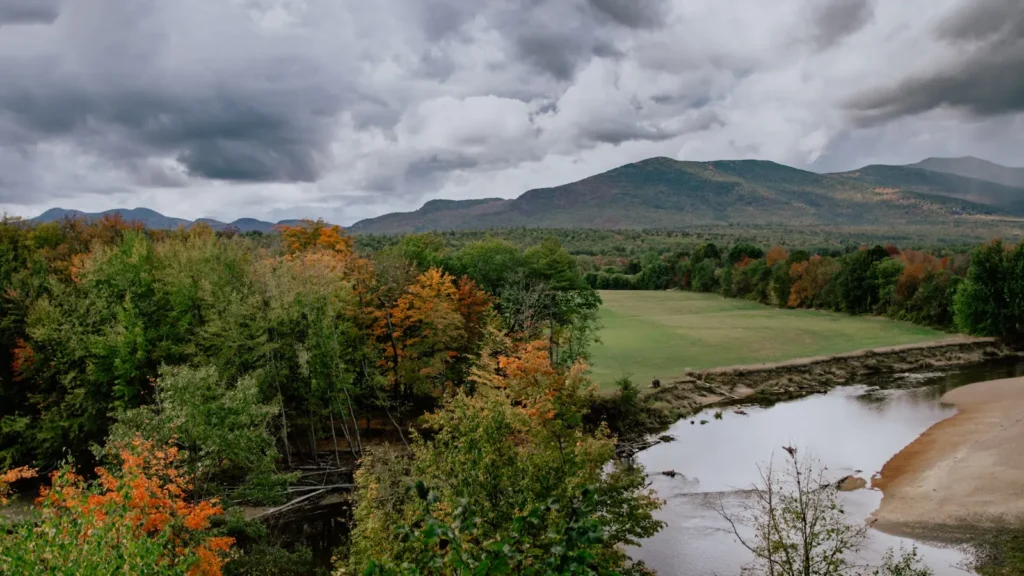
The photo at the top of this page is not Shetucket River.
It is a regional stand-in, honestly captioned but generic — we will not put a name to a river we cannot prove. Send us a photograph you took here and it replaces the stand-in, with your credit on it.
Add a photo of this water
Landscape, not fish — the water itself. Reviewed by hand before it appears. The first one published here earns the Pioneer badge.
Fished this water? Add a photo
Reviewed by hand before it appears. Pick the water, not the spot — we never publish exact locations.
Access
Willimantic - the gauge city at the head of the river, with park and bridge access to the upper reach.
Baltic - a mill village on the middle river, with access near the dam and the designated salmon water.
Scotland Dam - a flow-controlling structure on the upper river and a reference point for the reaches below.
Taftville - a downstream mill village above Norwich, with bank access near the dam.
Norwich - the city at the downstream end, where the Shetucket joins the Yantic to form the Thames.
Airline State Park Trail - a rail trail following parts of the valley and giving walk-in access.
Mansfield Hollow State Park - public land on the Natchaug above Willimantic, on the water that feeds the river.
Seasons
Spring: high with snowmelt and rain, with the tail of the salmon season, stocked trout going in and American shad running below the dams.
Summer: warm and low, when the river turns to smallmouth bass and the cold-water fishing goes quiet.
Fall: the salmon broodstock stocking begins and the river becomes a destination, with cooling water and settled flows.
Winter: the core Atlantic salmon season, cold and often the most productive weeks of the year for the largest fish.
From the water
No logged trips yet. Be the first to put this water on your map.
Log this water
Fished it or cleaned it? Log in or create a free account to log a trip with photos and earn the waterway badge.
Questions
What is the current flow on the Shetucket River?
As of Nov 2, 7:30 am, the USGS gauge SHETUCKET RIVER NEAR WILLIMANTIC, CT reads 161 cfs. Conditions update every 15 minutes.
What species can you catch on the Shetucket River?
Anglers target American Eel, American Shad, Atlantic Salmon, Brown Trout, Chain Pickerel, Fallfish, Largemouth Bass, Rainbow Trout, Smallmouth Bass, Yellow Perch on the Shetucket River in Connecticut.
Where can you access the Shetucket River?
Willimantic - the gauge city at the head of the river, with park and bridge access to the upper reach. Baltic - a mill village on the middle river, with access near the dam and the designated salmon water. Scotland Dam - a flow-controlling structure on the upper river and a reference point for the reaches below. Taftville - a downstream mill village above Norwich, with bank access near the dam. Norwich - the city at the downstream end, where the Shetucket joins the Yantic to form the Thames. Airline State Park Trail - a rail trail following parts of the valley and giving walk-in access. Mansfi...
When is the best time to fish the Shetucket River?
Spring: high with snowmelt and rain, with the tail of the salmon season, stocked trout going in and American shad running below the dams. Summer: warm and low, when the river turns to smallmouth bass and the cold-water fishing goes quiet. Fall: the salmon broodstock stocking begins and the river becomes a destination, with cooling water and settled flows. Winter: the core Atlantic salmon season, cold and often the most productive weeks of the year for the largest fish.
Where are the fishing regulations for the Shetucket River?
Regulations change by season and section. Read the current rules on the Connecticut agency site: https://portal.ct.gov/deep/fishing/regulations/fishing-regulations