Attoyac Bayou Fishing Guides
A tannin-dark piney woods bayou that feeds the upper end of Sam Rayburn, fished from small boats and kayaks for bass, crappie and heavy flathead catfish.
Guides on the Attoyac Bayou
Claimed profiles take booking requests. Unclaimed profiles are built from public records so the river is never empty; the guide can claim or remove one any time.
No guides listed yet
Guide or outfit this water? Create your profile. Listing is free, the commission is 10% or 7% with a premium profile, and premium profiles list first on this water.
About the Attoyac Bayou
Attoyac Bayou is deep East Texas water, and it looks nothing like the Hill Country rivers that dominate the state’s fishing reputation. It gathers out of the pine and hardwood country of Rusk and Nacogdoches counties and runs south through a broad bottomland of cypress, tupelo and willow before spreading into the upper arm of Sam Rayburn Reservoir. The water is the color of strong tea, stained by leaf tannin rather than sediment, and the channel winds hard enough that a mile of map is often two miles of paddling.
Most of the fishing here is a structure game rather than a current game. Largemouth and spotted bass hold against laydowns, cypress knees and the undercut outside of every bend, and crappie stack on the deeper timber where the bayou widens toward the reservoir. The catfishing is the quiet reason a lot of locals come: channel cats everywhere, and flatheads in the deep holes that reach genuine size. Bowfin and longnose gar are common enough that anyone fishing cut bait should expect them, and a few anglers now target them deliberately. Guiding here is informal and mostly runs off the reservoir end, with jon boats and kayaks rather than big bass rigs.
The gauge near Chireno is the number that matters, and it reads the bayou above the reservoir influence. This is flashy country: a heavy thunderstorm over the pines can double the stage overnight, push the bayou into the trees and shut the fishing down for days, while a dry late summer can leave the upper reaches too skinny to run a motor. There is no temperature sensor on this gauge, so it tells you whether to go and nothing at all about the bite.
This water needs a real photo
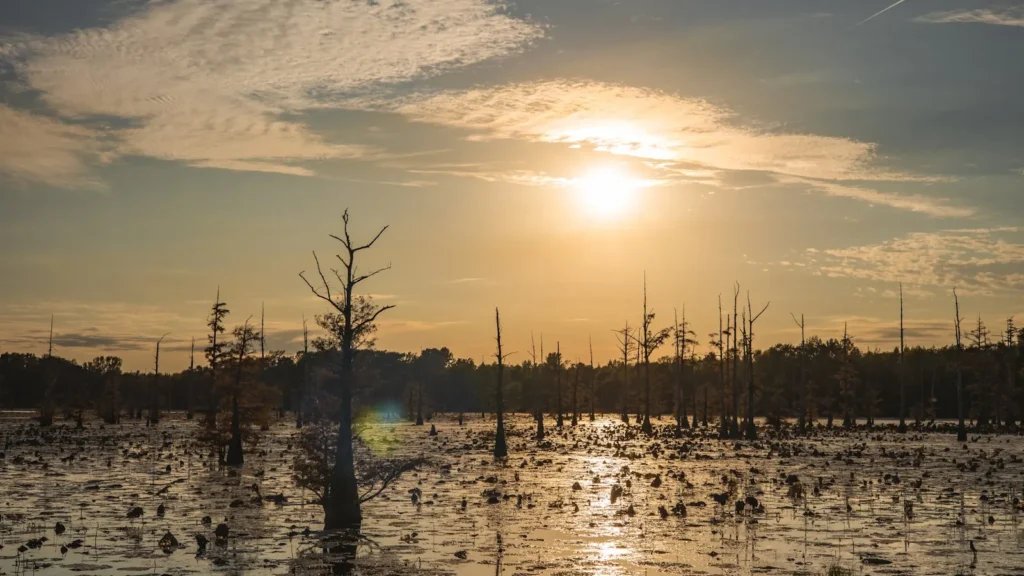
The photo at the top of this page is not Attoyac Bayou.
It is a regional stand-in, honestly captioned but generic — we will not put a name to a river we cannot prove. Send us a photograph you took here and it replaces the stand-in, with your credit on it.
Add a photo of this water
Landscape, not fish — the water itself. Reviewed by hand before it appears. The first one published here earns the Pioneer badge.
Fished this water? Add a photo
Reviewed by hand before it appears. Pick the water, not the spot — we never publish exact locations.
Access
Highway 21 crossing east of Chireno - the main public bridge access near the gauge.
FM 95 crossing north of Chireno - bank fishing and a rough kayak put-in.
Highway 7 crossing near Melrose - upper-bayou access with limited parking.
Sam Rayburn Reservoir upper arm ramps - the practical motorboat entry to the lower bayou.
Angelina National Forest access points near the confluence - walk-in bank fishing.
FM 1878 crossing - a mid-bayou put-in for short paddle floats.
Jackson Hill Park on Sam Rayburn - a paved ramp for reaching the bayou mouth.
Seasons
Spring: the best bass fishing of the year as fish move shallow into the cypress and the crappie run up the bayou.
Summer: hot, low and dark, with catfish the main quarry and early morning the only comfortable window.
Fall: cooling water brings bass back to the laydowns and the bottomland hardwoods make it the prettiest float.
Winter: slow and clear by local standards, with crappie holding deep on the timber near the reservoir.
From the water
No logged trips yet. Be the first to put this water on your map.
Log this water
Fished it or cleaned it? Log in or create a free account to log a trip with photos and earn the waterway badge.
Questions
What species can you catch on the Attoyac Bayou?
Anglers target Black Crappie, Blue Catfish, Bluegill, Bowfin, Channel Catfish, Flathead Catfish, Largemouth Bass, Longnose Gar, Spotted Bass, Warmouth, White Crappie on the Attoyac Bayou in Texas.
Where can you access the Attoyac Bayou?
Highway 21 crossing east of Chireno - the main public bridge access near the gauge. FM 95 crossing north of Chireno - bank fishing and a rough kayak put-in. Highway 7 crossing near Melrose - upper-bayou access with limited parking. Sam Rayburn Reservoir upper arm ramps - the practical motorboat entry to the lower bayou. Angelina National Forest access points near the confluence - walk-in bank fishing. FM 1878 crossing - a mid-bayou put-in for short paddle floats. Jackson Hill Park on Sam Rayburn - a paved ramp for reaching the bayou mouth.
When is the best time to fish the Attoyac Bayou?
Spring: the best bass fishing of the year as fish move shallow into the cypress and the crappie run up the bayou. Summer: hot, low and dark, with catfish the main quarry and early morning the only comfortable window. Fall: cooling water brings bass back to the laydowns and the bottomland hardwoods make it the prettiest float. Winter: slow and clear by local standards, with crappie holding deep on the timber near the reservoir.
Where are the fishing regulations for the Attoyac Bayou?
Regulations change by season and section. Read the current rules on the Texas agency site: https://tpwd.texas.gov/regulations/outdoor-annual/fishing