Levisa Fork below Fishtrap Dam Fishing Guides
The coldwater release below Fishtrap Dam in Pike County, where water drawn from deep in the lake changes the river's character for miles and the gauge reading is the release schedule.
Guides on the Levisa Fork below Fishtrap Dam
Claimed profiles take booking requests. Unclaimed profiles are built from public records so the river is never empty; the guide can claim or remove one any time.
No guides listed yet
Guide or outfit this water? Create your profile. Listing is free, the commission is 10% or 7% with a premium profile, and premium profiles list first on this water.
About the Levisa Fork below Fishtrap Dam
Levisa Fork below Fishtrap Dam is a genuine tailwater in the strict sense: the river below the dam is not the river above it. Fishtrap Lake is deep enough to stratify through the summer, and the water released from its lower levels arrives in the channel colder and more consistent than anything the surrounding Pike County watershed would produce on its own. The gauge immediately below the dam near Millard reads stage continuously, and on a managed release that stage record is effectively the operating schedule written down.
Reading it properly is the whole business of fishing here. A tailwater rises when the gates open, and it does not rise gently. The difference between a wadeable morning and a river running hard can be a matter of an hour, and an angler standing mid-channel when a generation release arrives is in real trouble. The practical habit is to check the stage before travelling, check it again on arrival, and treat any rise as the signal to get out rather than as something to work around.
The compensation for that discipline is a river that fishes well when conditions are right. The cold stable release supports better invertebrate production than the freestone water upstream, and the fish below the dam grow accordingly. Smallmouth bass are the principal quarry through much of the year, with spotted and largemouth bass alongside them. Musky are present in this drainage and are a genuine if demanding target. Walleye and sauger use the deeper water below the dam, white bass run in numbers at times, and channel and flathead catfish reach good size in the holes. Bluegill, longear sunfish, rock bass, freshwater drum and carp round out the assemblage.
Access is from road crossings and the dam area below Fishtrap, with Pikeville the nearest centre of any size for lodging, food and supplies.
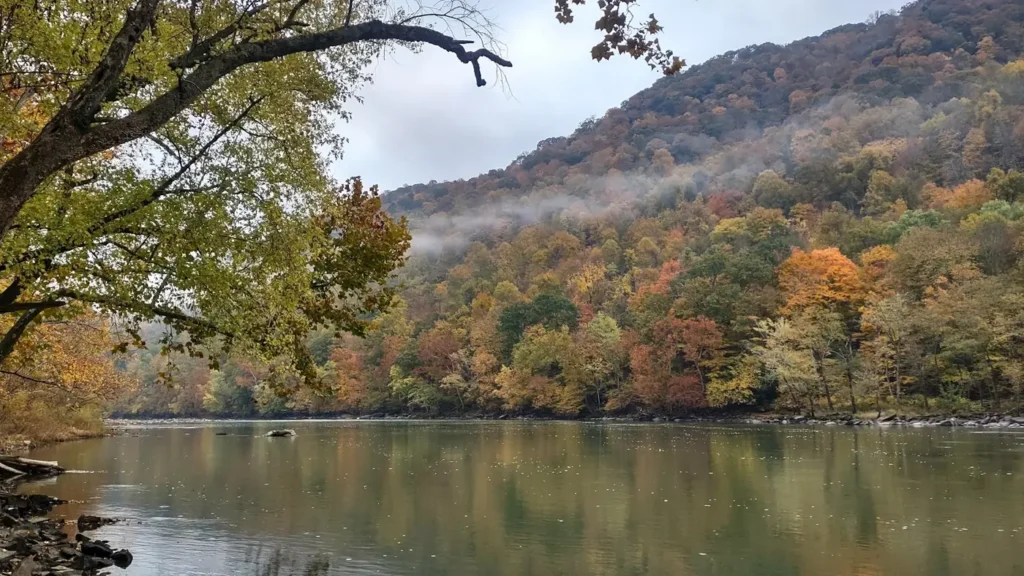
This water needs a real photo
The photo at the top of this page is not Levisa Fork below Fishtrap Dam.
It is a regional stand-in, honestly captioned but generic — we will not put a name to a river we cannot prove. Send us a photograph you took here and it replaces the stand-in, with your credit on it.
Add a photo of this water
Landscape, not fish — the water itself. Reviewed by hand before it appears. The first one published here earns the Pioneer badge.
Fished this water? Add a photo
Reviewed by hand before it appears. Pick the water, not the spot — we never publish exact locations.
Access
Fishtrap Lake and dam area - the release point, with parking and bank access immediately below the structure.
Millard - the community at the gauge, the usual reference point for the upper tailwater.
Pikeville - the Pike County seat a short drive downstream, with lodging, food, fuel and tackle.
Road crossings along the Levisa Fork - the standard access to the river downstream of the dam.
Fishtrap Lake itself - the reservoir above, offering a completely different fishery with ramps and camping.
Russell Fork - the celebrated whitewater river in the same drainage to the east.
Breaks Interstate Park - the gorge park on the Kentucky-Virginia line, with camping and river access.
Seasons
Spring: high inflows mean frequent releases, and the river is often unfishable, so the stage reading matters most now.
Summer: the cold release keeps the tailwater fishing well when the freestone water upstream has gone warm and slow.
Fall: releases ease, the river settles, and smallmouth bass feed hard through the most reliable stretch of the year.
Winter: flows are usually lower and steadier, and walleye and sauger below the dam become the sensible target.
From the water
No logged trips yet. Be the first to put this water on your map.
Log this water
Fished it or cleaned it? Log in or create a free account to log a trip with photos and earn the waterway badge.
Questions
What species can you catch on the Levisa Fork below Fishtrap Dam?
Anglers target Bluegill, Channel Catfish, Common Carp, Flathead Catfish, Freshwater Drum, Largemouth Bass, Longear Sunfish, Musky, Rock Bass, Sauger, Smallmouth Bass, Spotted Bass, Walleye, White Bass on the Levisa Fork below Fishtrap Dam in Kentucky.
Where can you access the Levisa Fork below Fishtrap Dam?
Fishtrap Lake and dam area - the release point, with parking and bank access immediately below the structure. Millard - the community at the gauge, the usual reference point for the upper tailwater. Pikeville - the Pike County seat a short drive downstream, with lodging, food, fuel and tackle. Road crossings along the Levisa Fork - the standard access to the river downstream of the dam. Fishtrap Lake itself - the reservoir above, offering a completely different fishery with ramps and camping. Russell Fork - the celebrated whitewater river in the same drainage to the east. Breaks Interstate Par...
When is the best time to fish the Levisa Fork below Fishtrap Dam?
Spring: high inflows mean frequent releases, and the river is often unfishable, so the stage reading matters most now. Summer: the cold release keeps the tailwater fishing well when the freestone water upstream has gone warm and slow. Fall: releases ease, the river settles, and smallmouth bass feed hard through the most reliable stretch of the year. Winter: flows are usually lower and steadier, and walleye and sauger below the dam become the sensible target.
Where are the fishing regulations for the Levisa Fork below Fishtrap Dam?
Regulations change by season and section. Read the current rules on the Kentucky agency site: https://fw.ky.gov/FishBoatGuide/Pages/default.aspx