Beta

GuidedFloats is in beta. The full site launches March 1, 2027. The mobile app follows.

Guides: claim before March 1, 2027 and your first full season of Premium is free. Claim your founding spot →

Home › Waters › North Carolina › Currituck Sound
Estuary · Outer Banks · North Carolina

Currituck Sound Fishing Guides

A shallow, brackish Outer Banks sound famous for grass-bed largemouth bass, with striped bass and white perch through the cooler months and a wind-driven water level that the Corolla gauge tracks directly.
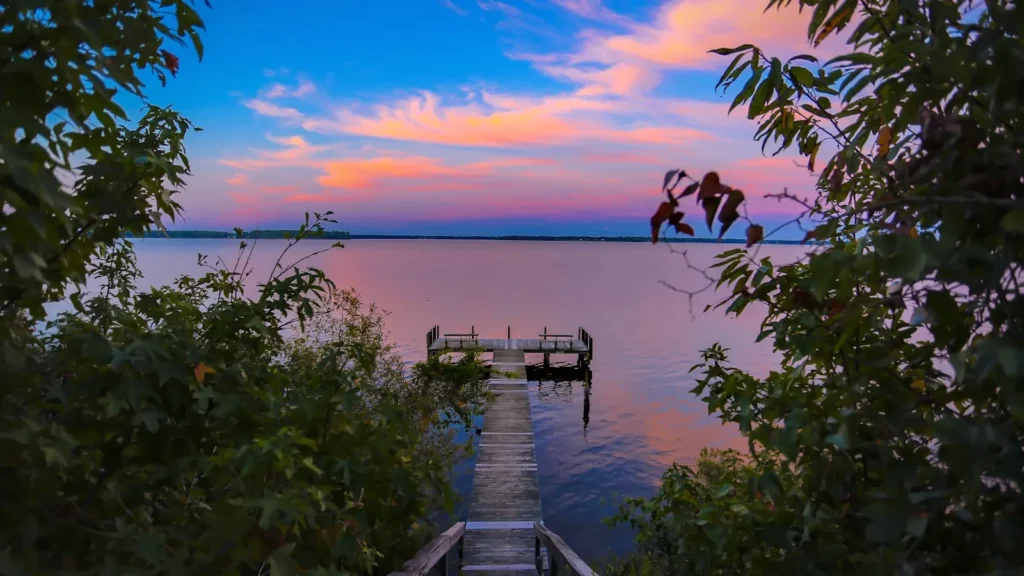
A dock reaching out over wide brackish water at dusk
Gauge location. Map data © OpenStreetMap contributors.

Guides on the Currituck Sound

Claimed profiles take booking requests. Unclaimed profiles are built from public records so the river is never empty; the guide can claim or remove one any time.

About the Currituck Sound

Currituck Sound is a broad, shallow, low-salinity estuary running behind the northern Outer Banks from the Virginia line down toward Kitty Hawk. It has no significant lunar tide. Water level here is driven almost entirely by wind, and a sustained northeast blow can push a foot of water out of the sound and leave the grass flats unfishable while a southwest wind stacks it back in. The USGS gauge on the east bank at Corolla reads that stage directly, which makes it the single most useful planning number for the sound.

The fishery is unusual and is what draws guides here. Despite being brackish, Currituck is one of the better largemouth bass estuaries on the Atlantic coast, with fish holding in submerged aquatic vegetation, milfoil beds, duck blinds and the marsh edges along the west side. Striped bass move through the sound in the cooler months, white and yellow perch fill the creeks in late winter, and chain pickerel and bowfin are abundant enough to be a target rather than a nuisance. Red drum occasionally push up from the south in warm years.

Salinity swings with wind and rainfall, and the grass beds respond. In a good grass year the bass fishing is exceptional; in a year when a storm scours the vegetation it can take a season to recover. Local guides track the grass as closely as they track the fish, and most trips are run in shallow-draft skiffs because much of the productive water is under three feet.

Wind is the governing factor for both fishing and safety. The sound is wide and shallow enough to build a short, steep chop very quickly, and a day that starts flat can turn genuinely unpleasant by midmorning. Plan around the forecast, fish the lee shore, and use the gauge to confirm there is enough water on the flats before running to them.

This water needs a real photo

The photo at the top of this page is not Currituck Sound.

It is a regional stand-in, honestly captioned but generic — we will not put a name to a river we cannot prove. Send us a photograph you took here and it replaces the stand-in, with your credit on it.

Add a photo of this water See the badges

Pioneer badgeUnclaimed

Add a photo of this water

Landscape, not fish — the water itself. Reviewed by hand before it appears. The first one published here earns the Pioneer badge.

Never published. It is how the badge is held for you until member accounts open.

Posting to Currituck Sound.

JPG, PNG or WebP, up to 12 MB. Landscape orientation looks best at the top of the page. We resize it and strip the location data out of the file.

The name printed under the photo and on your badge. Leave blank to stay anonymous.

Reader photo license v1.0 — the short version:

  • You grant Guided Floats, LLC a non-exclusive, royalty-free license to publish, resize and crop your photo on guidedfloats.com and in GuidedFloats’ own social posts and apps. You keep the copyright and can use the photo anywhere else.
  • You confirm that you took the photo yourself, that publishing it does not infringe anyone else’s rights, and that anyone recognisable in it (or a parent or guardian, if they are under 18) is happy for it to appear here.
  • Credit is printed beside the photo wherever it appears on the site, using the credit name you give us. Leave it blank and we use your name; write “Anonymous” for no name. Your email address is never published.
  • Withdrawing is one email to hello@guidedfloats.com naming the photo. It comes off the site within 7 days.
Read the full license

Version 1.0, dated 6 September 2026. Applies to every photograph submitted to GuidedFloats through the contact form, a species page, or the community board.

1. What you give us

By ticking the box on the form you grant Guided Floats, LLC (“GuidedFloats”, “we”) a non-exclusive, worldwide, royalty-free license to store, copy, resize, crop and display your photograph on guidedfloats.com, in GuidedFloats’ own social media accounts and mobile apps, and in material that promotes the site itself, in connection with the fish, water or community feature you sent it in for. The license lasts until you withdraw it (section 4).

You keep the copyright. The license is not exclusive, so you can use the photo anywhere else and license it to anyone else. We will not sell your photo, license it on to anyone else on its own, or use it in paid advertising for a third party.

2. What you confirm

You confirm that you took the photograph yourself (or otherwise own the rights to it), that you have the right to grant this license, and that publishing the photo does not infringe anyone else’s copyright, privacy or other rights.

If any person is recognisable in the photo, you confirm that they have agreed to its being published here, and that a parent or guardian has agreed on behalf of anyone under 18. Please do not send photographs of other people’s catches, screenshots, or pictures copied from other websites or social media.

3. Credit

We print the credit name you give us beside the photo wherever it appears on the site, and record it as the photo’s creator in the page’s structured data. If you leave the credit blank we use the name you gave us on the form. Write “Anonymous” if you prefer no name at all. Your email address, phone number and the exact spot the photo was taken are never published.

4. Withdrawing the license

You can withdraw the license at any time by emailing hello@guidedfloats.com, or by using the contact form, and telling us which photo you mean. We will remove the photo from guidedfloats.com within 7 days of receiving your message and stop using it in anything new. Copies that are already outside our control — search-engine caches, social posts that have already gone out, printed material already produced — may take longer to disappear or may not be recallable, and we are not responsible for those.

5. What we may do

We choose which photos to publish and may decline any submission without giving a reason. We may crop, resize, sharpen or colour-correct a photo for display, and we may remove a photo at any time. We will not alter a photo in a way that misrepresents the fish, the water or you.

6. Your details

We keep your name, email address, the credit name, the water and date you gave us, and the network address the submission came from, with the submission record, as our evidence of this license. We hold that record for as long as the photo is published and for the retention period described in our privacy policy. Location data that your camera or phone embedded in the file is removed before the photo is published.

7. Versions

The version of this license you accepted is stored with your submission and printed with the photo. A later version does not apply to a photo you have already sent unless you agree to it.

Fished this water? Add a photo

Reviewed by hand before it appears. Pick the water, not the spot — we never publish exact locations.

Never published. We use it only if we need to ask about the photo.

Posting to Currituck Sound.

JPG, PNG or WebP, up to 12 MB. We resize it and strip the location data out of the file.

The name shown under the photo. Leave blank to stay anonymous.

Reader photo license v1.0 — the short version:

  • You grant Guided Floats, LLC a non-exclusive, royalty-free license to publish, resize and crop your photo on guidedfloats.com and in GuidedFloats’ own social posts and apps. You keep the copyright and can use the photo anywhere else.
  • You confirm that you took the photo yourself, that publishing it does not infringe anyone else’s rights, and that anyone recognisable in it (or a parent or guardian, if they are under 18) is happy for it to appear here.
  • Credit is printed beside the photo wherever it appears on the site, using the credit name you give us. Leave it blank and we use your name; write “Anonymous” for no name. Your email address is never published.
  • Withdrawing is one email to hello@guidedfloats.com naming the photo. It comes off the site within 7 days.
Read the full license

Version 1.0, dated 6 September 2026. Applies to every photograph submitted to GuidedFloats through the contact form, a species page, or the community board.

1. What you give us

By ticking the box on the form you grant Guided Floats, LLC (“GuidedFloats”, “we”) a non-exclusive, worldwide, royalty-free license to store, copy, resize, crop and display your photograph on guidedfloats.com, in GuidedFloats’ own social media accounts and mobile apps, and in material that promotes the site itself, in connection with the fish, water or community feature you sent it in for. The license lasts until you withdraw it (section 4).

You keep the copyright. The license is not exclusive, so you can use the photo anywhere else and license it to anyone else. We will not sell your photo, license it on to anyone else on its own, or use it in paid advertising for a third party.

2. What you confirm

You confirm that you took the photograph yourself (or otherwise own the rights to it), that you have the right to grant this license, and that publishing the photo does not infringe anyone else’s copyright, privacy or other rights.

If any person is recognisable in the photo, you confirm that they have agreed to its being published here, and that a parent or guardian has agreed on behalf of anyone under 18. Please do not send photographs of other people’s catches, screenshots, or pictures copied from other websites or social media.

3. Credit

We print the credit name you give us beside the photo wherever it appears on the site, and record it as the photo’s creator in the page’s structured data. If you leave the credit blank we use the name you gave us on the form. Write “Anonymous” if you prefer no name at all. Your email address, phone number and the exact spot the photo was taken are never published.

4. Withdrawing the license

You can withdraw the license at any time by emailing hello@guidedfloats.com, or by using the contact form, and telling us which photo you mean. We will remove the photo from guidedfloats.com within 7 days of receiving your message and stop using it in anything new. Copies that are already outside our control — search-engine caches, social posts that have already gone out, printed material already produced — may take longer to disappear or may not be recallable, and we are not responsible for those.

5. What we may do

We choose which photos to publish and may decline any submission without giving a reason. We may crop, resize, sharpen or colour-correct a photo for display, and we may remove a photo at any time. We will not alter a photo in a way that misrepresents the fish, the water or you.

6. Your details

We keep your name, email address, the credit name, the water and date you gave us, and the network address the submission came from, with the submission record, as our evidence of this license. We hold that record for as long as the photo is published and for the retention period described in our privacy policy. Location data that your camera or phone embedded in the file is removed before the photo is published.

7. Versions

The version of this license you accepted is stored with your submission and printed with the photo. A later version does not apply to a photo you have already sent unless you agree to it.

Access

Corolla village access — closest launch and bank access to the USGS gauge on the east bank.
Currituck Sound public boating access at Poplar Branch — improved trailer ramp on the west side.
Jarvisburg and Grandy area ramps — mid-sound access to the western marsh edges and creek mouths.
Coinjock area landings — northern sound access near the Intracoastal Waterway connection.
Aydlett public access — west-side ramp with parking, close to productive grass flats.
Mackay Island national wildlife refuge access, Knotts Island — paddle and small-boat launch on the north end.
Duck and Kitty Hawk soundside access points — kayak and wade access to the southern end.

Seasons

Spring: the strongest bass fishing of the year as fish move onto the grass and marsh edges from late March into May, with white perch already stacked in the creeks.
Summer: fish the deeper grass edges and duck blinds early and late; heat and boat traffic push the best action to first light, and topwater over the beds is the classic presentation.
Fall: excellent. Cooling water spreads bass across the flats through October and November and brings striped bass into the sound in numbers.
Winter: striped bass, white perch and yellow perch carry the season in the creeks and deeper channels; bass fishing slows sharply but does not stop on warm, calm stretches.

From the water

No logged trips yet. Be the first to put this water on your map.

Log this water

Fished it or cleaned it? Log in or create a free account to log a trip with photos and earn the waterway badge.

Questions

What species can you catch on the Currituck Sound?

Anglers target Black Crappie, Bluegill, Bowfin, Chain Pickerel, Channel Catfish, Largemouth Bass, Red Drum, Striped Bass, White Perch, Yellow Perch on the Currituck Sound in North Carolina.

Are there fishing guides on the Currituck Sound?

GuidedFloats lists 1 guide and outfitters on the Currituck Sound. Claimed profiles accept booking requests; unclaimed profiles are built from public records and link to the business.

Where can you access the Currituck Sound?

Corolla village access — closest launch and bank access to the USGS gauge on the east bank. Currituck Sound public boating access at Poplar Branch — improved trailer ramp on the west side. Jarvisburg and Grandy area ramps — mid-sound access to the western marsh edges and creek mouths. Coinjock area landings — northern sound access near the Intracoastal Waterway connection. Aydlett public access — west-side ramp with parking, close to productive grass flats. Mackay Island national wildlife refuge access, Knotts Island — paddle and small-boat launch on the north end. Duck and Kitty Hawk soundsid...

When is the best time to fish the Currituck Sound?

Spring: the strongest bass fishing of the year as fish move onto the grass and marsh edges from late March into May, with white perch already stacked in the creeks. Summer: fish the deeper grass edges and duck blinds early and late; heat and boat traffic push the best action to first light, and topwater over the beds is the classic presentation. Fall: excellent. Cooling water spreads bass across the flats through October and November and brings striped bass into the sound in numbers. Winter: striped bass, white perch and yellow perch carry the season in the creeks and deeper channels; bass fis...

Where are the fishing regulations for the Currituck Sound?

Regulations change by season and section. Read the current rules on the North Carolina agency site: https://www.ncwildlife.gov/fishing/regulations