Cooper Creek Fishing Guides
A short, cold mountain creek entering the upper Kenai River at Cooper Landing, with a gauge at the mouth reading temperature, flow and stage on water that concentrates fish where it meets the river.
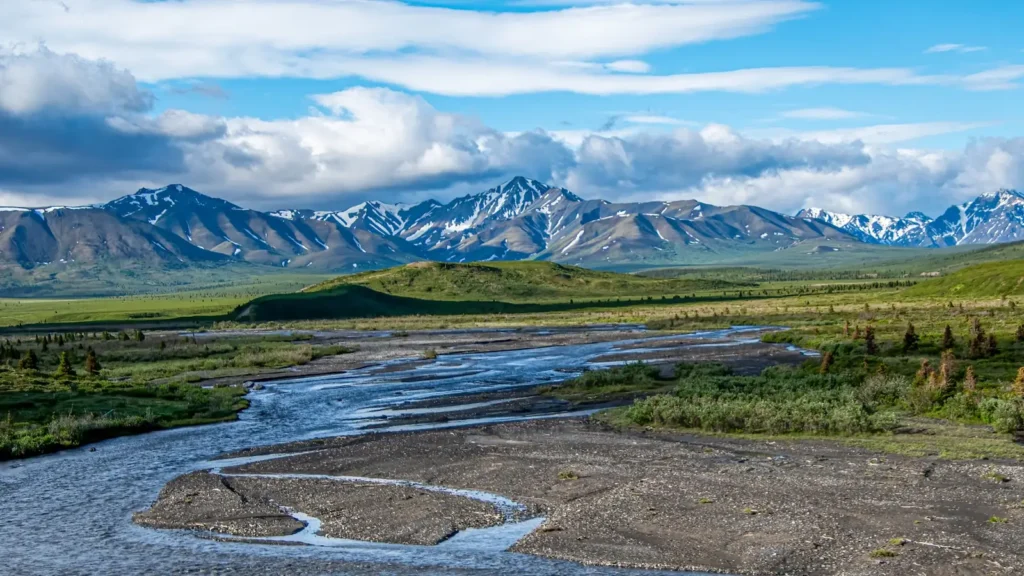
Guides on the Cooper Creek
Claimed profiles take booking requests. Unclaimed profiles are built from public records so the river is never empty; the guide can claim or remove one any time.
No guides listed yet
Guide or outfit this water? Create your profile. Listing is free, the commission is 10% or 7% with a premium profile, and premium profiles list first on this water.
About the Cooper Creek
Cooper Creek drops out of the Kenai Mountains through the Chugach National Forest and enters the Kenai River at Cooper Landing, which is one of the most heavily fished pieces of water in Alaska. The creek itself is short, cold, clear and steep by comparison with the river it joins, and its importance is out of all proportion to its size, because a cold clean tributary entering a big glacial river creates exactly the conditions that concentrate fish.
The gauge at the mouth reads water temperature along with discharge and stage, and the temperature trace is the useful one. The Kenai above Cooper Landing runs with glacial flour and the colour and temperature of the main river change through the season, so knowing what the creek is contributing at the confluence tells you something real about where fish will sit. Flow matters too, since a hard rain on the mountains pushes the creek up and colours the seam.
Rainbow trout and Dolly Varden are the year-round residents and the reason the confluence area is fished so hard. They stack below the mouth to take what the creek delivers and they follow the salmon through the season. Sockeye come through in enormous numbers in the summer and are the fish the Kenai is famous for, with coho behind them in the fall and pinks on their alternate-year cycle. The fishery is managed closely and the regulations in this corridor are specific, so read them before you go.
Cooper Landing is a genuine guiding town and there is no shortage of operators, drift boats and shuttles, which is both the convenience and the crowd. The Russian River confluence is minutes away and draws the heaviest pressure in the state. Bears are a real presence throughout, so fish with the awareness that the country demands.
This water needs a real photo
The photo at the top of this page is not Cooper Creek.
It is a regional stand-in, honestly captioned but generic — we will not put a name to a river we cannot prove. Send us a photograph you took here and it replaces the stand-in, with your credit on it.
Add a photo of this water
Landscape, not fish — the water itself. Reviewed by hand before it appears. The first one published here earns the Pioneer badge.
Fished this water? Add a photo
Reviewed by hand before it appears. Pick the water, not the spot — we never publish exact locations.
Access
Cooper Landing - the guiding town at the confluence, with lodges, outfitters, drift boat operators and supplies.
Kenai River - the main river the creek enters, one of the most productive salmon fisheries in Alaska.
Russian River confluence - minutes upstream, the most heavily fished sockeye water in the state.
Chugach National Forest - public land through the whole watershed, with campgrounds and trailheads.
Cooper Creek Campground - a Forest Service campground on the creek near the mouth.
Kenai Lake - the lake immediately upstream that feeds the upper river and clears its water.
Soldotna and Sterling - the service towns down the peninsula, with tackle, groceries and lodging.
Seasons
Spring: breakup and high cold water, with rainbows and Dolly Varden the only realistic targets and the season slow to start.
Summer: the sockeye run and the peak of the Kenai year, with heavy traffic, strict rules and extraordinary numbers of fish.
Fall: the finest fishing of the year, with coho in the river, big rainbows feeding hard and the crowds thinning out.
Winter: cold, dark and largely closed, with the corridor quiet and access limited to what the highway allows.
From the water
No logged trips yet. Be the first to put this water on your map.
Log this water
Fished it or cleaned it? Log in or create a free account to log a trip with photos and earn the waterway badge.
Questions
What is the current flow on the Cooper Creek?
As of Oct 18, 4:15 pm, the USGS gauge COOPER C AT MOUTH NR COOPER LANDING AK reads 29 cfs, with water temperature 42.1 F. Conditions update every 15 minutes.
What species can you catch on the Cooper Creek?
Anglers target Arctic Grayling, Chinook Salmon, Coho Salmon, Dolly Varden, Lake Trout, Pink Salmon, Rainbow Trout, Round Whitefish, Sockeye Salmon, Steelhead on the Cooper Creek in Alaska.
Where can you access the Cooper Creek?
Cooper Landing - the guiding town at the confluence, with lodges, outfitters, drift boat operators and supplies. Kenai River - the main river the creek enters, one of the most productive salmon fisheries in Alaska. Russian River confluence - minutes upstream, the most heavily fished sockeye water in the state. Chugach National Forest - public land through the whole watershed, with campgrounds and trailheads. Cooper Creek Campground - a Forest Service campground on the creek near the mouth. Kenai Lake - the lake immediately upstream that feeds the upper river and clears its water. Soldotna and...
When is the best time to fish the Cooper Creek?
Spring: breakup and high cold water, with rainbows and Dolly Varden the only realistic targets and the season slow to start. Summer: the sockeye run and the peak of the Kenai year, with heavy traffic, strict rules and extraordinary numbers of fish. Fall: the finest fishing of the year, with coho in the river, big rainbows feeding hard and the crowds thinning out. Winter: cold, dark and largely closed, with the corridor quiet and access limited to what the highway allows.
Where are the fishing regulations for the Cooper Creek?
Regulations change by season and section. Read the current rules on the Alaska agency site: https://www.adfg.alaska.gov/index.cfm?adfg=fishregulations.main